Chapter Two
First Years in Vilna
31Recollections of the first years of a life are like the experience of someone walking out of a tunnel. He begins to see something, but at first very dimly. A cloud rings him round, and through that cloud he gazes out at the world. He sees few objects. Here and there one brick is whitewashed paler than the others. An iron clamp juts out, or a bit of overhanging ceiling-edge catches the eye. The farther he goes, the lighter it grows for him. More bricks come into view, and they are clearer. At last he comes out into the bright world. Everything is light.
My tunnel comes to an end about a year after we came to Vilna. My first two years in Vilna are by now fairly clear in my mind too, but not absolutely clear. A few faces and scenes are vivid, but only a few, and those years in general are draped in a faint mist.
When my memory halts at this point, and I look back to the first year in Vilna, and then farther back — to Podbreze — the tunnel grows darker 32and darker, until my backward gaze is lost in a black abyss.
What is beyond? I do not know. It is dark, absolutely dark. One can see nothing at all.
The first impression I remember of Vilna — not from afar but from within, inside the town — concerns its smell. To me it was strange and pleasant. The air there is very different from Podbreze; and since I inherited a sharp sense of smell from my mother, I felt the difference very strongly.
Podbreze is a quite small town, and wherever you turn there is a garden or a meadow, and a few steps from our house is already "beyond the town." The sky is broad, the earth is not covered over, and the air is fresh; its breath is fresh. And here in Vilna streets stretch on and on, the houses are all of brick, and all very tall — so they looked to me; the ground is entirely paved, everything is walled in, fenced, shut up.
There were no flower-beds. Of such things I knew nothing. I only knew that a bad smell drifted from the courtyards, and I felt that the air could not carry it off. It seemed to me that into the gray stones of the pavement and into the yellowish-greened walls of the brick houses the heavy smell of the courtyards had crept.
The great city, walled and paved, awoke in me awe. And when I recall well my mood of those days, I see that the discontent of my sense of smell did not disturb that awe. Vilna both frightened me and enchanted me.
33It was my mother's two uncles who brought us down to Vilna — Uncle Arye-Leyb and Uncle Shneyur. They were brothers, and their family name was Analik. My mother's mother, who died before I was born, was a sister of theirs. A few miles from Vilna, in the Oshmiany district (uyezd), they had two distilleries, and in Vilna they had a "podval" (a wholesale liquor business) together with a tavern. So they brought my parents over to run the tavern. They loved my mother, and wanted to free her from being a melamedke (a teacher's wife who herself teaches).
A great part in this plan was played by my mother's faithful sister, Feyge. She instilled in the two uncles the desire to bring us down. And she had a purpose of her own in it: not only to ease her sister's livelihood, but also to have my mother near her. They were deeply attached to each other.
Arye-Leyb was the elder of the two brothers, and he was the chief proprietor of all the businesses. What financial arrangements existed between them I was too young to understand.
Arye-Leyb was probably a man of about fifty, with a dark face and gray hair. He had a shrewd smile and often winked with one eye. Shneyur had blond hair with a low blond beard. He had a habit of raising his upper lip in a certain way. His smile was shrewd, brighter and merrier than his elder 34brother's. He was altogether more cheerful, and more likable too.
Both of them loved to take pleasure in life, and pious they were not. Arye-Leyb was the craftier, more reserved, less candid one. Shneyur talked more, made more jokes, and caroused (huliet) more openly. My mother called Shneyur simply "Shneyur" and addressed him with the familiar "thou." Arye-Leyb, however, who was much older than she, she called "Uncle" and addressed formally. I took to Shneyur at once. Of Arye-Leyb I was afraid.
The podval and the tavern and our flat were in Shevakh Zhirmunski's court, where Little-Stefan Street begins. There I spent my childhood years, from the sixth to the fourteenth.
The courtyard still stands today, only it is now called something else. It is on the corner of Little-Stefan Street and a small lane (zavolik), which in Russian was called "Kvasnoy Pereulok" — a name the Jews never used. They called it "Shloyme Kisin's lane," or "by the slaughtering-house."
The place is quite lively. It is a kind of square, a "little market," as people called it; besides Little-Stefan Street, Great-Stefan Street and Rudnitsker Street begin here too, and the broad Zavalne Street passes through. On the little market stood poor "street-folk" with their big two-wheeled carts. Yet right beside it one found, all the same, a glittering apothecary and a soda-water stall.
The apothecary was on a corner of Zavalne, in a great white brick building where a general lived. Beyond, the neighborhood was entirely Jewish. The apothecary and his employees were also Jews, but clean-shaven 35and dressed in modern style, and I felt for them the same sort of deference as for the general and his family.
I do not remember how the Christian household looked. I remember only the sounds of a piano that often came from their windows; or of a barrel-organ (katerinke) that often stopped to play before them. Sometimes a carriage (karete) would draw up at their front door.
The white brick house with its handsome great door stood just opposite our tavern — perhaps thirty paces from us. And here, were I to find myself a thousand miles away and hear singing, it could be no farther from me than it was then.
The carriages that used to drive up to the general's residence were a rare exception. For the rest it was a neighborhood of poor cartmen and great freight-wagons. A droshky too passed through only rarely.
A few steps from the white building, in Strashuner's court, was a herring shop and a shop of wheels and wheel-grease (dzhegekhts). And a few steps in other directions — a flour-shop, a shop of oats and hay, harness-makers' shops (rimarske), and stalls of coarse salt and tobacco and other goods for village use.
Like many European courtyards, Shevakh Zhirmunski's court consisted of two parts: a dark one with a roofed-over passage, and a light one facing it — open sky. When people said "the gate," they meant the gateway together with the dark part of the court.
Our tavern had two doors: one on the street, onto the little market, and the second — "in the gate." Out there too opened the two windows of our cellar-room (shpelunke), which was next to the tavern.
In the cellar-room it was almost dark. Apart from the beds, there stood my mother's chest of drawers, on top of which, in the 36middle, she kept her candlesticks. We ate in the tavern proper. On Friday at dusk she would set up the candles on the two tables that stood in the tavern (besides the "shemer"-table, the serving counter, where the brandy was dispensed and where the relish to nibble with it lay). There mother would bless the candles, and then the tavern-room would become a whole part of our dwelling. If someone happened to come in to take a drink, and he could be trusted, he was given it on credit. If not, he had to leave a pledge (mashken); no money, of course, was taken on the Sabbath.
The cellar-room was one step higher than the tavern. Beyond the cellar-room was an entry-hall (firhoyz), and next to the entry-hall — the podval: the small room full of brandy-fumes and with a few big barrels by the wall.
That was my home. But strictly speaking, I cannot count the podval as part of my home. There ruled the unfriendly Uncle Arye-Leyb and his managers (forshteyer). Father would sometimes take me out there. But free I never felt there. The podval and the entry-hall were to me like a country on the far side of a border.
We arrived in Vilna a week before Passover, and I remember how father and mother took out the Passover utensils (kelim) they had brought from Podbreze. Best of all I remember my cup. A plain, low little glass, 37a blue one. That bit of color shows distinctly against the background of all my earliest memories.
The first seder father conducted I do not remember, only how the utensils were taken out for Passover. The moment when the Passover utensils were brought out, and how mother with a loving word handed me my little blue glass — that too I see before my eyes.
Together with that scene I remember a kind of echo of my parents and their mood in those weeks. A feeling of dependence marked their bearing, their expression, their talk. Children sense such things. And I remember quite well how their mood used to make itself felt upon me.
It was probably a question of how far my father and mother were succeeding with the "tavern," whether they were "taking in" (layzn, earning) enough. I remember how they would fret. At such times I hated Uncle Arye-Leyb like a murderer.
Another of my earliest memories of Vilna concerns the language. I noticed at once the differences between Podbreze Yiddish and the Yiddish of my new home.
Podbreze is only 28 versts from Vilna. Had there been a railway, one could have come there in half an hour; and in Podbreze they speak Yiddish as in Vilna, with the same "sin"-sounds, the same soft "resh"-sounds, the same melodies. But a few words and phrases sounded strange in Vilna. In a big city there are expressions and words the small towns do not use. Life there is broader and demands a richer language. More than anything I remember the expression: "Now there's 38a story for you!" or: "How do you like such a story!" I had never heard it before.
Other words were simply different; for example: when I said "arbes-strotshtshes" (a name for peas), people laughed at me. In Vilna they said "arbes-shoyten."
In Vilna they pronounce the word "broyt" (bread) correctly, but in Podbreze they said "brit." And that fits better with the character of the Lithuanian pronunciation. In the Vilna dialect, where "Moyshe" is pronounced "Meyshe," and where one says "veynign" instead of "voynen" (to dwell), and "nit" instead of "nut," "broyt" is a peculiar exception. In Podbreze this exception was not made.
People said that I was a "nit-higer," from "not here." In Podbreze I had never heard such expressions at all — probably because there is no occasion to use them. There everyone knows whoever lives there, and a stranger appears as something so unusual that it is hardly worth pointing out.
In Vilna it had so worked out that by the words "from not here" people meant: "from a little town." So that a "non-local," a "yishuvnik" (a small-town or village rustic), was a lower sort of creature. That added to my dejection.
But a child takes over at once the language that rings round him. He takes it over with every detail, the most delicate details. So I soon began to talk in the genuine Vilna style. I became a "local."
My father, who was born in a small town near Vilna, used to say "breyt," and I and my mother, who was a native Vilna woman, used to say "broyt." Whenever someone spoke a little differently from the way they speak in Vilna, I would feel it at once.
39Right after Passover I was taken off to a cheder (religious primary school). My first teacher in Vilna was an elder brother of my father's, Uncle Mende — tall, like my papa, only taller, gaunt, and resembling him; only a quieter man.
The strongest impressions that have stayed with me from this cheder are the terrible poverty that reigned in it, and the figure of my uncle's wife as she comes in from the street with a little pot under her arm. She was a tendlerke (a peddler-woman, a dealer in secondhand goods). Of what exactly she dealt in — I never knew. In our family she had a reputation as a very bad woman. She was my uncle's second wife.
She had a stepdaughter, "Saske," his little girl by his first wife (the same little girl who came to us in Podbreze with my pretty aunt Zelde). More than once I saw her throw Saske down on the floor and trample her underfoot.
She was not an ugly woman. She had regular features and red cheeks. But it seemed to me that her face was full of murderousness (retsikhes), and that the color of her cheeks was the redness of a robber (gazlen); for without red cheeks I could not picture a robber.
Saske always looked terrified.
The cheder was on the fourth floor in Leyb-Leyzer's court, on the Jewish Street, one of the largest and poorest courts in town. The four flights of stairs were dark; the entry-hall through which one came into the 40cheder was absolutely dark. One had to grope for the door.
Zelke, Saske's elder brother, once stuck a bit of candle to the floor there. He did it at a moment when his stepmother was ready to go out with her little box; and his plan succeeded: she slipped and fell. He himself did not live with his uncle. He ate and slept at another uncle of mine, with whom he was learning the passementerie (braid-and-trimmings) trade.
My uncle Mende's wife was named Gnese, but he always called her "Gneske." That was how cobblers or wagon-drivers (bal-egoles) used to call their wives. Why a rabbi's son called his wife so, I do not know either. I know that he did not call his first wife so. When a poor widower with children marries again, he usually makes a match a social rung lower; probably Gnese came to him from a family where the men call their wives with such a "-ke."
On uncle Mende's wife people in our house looked down from above, and the fact that she beat Saske made her a devil in my eyes. She never came to us. Uncle Mende came alone. That was my parents' standpoint.
She would probably have had quite another story to tell. In later years, when I would recall my first experiences in Vilna, her figure would awaken in me a feeling of pity. I would picture her hard struggle for the few groschen needed for the family's subsistence (khiune), the hatred of her stepchildren toward her, and her feeling of being a victim (korbn, a sacrifice).
Rarely does a melamed earn, with his day-and-night hard 41livelihood, enough to feed his wife and children. Almost every melamed's wife sold something, ran about or stood at a market, to help scrape together the wretched living.
What I learned at uncle Mende's I do not remember. Probably Chumash (Pentateuch) with the beginnings of Rashi. I do remember how in his cheder I was taught to write. At midday a "scribe" came for an hour. A tall Jew, with a long, thick beard, a blond one. Itse Gordon was his name. He was reckoned one of the two best penmen in town. How he came to give an hour in such a poor cheder, I do not know.
Vilna had its distinctive script, just as it has its special spoken letters. It may be that I am too "patriotic," but that the Vilna script is the most beautiful is proved by the fact that all the presses of Russia and Poland gradually discarded the other letters and adopted the Vilna hand. The same may be said of the Vilna print. And Itse Gordon wrote the most beautiful hand.
We wrote with goose quills, which the "scribe" used to make for us himself. Since his beard was very long and thick, he would let his quill creep through the beard to the paper, and so he would write.
Once my father gave me a little note for uncle Mende. I carried it off with joy. I came to the cheder, and proudly handed over the slip of paper, feeling how the other children envied me such a privilege. But soon my glory was turned into a disgrace and a pain: when uncle read the note, he ordered me to 42lie down, and gave me a whipping. And as he whipped he shouted that one must obey one's father.
Leyb-Leyzer's court is a fair distance from Zhirmunski's court. I do not remember how I used to go to uncle Mende's cheder. Perhaps I was taken there. In any case the first term was a summer. But by winter the matter was already serious. So I was given over to a teacher whose cheder was a few steps from us. Yankl Foyzner was his name. A handsome Jew, with thickish hair, a great dense beard, and a cheerful one. When he whipped a boy with his "tsifelinke" (little switch), he would express his anger in a jesting way.
"Here's your noodle-soup!" he would say, whipping the pupil across the back. Then he would add: "And here's salt for you! Here's a bit more salt! And here's pepper! Now, how's the taste? Want more pepper?"
A few of the boys would take the "taste" too with a joke and put on a brave front that they could bear the lashes. Falke especially used to do so — a boy who wore a little yellow fur cap. "It needs salt!" he would say, and the rebbe would "fire off" a bit more: "It needs salt!" he would echo. And so it would go until one of the two sides gave in. Either the rebbe would stop whipping with a curse, or Falke would admit that there was salt and pepper enough.
Sometimes, when the rebbe had patience, the boy could not keep up his hero's role and would burst into tears.
The first term Yankl Foyzner's cheder was in 43a cellar, where Rudnicki Street begins. Afterwards he moved to a room with an entrance straight from the street, a little farther toward the square, which here was called the "Horse-Market."
When the rebbe got together with my father, he would tell him Torah-anecdotes. When he finished, they would either burst out laughing, or raise their eyebrows and close their eyes with pleasure.
My studies with him I do not remember. I remember only a few scenes that took place in his second cheder.
Among the pupils were two brothers, children of a poor widow. The elder brother had soft red cheeks, and when he gave a smile a deep dimple appeared in each cheek. He wore a little cap from which the peak (kozirek) had been torn off. Once he lost the kopeck his mother had given him to buy himself a little cake for a snack. The rebbe wondered aloud to the other boys whether they would let him be left without a snack. Then each of us broke off a piece of his own little cake and laid it beside the boy who had no breakfast. A whole little heap collected, and, with his head lowered, like a mourner (ovel), he ate it up.
As far as I remember, I learned at Yankl Foyzner's only two terms. That would mean I was taken from him at the end of summer 1867, when I was a little over seven. That does not square with my reckoning, for as my next teacher I remember a young melamed named Khatskel. And I came to him at the beginning of the summer when I turned eight. A term is missing, then. In my 44reckoning lies some error, and there is no longer anyone to ask.
It so happened that the podval was a gathering-point of cantors (khazonim). They sold brandy there to tavern-keepers; they reckoned and haggled with them; but at the same time it was a kind of cantors' exchange. Before the Days of Awe the cantors' fair would blaze up there, and every evening the voices of a cantor and his choristers (meshoyrerim) would ring out. But all year round too it was a kind of center.
The bookkeeper and manager of the podval was Layzer Henekh Abramovitsh, a man of over fifty, a personal friend and favorite of Arye-Leyb Analik. This Layzer Henekh was one of the greatest cantors in town. Next to the Great Synagogue in Vitkovski's court was the "Old Kloyz," also on the shul-courtyard; and there Layzer Henekh used to pray on the High Holy Days. (The city-cantor, if he was great in his craft, would pray the first day of Rosh Hashanah in the Great Synagogue and the second in the Old Kloyz; Kol Nidre in the Old Kloyz, and Musaf in the Great Synagogue.) And Layzer Henekh used to take turns with him. His choir was one of the best. And to him in the podval all the best-known cantors would come. When a prayer-leader (bal-tfile) from another town passed through, he never failed to visit Layzer Henekh.
All the news of the cantors' world in Vilna and other Lithuanian towns would arrive and be discussed 45in the brandy-air of this room. Once, I remember, it was a question of a new city-cantor. There were several candidates, all of them cantors from other towns; and in the podval people pecked away at it day and night, until at last some wonder came to pass, and the town took him up like a treasure. That was the famous Yehoshua Fayzinger.
My father was a passionate lover of song — in the old style — a connoisseur (meyvn) of cantorial music (khazones). For him the nearness of the podval was a precious gem. Before the High Holy Days, when Layzer Henekh and his choir would arrange themselves for rehearsal, they would even bring forth a tune. I would watch how Layzer Henekh commanded his choir, using his snuffbox in place of a conductor's baton; I would look at each chorister separately; and at the same time I would listen to their singing, fall into a dream, be bewitched by the magic of their song, and the magic worlds would mingle in my consciousness with the smell of brandy, as if it could not be otherwise.
Here for the first time I felt within me the new "I" that takes the place of the ordinary person when one listens to music. In music itself there is also a "little person." He speaks to you. What he says, it is impossible to render in words. He pleads something, and it is both a delight to hear and a torment to you.
Here in the podval, listening to Layzer Henekh with his choristers, I became for the first time fully acquainted both with that paradise and with that 46hell; acquainted with the devil-ridden mystery that is called music.
I knew all the tunes I heard there. And as these words are written, there sings in my mind Layzer Henekh's "Kol Ma'aminim" (the High Holiday hymn "All Believe"), which I used to sing over for the market-folk in the tavern, and for my playmates on Stefan Kisin's lane.
I remember almost every chorister of the choir. Two of them were Layzer Henekh's sons, Sane and Ansel. Ansel, "the Antske," was a handsome lad, much older than Sane. One chorister, named Meir — a quiet, pleasant young man with a rounded little beard — was a cousin of my mother's.
Sane and Ansel, as well as their father, had a stammering manner that awoke in me a bitter feeling. That increased my sense that the podval was an enemy camp.
Layzer Henekh himself was a hospitable man. At his home a great number of guests would sometimes gather. And I do not know why, but there I would feel much better than in the podval.
Layzer Henekh the bookkeeper's dwelling was far from town, beyond the "Zarechye," not far from the cemetery. There he lived and kept a tavern, which his wife ran. There a fair-sized crowd would gather, and people would pass the time with great festivity, with tunes and with old-time Jewish entertainments.
Among the best-known cantors in town were Moyshe "the Sofer (scribe)," a brunet, and Berel "the Khazn," a blond. Both were close friends of Layzer Henekh, and both often came into the podval. Moyshe 47the Sofer was the friendliest, liveliest, and merriest of the whole company. He was always saying jokes and making fun. The moment he appeared, people grew gayer. He often spent time in our tavern. At the revels in Layzer Henekh's home too he would set the whole tone with his antics. People would hold their sides laughing.
Berel the Khazn, who limped badly on one foot, was also a cheerful man, but not so boisterous a prankster. The foot was like a block at the bottom, and he had a son who was born with exactly such a foot.
Once in the podval I heard a certain cantor tell about an Adelina Patti, whom he had just heard in Petersburg. He described how people stood through whole nights waiting for a ticket, and with quaint cantorial expressions he described her wondrous voice and singing.
47The tavern was a fair, bright room. By the window, behind the "shemer," at the little cash-box, mother or father would sit. The "shemer" was the part of the tavern-counter fenced round with wooden grating. There lay honey-cakes and little cookies; there too stood a bowl with pieces of roasted goose and a bowl of "kvashene" (petsha, calf's-foot jelly). Beyond that the counter was free. There they set up the poured little glasses of brandy for the customers.
48By the wall, behind mother, were shelves, and on them stood little bottles with various bright drinks — "sweet" ones, or "weaker brandies." The real tavern-tap came from a little keg with a spigot; but the very strong kind, the "ninety-proof," was also kept in a bottle on one of the shelves. On the windowsill stood bottles of beer, with the name "Schafau" on every cork.
Beside mother is the side door, which opens "into the gate." Past the door stands the table at which we eat, and where on Friday night mother blesses the candles. In the middle of the week, when the tavern is open, customers sit here too. Behind this table stands the "sleeping-bench" — a torn-up sofa or "lezhanke." On the other side of the room is a brown lezhanke, and beside it, in a corner, stands the oven on which mother cooks and bakes. On the far side up is the door, and it leads into the dark larder.
Most of the customers were the "market-folk" (porters, "tregers"), as they are called here; in other towns they are called otherwise. Each of them had a long, thick rope, wound several times around his waist; and each had a big two-wheeled cart, without a spring. A larger load they would haul on the cart; a smaller one they carried on themselves. The little market was their center. People came there for a porter almost from the whole town.
And whenever they only had no "haul," they would sit at our place for whole hours. The tavern was a kind of club for them. To my father they showed much respect. They were proud of the fact that their tavern-keeper was a 49ben harav (a rabbi's son). And they would call him "R' Shakhne" with great respect.
One of them — lean, and not a tall one, but a strong man — had a tiny, narrow little beard. He was an absolutely simple man, scarcely able to read the Hebrew prayers; but he would show the deepest enthusiasm toward learned men (lamdonim) and toward holy books. He would put questions to my father about religious matters, or — far more often — about a legend concerning Elijah the Prophet, or an aggadah. My father would answer him, and he would swallow every word. Even more religious fervor (hislahavus) was had by this market-man's little boy, almost blind.
A second market-man was just the opposite of this one, both physically and spiritually. He was tall, stoutish, with broad shoulders and a handsome face, and they held him almost for a "refined man." It was said he could "learn a little," and he belonged to a "workers' society," studied "Khayey Adam" and "Eyn Yankev." He was the biggest earner of the company, and on the Sabbath he would hire himself a substitute.
On the Sabbath he would go dressed like a householder. He lived on Kvasna Pereulok a few steps from our tavern, and in summer, on a Sabbath afternoon, when his little window was open, I would hear him reciting Pirkei Avot. He even recited it "with the trope" (the proper cantillation); and that was not common in Vilna. He would distinguish the "shin"s from the "sin"s too sharply, for they did not come to him easily and naturally.
A third market-man was also a stoutish Jew, a big one, a bit clumsy. I liked him more than all. From him there remained with me an impression of absolute honesty and sincerity. The lean, ardent market-man was cunning, and 50the tall "aristocrat," the one who recited the Hebrew "right and left," was too cold. This one, however, was open, absolutely sincere and warm-hearted. He was married to a second wife; from the first he had divorced. Once I saw him talking with the first one on the street, not far from our tavern. Already then I understood that this was no ordinary thing, and I remember how I ran in and told my mother about it. What she answered me, I do not remember.
The eldest market-man was a tall, lean, gray one. Once there was a whole sensation about him. He took leave of everyone and traveled off all the way to Odessa. He had a son there. Then he came back, and I remember how the other market-folk would put questions to him about Odessa, and he would tell them what goes on there. He was no great talker. Asked, he answered.
The market-man did not always carry the whole rope around himself. Sometimes he would fold a part of it into a loop and carry it that way from behind.
The youngest of them, a little Jew with a thick, dark-brown beard and a round, very foolish face, was a half-idiot. Remarkably, he is the only one of the market-folk whose name I remember. Volfe was his name. The others — especially the lean little Jew — often made fun of him. Volfe would take a word and repeat it, again and again, smiling into his thick beard and turning on one foot the while. One of the other market-folk once took an indecent Yiddish 51word and tacked "-ovitsh" onto it, as if it were the name of a count. Volfe took such a liking to it that he would repeat it to himself a thousand times a day. Laughing and reveling in his beard, he would repeat it.
Father would complain that "in the tavern one sees no black garment," for the market-folk wore gray garments of linen or coarse homespun (sermyage), with thick linen tied aprons. A man with a black kapote he called a householder-Jew.
Such customers there were too, but not many. Someone from Zhirmunski's court itself, or from the nearby courts, would come in to take a drink. There were already a few householder-Jews who came specially from other streets. But the steady customers were market-folk, and our place was their headquarters.
One of the most frequent householder-customers was a lean, gray Jew named Leybetshke Strashuner, the owner of a great long court, "Strashuner's court," which stood on the very same corner as Zhirmunski's, only on the other side of Little-Stefan Street. He was a learned Jew (lamdn) and would often start a conversation with father about a bit of Torah.
Sometimes Aba Tomim would come in, a brunet Jew who ran a "Jewish post" between Vilna and Kovno. He would come with the letters to the railway station, and when he saw a familiar Jew traveling to Kovno there, he would give them to him. And when that man reached Kovno, Aba Tomim's partner would already be waiting at the station. So the post went back and forth — not only letters but money too. Many Jews were not yet accustomed to the government post. With the "Jewish post" they felt more at home.
52There were also a few Christians who often came in to take a drink of brandy — Poles who lived on the far side of Shloyme Kisin's court, mostly officials (chinovniks) of the Russian government. One of them was very handsome, with a big trimmed beard.
Sometimes Uncle Shneyur would bring in a Pole, a plenipotentiary ("pelnomotshe") through whom he conducted business with a certain Polish squire (porets). The plenipotentiary was a dandy, and every little while he would glance at his fingernails.
I understood no Polish, and yet I could notice that his Polish was a more beautiful and aristocratic tongue than the speech of the chinovniks. There remained with me an impression that he polished his pronunciation just as he polished his fingernails.
Sometimes a whole Christian company would come in and hold a feast — for a wedding or after a funeral. These were poor people, workers or watchmen, all Polish or Belorussian. They would seat themselves around the table that stood by the street door, spread out the foodstuffs they had brought, and father or mother would set out for them a bottle of brandy with little glasses. Usually they would get drunk and sing aloud together with drunken voices.
Great-Russian workers would also sometimes come in. These were woodcutters who worked in a forest near Vilna, for a "supplier" (shafer, contractor) who was an acquaintance of my father's. This work was done by "staroveres" (Old Believers), tall, healthy Russians. Sometimes they were so great in number that they could barely squeeze into the tavern. If it was winter, they would wear 53long yellow sheepskin coats, and the tavern would become permeated with the smell of pelt.
From time to time a group of coopers (bondares) from Kovno would come, and their headquarters too was at our place. They were not ordinary coopers, but specialists, and their specialty was connected with the wholesale herring trade.
Kovno was one of the centers of this trade. In the poor life of the masses, herring was a most important article. The herring trade therefore played a great role.
These Kovno coopers were able men and connoisseurs in everything pertaining to the herring-barrels, and also to the packing of the herring. Since in Strashuner's court there was a big herring business, they would be brought over there for a few days.
The Vilna cooper was reckoned in Vilna among the poorest and lowest craftsmen. But these Kovno coopers were looked upon as craftsmen of a higher class. They earned well, dressed like householder-folk, and held themselves like masters or merchants. A few of them could learn a little, and one, who was from near the border, even read German booklets. They had a kind of partnership among themselves. All earnings went together. Whatever they earned — whether in Kovno, in Vilna, or in other towns — went into their common treasury, and from there they all shared in it.
Friday afternoon, near candle-lighting, people would come in with little bottles to buy brandy for the Sabbath. When 54someone came in with a "carafe" (decanter), with a glass stopper — that was a sign that it came from a householder's house.
Often father would send me to collect money owed for brandy — mostly for that which had been carried off in a decanter. These errands I hated. I had no courage to ask for money.
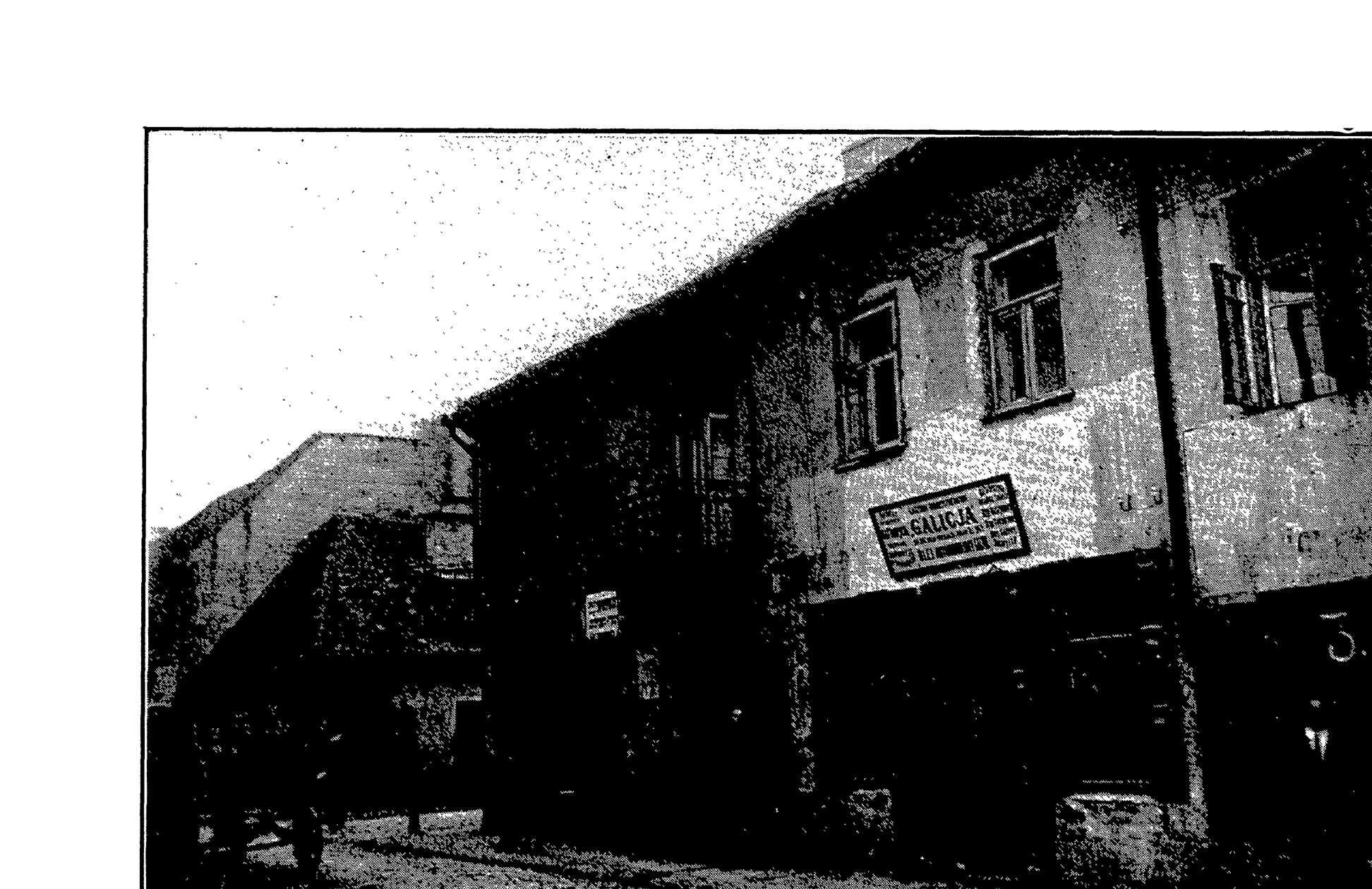
(In the original: a photo plate between pp. 56–57)
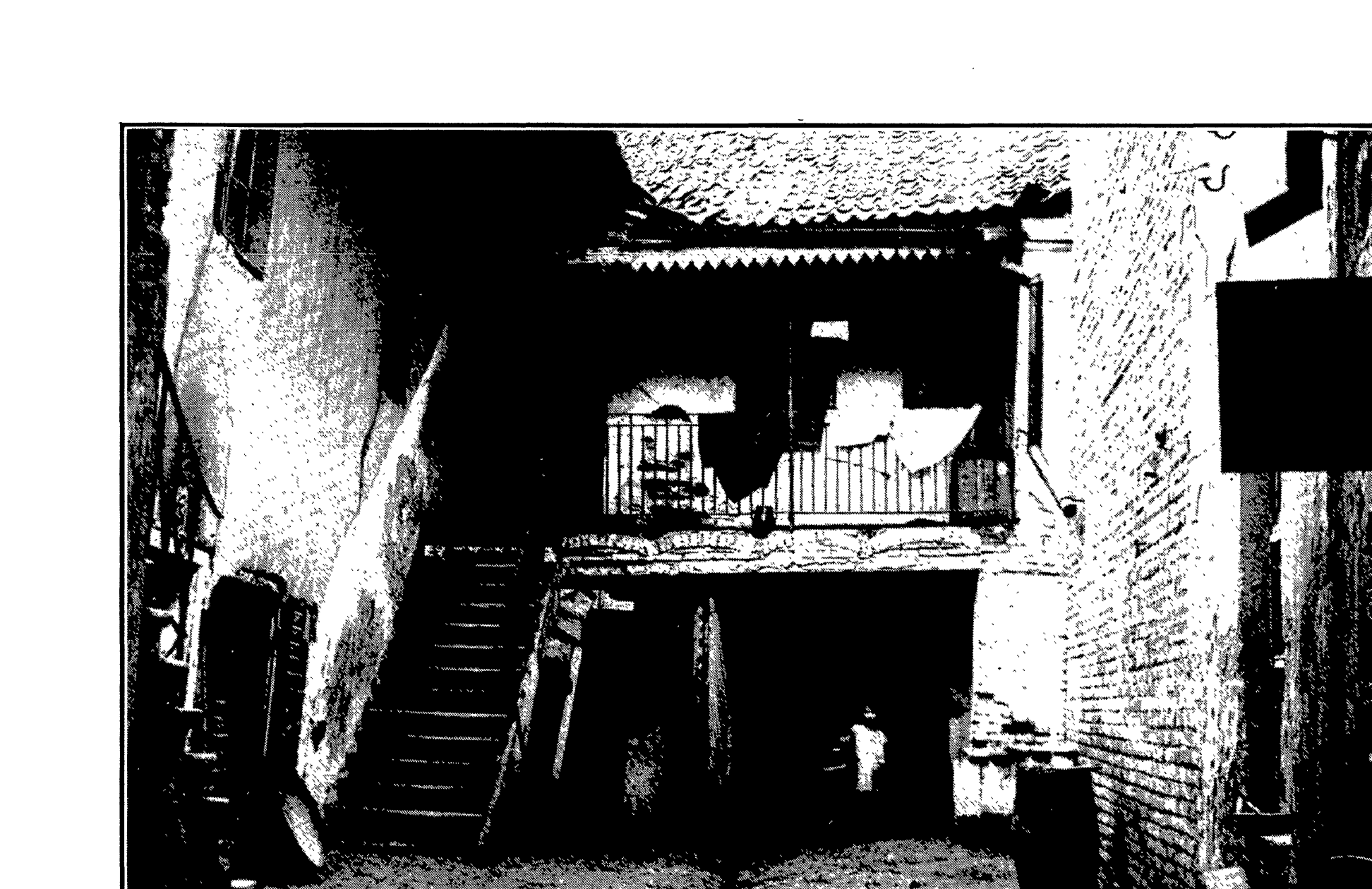
(In the original: a photo plate between pp. 62–63)
In New York the tenants change: one moves out, another moves in. And the houses themselves mostly do not stand long either. People tear down almost-new brick buildings and put up modern ones, with new "improvements." Rarely does one find a family that lives many years in one place, and families who live in one house at the same time do not know one another.
Quite otherwise is it in a town like Vilna. Brick buildings stand there almost for eternity, and seldom does one move from one flat to another. That a family should live its whole life in the same place was no unusual thing. The neighbors are mostly the same; one is constant, and firm mutual relations exist between one and another.
In such a place a definite general character develops, with definite types, with definite mutual relations.
Each courtyard is a separate little town, a separate 55human little world. Here I shall tell of the little world that was called "Zhirmunski's court."
Usually families of different classes lived in the same court. So it was in Zhirmunski's court too. There lived in it poor people, small householders, and a few rich businessmen.
One also found there Jews who could learn a little, and ignoramuses who kept up a genteel "status" and pretended to glance now and then into a holy book, and plain people without pretensions.
The richest man was one named Pines. To him belonged the herring warehouse in Strashun's court. In the business, however, his wife was more active than he. They were dressed better than the other neighbors and held themselves differently, though they showed no arrogance (gayve).
They occupied a great flat on the first upper floor, the finest and richest in the court. The door to their dwelling was on a gallery (ganik, an outer porch), which in my mind was marked as the "rich porch," for there lived a few rich families besides; and on the other side of the court was a second gallery, where poorer householders lived.
Both galleries hung in the bright half of the court, one facing the other — the "rich" one nearer the gate, and the other on the far edge of the court. The steps that led to the "rich" porch were "in the gate," opposite the side door of our tavern.
Madame Pines was a handsome woman, a blonde, with a pleasant smile; and my mother used to say that she was a refined and good woman. When I recall her, her image is in my mind always with 56a great key in her hand — the key with which she would open the gates of her herring-warehouse.
Her husband, not stout and of middling height, wore even on a weekday a white shirt-front (manishke) with a bow-tie and a soft hat instead of a cap.
They had a daughter, a girl a few years older than me; she was called "Feytske"; and that too sounded aristocratic to me. A poor person's child one would have called Feygetske.
A second rich Jew who lived on that porch was an ox-dealer, no longer young, with red cheeks, with jutting cheekbones. I remember the black knob of his walking-stick. He would sometimes come in to us to take a schnapps, and, leaning against the tavern-counter, with his stick in his hand, he would tell my mother or my father something, and sometimes crack a joke.
On the "rich" porch there lived a young man — I do not remember well what he was called or whose son he was. It seems, the ox-dealer's. The general opinion was that he was good for nothing, and by my notions of that time it came out thus: the son of a rich man (gvir) must necessarily be good for nothing.
On the same staircase where this rich family lived there also lived an old couple. Their faces I do not remember clearly. I remember only that their elder son was a "smotritel" (overseer) somewhere in a madhouse. A younger son, Motke, lived together with them. He was about twenty, and perhaps less. He would often do such things that he would be taken away to the madhouse, and kept there several weeks.
No details do I remember, and father, it 57seems, never knew either. But I did know that he was not mad. They would drag him off there as into a prison, to punish him, so that he should behave better. Whenever he came back, he would for a certain time be quiet as a kitten; but then he would let himself go again, and once more wild deeds. Then they would lead him away again.
I see before me the picture of a watchman coming and taking him. Motke would not resist. With his head hanging down, cowed, he himself would stretch out his arm to the watchman, and the man would lead him away. A great circle of onlookers would gather. I would look on, and the scene would utterly unsettle me.
In the middle of the lit part of the court, right on the pavement, were three doors, which led to three separate dwellings. In the middle one lived the "podgrabe" (the under-steward), the manager of the court. Gershon he was called, an elderly Jew, lean, with grayish hair. He had some post connected with the contractors who supplied provisions to the prison — the famous "Number Fourteen" of those days; and he would tell what goes on there. A son of his, a young fellow who never had anything to do, would often come in to the various neighbors. He talked a great deal, mostly with a smile, and would tell the wonders of Shabes Zhirmunski, the landlord of the court. Zhirmunski himself I think I never saw.
Another of the three doors led to Lipe the brushmaker, also an elderly Jew, with a pointed little beard, so tiny and so sparse that enemies would 58call him "Lipe thirteen-hairs." His portrait has stayed in my mind with a skullcap on his head and a pipe in his mouth. A brushmaker he was not really. He only dealt in hog-bristle, which was combed out in his home and prepared in round little bundles.
He had money. His wife, his second wife, was younger than he. Learn he could not; but he held himself as if he were a learned Jew. My father used to mock the way he would say: "In the early morning, when there is time, I learn myself a little bit." The word "a little bit" my father would mimic.
Lipe was a cantor — one of the lesser cantors of the town — and before the High Holy Days the whole court would hear how he rehearsed with his choristers. People would, however, listen more to Leyzer Henekh's choir, and then R' Lipe's three or four voices only got in the way. For that very reason this point — how the two choirs ring out together — is firmly fogged over in my memory.
He and his wife were hospitable people, and at their place was a kind of gathering-place for the whole court. Friday night people would welcome the Sabbath there. They would come together while it was still light. They would sit and chat or tell each other stories. Then Gershon the podgrabe would tell about "Number Fourteen," and about the Castle Hill, where every day, at exactly twelve o'clock, a cannon was fired so the town should know the right time. (That was then still a novelty. I remember how it was introduced. And I remember how at twelve o'clock my rebbe would look at the wall-clock to see whether it ran right. Throughout the whole 59town people would then look at their clocks and set them by the "shot.")
The podgrabe was one of those who carried a watch (my father did not yet possess such a luxury), and speaking of the shot on the Castle Hill, he would take out his watch and say with pride that it goes "exactly with the shot." And a few of the neighbors would afterwards mimic this.
On the winter evenings, from Chanukah right up to the eve of Passover, people would play cards at Lipe the brushmaker's. My father often took part, and I would always stand beside him and watch. They always played "ake" (a kind of shortened poker). The cards I did not understand; only once, when my father had four aces, I felt that it was something unusual. I was so astonished that I cried out:
"Oh, papa!"
He gave me an angry look, and with that he only made it worse. The others immediately "fled" (folded).
Sometimes at the cards unpleasant scenes occurred. People quarreled, shouted at the top of their voices. Mostly the scandals arose because of a certain participant who did not even live in Zhirmunski's court. He was a young man with a little black beard, a pauper of a Jew (kabtsn) who earned three rubles a week as a collector at a beer-brewery (I remember the figure quite well), and when the card "season" began, he would sit up whole nights and play. How he could manage it, I do not know. Sometimes he would "wangle" (cheat), and when he was caught, an uproar (mehume) would arise. R' Lipe drove him out a few times. But he would come back.
60My father never took part in the scandals. At such scenes he would grow ashamed and quietly slip out of R' Lipe's house. So that mother should not know how much he took with him when he went to play cards, he would watch for a moment when she was not near the cash-box. I do not remember that she ever hindered him; but a regular player he was not, in any case.
In the third of the three lower flats lived Shmerel Prus, a deeply honest, pious man. He was a Jew of, probably, thirty-some years, with black hair, with black eyes that had such an earnest look that I always thought he was angry. His wife was quite another type. She would have gone without a wig, had she been able; and her children she wished, right from the start, to raise in the modern style, only at first she could not carry it out.
She was a clever and a beautiful woman, and all their children were beautiful. The eldest girl, Rozalye, a girl of fourteen or fifteen, was a beauty. The eldest boy, Moyshke, also a handsome one, was a friend of mine; I would often come in to them.
Once, before the holidays, there occurred at home a debate over a little coat (kapotke) that was being sewn for Moyshke. The mother wanted him to have a shorter one made, and "to the figure" (fitted to the waist), but Shmerel ruled (paskenen) that the coat should be a long one and very wide. The closer to the ground — the wider; the less modern, that is. And so it remained. (Some years later it all turned over; the wife prevailed. The children 61began to study, and everything went on in the new manner.)
Shmerel was a bookkeeper at a rich brandy-dealer named Fayve Sviadoshtsh, who was also very pious. Sviadoshtsh dressed modernly, and his wife too dressed by the latest fashion. But they had a name throughout the town for their piety. My father used to tell that on Chol HaMoed Passover, Sviadoshtsh did not write, because ink is leaven (chometz).
Among those who lived on the poor porch was a blond ritual-slaughterer (shochet) and his brunette wife. He limped on one foot, and she was a "shapetke" (a stammerer). One always saw him in a black worsted kapote. He was a quiet man, and she — a merry, lively one. Often, telling a droll story, she would fall to stammering. But she would not lose her good cheer and would finish with a laugh, as if her stammering were a part of the joke.
On the same porch lived Shmalin the scribe, one of the well-known teachers in town. He had a dark face, very black hair and beard. Today I would say he looked like a Mexican. Once he saw me sitting and writing. I longed to be able to write like Itse Gordon, and I used to practice until late at night, artfully shaping the letters and copying the same ones dozens of times over. I was convinced that I had a wonderful hand. So Shmalin came upon me at one of my endless exercises. He looked closely, gave me a stroke over the head, and said:
"Eh! You write quite not-badly already!"
62And to my father he remarked: "For a boy of his years it's really not bad." It was as if he had doused me with cold water.
In a corner, under the poor porch, lived a goose-dealer, a hale young fellow with a little blond beard, who had a habit of often giving a hitch with his right shoulder. He liked to eat kvashene in our tavern. He was a simple man, and he held himself for a simple one.
One neighbor was a jeweler, or a "dubelirer," as people used to say in Vilna. A courteous young man with a little blond beard, and compared to most of the neighbors he was dressed neatly and somewhat modernly. He was married, but how his wife looked I do not remember.
Of one family that lived on the poor porch I remember clearly only a boy. Eyzke he was called. He was older and bigger than me, but we were constant friends. In part I also remember his eldest little sister, as if through a fog. He was a decent, a good one. He often made jokes, but always in a quiet, well-mannered way.
The husband of a young little-wife, who kept a provisions-shop in Zhirmunski's court, was, by my present understanding, the most interesting of all our neighbors. Had the other inhabitants of the court known the word "type," they would have said of him: "There's a character!"
His name was Elye, but my father called him nothing but "Elyetshke." He was a traveling clerk (prikashtshik) for a holy-books (seforim) business, and would often 63visit far-off provinces. For Passover and the High Holy Days he would come home for a longer time; in mid-winter or summer he too would show up, but mostly only for a few days.
He was a young man, with no ugly figure and no ugly face, fair-skinned, and he always went about full of life. When he gave a smile, beautiful white teeth would gleam from his mouth. He was a truly religious man, a flaming-religious one. He burned with piety and at the same time burned with the joy of life. By this he drew attention as a Hasidic character, and people called him a Hasid, although he was a misnaged (an opponent of Hasidism).
Today, when I picture him before me, with all that I saw and heard of him, I would say that with his head he was a misnaged and with his heart — a Hasid.
He was often in Poland with his holy books. He used to pass time among the Hasidim there, and always told of their fervor (hislahavus), and of the spirit of brotherhood that exists in the court of one of their good little Jews (a Hasidic rebbe), and of their liveliness and merriment, of their delight both from praying and from a little glass of liquor.
My father used to mock these descriptions, and the Hasidim he used to revile. But I believe he did this not out of conviction, only as a "party man."
Often, behind his back, people would call the provisions-shopkeeper's husband "Elyetshke the madman," although, as I now understand, he was clear as the clearest and smart as the smartest in Zhirmunski's court.
On Simchat Torah he would dance, leap and sing, 64turning the world over; and in this it was again a mixture — a flame of religious inspiration with a flame of zest for life.
Although my father used to mock him, they were nonetheless warm, good friends, and would often spend time together. They could learn much better than the other neighbors. Perhaps that united them. But that was not the only thing they had in common. My father by nature was also a great enthusiast, also an inspired pious-man, only a good deal more settled and sober than "Elyetshke."
On Simchat Torah my father too would dance and sing, but not so wildly as he. Then, under the influence of a bit of brandy, they would call each other "Elke" and "Shatske," as if they were two cheder-boys.
Once, on a Simchat Torah, when they and other Jews of the court were carousing at our house, Elyetshke, dancing, snatched the wig off the head of Lipe the brushmaker's wife. Then there was an uproar. Elyetshke apologized a thousand times. People made a great to-do over the affair. They said that from Elyetshke the madman one can expect anything.
When my father was "tipsy," as he would put it — and that happened only on Simchat Torah or at some celebration — he would, singing a merry hopke (dance-tune), begin to weep. Then Elyetshke would drag at him and shout:
"One mustn't weep today, Shatske!! Sing, you heretic (apikoyres)!"
When Elyetshke was at home, and he came in to Lipe's for the Sabbath welcome (kabbolas shabbos), he would tell of his 65travels, and everyone would listen as if spellbound. I remember how he depicted a merry bit of horseplay in the bathhouse among the Hasidim, in a deep-Polish little town, and how they stretched him out and "hacked into him" in fun.
Once at Elyetshke's home a thing occurred about which people afterwards talked through the whole Stefan-Street neighborhood.
His wife's little shop opened onto the street, like our tavern, only on the other side of the court, at the very corner of the back lane. And Elyetshke's dwelling consisted of three tiny little rooms, which stretched out behind the little shop.
One of these rooms they rented out. For a certain time it was occupied by two students of the Vilna Rabbinical School — a ten-grade institution where young Jewish men studied to become teachers or government rabbis (kazyone rov), and where everything was taught in Russian.
Once, on a Sabbath afternoon, from that room there showed itself the smoke of cigarettes.
Elyetshke wished to go in to them and make a scandal. But the door was bolted from inside. He began banging on the door, shouting, cursing, so that people came running from the whole court. The "rabinchikes" (the little rabbi-students, said mockingly) neither opened nor answered. Elyetshke kept banging on the door, but to bang too hard was a danger — lest he break open the door on the Sabbath. So instead he took to bombarding harder with his tongue. He fulminated, he stormed. His voice could be heard over the whole marketplace.
The "rabinchikes" held their breath and kept silent. The siege lasted a good while. At last the besieged gave in. The next morning they were forced to move out.
66A sukkah would be built for the whole court, with the exception of the Pineses and the ox-dealer, who had a separate sukkah on the "rich porch."
The big communal sukkah was set up in the court. And in it stood two big tables, knocked together from boards with empty barrels in place of legs. My father built it — he above all loved to do handiwork — with the help of Elyetshke and the boys of the court. On Yom Kippur, after Neilah (the closing prayer), when father came from shul, he would at once hammer in "the first peg."
The meals in the sukkah, chiefly the first Sukkot supper, gave me almost as much happiness as the Passover seder. In a certain sense, even more. All the families sit together. It is festive, it is merry — and it is unusual, that is the main thing. Everyone sees what is served to everyone else at the table. Each housewife outdoes herself. Here one makes kiddush, there a second, there a third. The heart trembles with curiosity and interest.
The kiddush in the sukkah the first evening was for me like the most precious overture to an opera. The heavenly excitement that would seize me then I can never forget.
The women and girls mostly did not sit in the sukkah. They were busy serving the men and boys at the table. But there were a few exceptions. And one of them was the shapetke, the wife of the blond shochet. Who served them the food, I do not remember. She always sat with her husband in the sukkah. There she sits with her black wig beside his blond earlocks, cheerful as usual. She looks into his eyes every little while. She worries 67over his every morsel. She makes little cooing fusses over him like a mother at a child.
The other women, noticing this, gossip about her afterwards. "She wants to show that she loves him so," they say among themselves. But there is no venom in their gossip, for the shapetke is beloved among them.
After eating, there is singing, and one feels festive in another way. Elyetshke lets himself be felt with his merriment, with his shining pious face, and my father with his high, strong tenor voice. Lipe the brushmaker sings along with cantorial pride.
I always begged God that the sky should be clear, for when the smallest drop drips through the s'chach (the leafy roof of the sukkah), there comes a pogrom: they snatch everything off the tables at once and carry it indoors. What a bitter disappointment that used to be!
Father had a new sleeping-bench made.
In New York one buys everything. In Vilna one would have everything made. The new sleeping-bench was painted red, and with its redness it filled the whole room. To me, at least, it was literally enchanting.
I could not tear myself from the sleeping-bench, and not only the first few days, but a long time afterwards.
The spell of its fresh redness did not stop me from writing on it with chalk. On the contrary, it even drew me to it all the more. And — I do not know why — mother let me. She had a reputation for being a 68tidy, fastidious one; yet she let me. Probably she had too many cares on her head to notice it.
The sleeping-bench had a board against the wall to lean on, a big thick board with cut-out shapes on both sides.
This red board I used as one uses the blackboard in a class. I would cover it with words and paint it with little men and other figures — a little circle with four little strokes for a little man, and a similar daub for a bird or a horse.
I would write and make, and write again, paint and make. What I wrote or painted — not the faintest memory of it has stayed with me. While writing I would think and dream and imagine crazy things to myself. But I am not sure they had any connection with the words or the "pictures." I came to believe that the hand worked on its own and the mind on its own. A few fantasies, however — which used to spin in my seven-year-old head — did remain in my memory. Here are a few of them:
I picture to myself a field, and from afar columns appear in the shape of chimneys, such as those I saw when we moved over from Podbreze to Vilna. Through the fields go Joseph's brothers (they look like the Jews who cart the barrels of brandy into the cellar, of Uncle Arye-Leyb's). They go and go, until in the distance there appears a handsome boy, with black hair. That is Joseph. The fields never cease going on, and they keep on never coming up close to Joseph. The columns are both very far and quite near, and they are so beautiful! The brothers ask: "Is this Egypt?" And I answer them: "Yes, this is Egypt, and Joseph is the viceroy (sheyni la-melekh)!"
69A whole evening I would spend so, writing, painting figures and dreaming about the columns with Joseph's brothers. As in a coop I would sit with these fantasies and picture them with my face to the red board.
Often of an evening I would imagine the sea. I thought it was in Kovno, and in my fantasy it looked like the stretch of the Vilia as I once saw it from the green bridge, when father took me there. Upon this sea go "ships" (okrenten) with merchandise belonging to my father. Each ship looked like the ferry that went from one bank of the Vilia to the other, and the cargo consists of barrels of herring and sacks of grain. Father is a great merchant. He has much money, and of Uncle Arye-Leyb he is not afraid.
Another dream — that used to take hold in my mind while I daubed with chalk on the sleeping-bench board — were the flies that flew about the room. These were imagined as wicked men (resho'im); later I divided them: some flies were wicked and others righteous (tzadikim). They wage wars, and the righteous win, naturally.
I used to catch flies and torment them, as all boys do. I would stick a straw into a fly and let it walk that way over the table. This meant that it served me like the Jews in Egypt. Or I would put several flies into a little bottle, blow smoke in there and stop it up; these flies were always the wicked. For example, one had in it the reincarnation (gilgul) of Pharaoh, a second of Haman, a third of the Russian governor-general, who was bad to the Jews in Vilna.
Father used to tell me tales from the "Book 70of the Upright" (Sefer ha-Yashar) and from "Josippon" (Yosifon), and I would listen with hastily-pounding breath; these tales would re-work themselves in my fantasy and dress themselves up with flies and bees and butterflies instead of people. Later I read the Sefer ha-Yashar myself.
Podbreze long went on haunting my young imaginative power.
I would often see the little town as if before my eyes, with the meadow that lay not far from our house. The three kinds of little flowers that I knew in Podbreze (without names) used to present themselves to me in Vilna. In my seven-year-old fantasy they took on the shape of people and whispered among themselves — all by the red sleeping-bench.
On the stove-ledge (lezhanke) opposite the sleeping-bench was the home of a little kitten, a yellow one, but a pretty one. And even when she grew up, she was not very big either. I became attached to her, and would play with her for dozens of minutes at a stretch. And my games with her also had the character of fantasy. She was not a kitten but a person. Sometimes she was the hero of my story, sometimes the hero of another, but always she took the role of a righteous one. Sometimes I would play with her on the stove-ledge, and sometimes I would carry her over to my sleeping-bench and there fantasize with her.
Once she vanished; someone had taken her away. I longed for her with a sharp, painful longing. I cried, begged my father and mother to seek her out and bring her here. But they had no idea where she had gone. A good while later I recognized her on the street 71somewhere. I ran to her. But she no longer knew me, and for a few days I suffered pain from it.
At our place a Jew named David used often to stop, who was known as David the flax-worker, by his trade. He used to sleep on the stove-ledge, and paid no lodging-money. He had been friends with my parents since Podbreze, where he too had once wandered, and at our place he was always a welcome guest.
He now wandered about in Trok (Troki). In one place there was no steady work at the flax-trade. So he would work today here, tomorrow there, and when he had something to do in Vilna, his quarters were with us.
A short man, a lean one, with short gray hair, a clever face, and quiet clever talk, often with a joke, he was a popular figure in the tavern. He must then have been a Jew of about fifty. On me he made the impression of a good-natured man. But at home, in Trok, he often grew angry, and then he would express it in a sharp manner, yet even in that there lay humor in him.
My father used to tell various little tales about him, and of them I remember the following two:
R' David puts on a "yoke" with two pails and goes for water. He comes back with full pails. But he finds that the water-barrel is covered. His wife had forgotten to take off the lid. In David the anger flares up. But he does not shout. He hates shouting. He pretends as if the barrel is open, and he simply pours the water over the lid. So he emptied both pails. In the entry-hall there was 72a flood; the wife comes running, makes an outcry. But David keeps silent, as if it is not he who is meant.
Once, on a Friday night, when he came from shul, he did not find the table set. No challah to make kiddush. The wife at that moment was not in the house. When she came in, she heard someone singing under the table. David sat there, on his knees, all hunched up, and made kiddush.
At times, when no one was at the cash-box, I would steal a kopeck from there, and sometimes more too. Once mother caught me.
"What are you doing at the cash-box?" she asked in a stern tone.
"He needs to change a ruble," R' David remarked.
My mother began to smile, and her anger broke.
Those who knew him superficially thought that he himself was never cross or out of sorts. It was a mistake. He knew how to hide his true mood. Inside, in his heart, God knows what might be churning; outwardly, away from home, he was always good-natured and full of humor.
He was a popular figure among all the Podbreze folk who lived in Vilna. They held him for a wise man (khokhem) and used to take counsel with him.
One of the market-folk once said to me:
"Why are you so deep in thought? Whole days he sits and thinks."
"He's worrying lest his ships sink on the sea," remarked R' David.
I did not understand that this was only a turn of phrase, and his words astonished me. From where 73does he know about my "ships"? — and if so, he probably also knows about my barrels of herring and sacks of grain (tvuoh)? I was sure that he understood what was going on in my heart. From then on he too became a great prophet (novi) for me. Now I understood why people held him so wise.
Khatskel's cheder, my third cheder in Vilna, was on Savitsher Street — again a bit too far. But, first, I was now already eight years old, and second, my aunt Fayne lived at the edge of Glezer Street, near the "platz" (the square), and that was a two-minute walk from my new cheder; so I would sometimes eat my midday meal (dinner) there and save myself the whole way back in the middle of the day.
By the notions of those times, Khatskel was a melamed of a progressive sort. He had quite small earlocks and was dressed almost in the "modern" style. Tanakh he taught a boy with Mendelssohn's German commentary (the Biur), partly with the German words and all. And one did not chant the words in the old-time Tanakh melody, but declaimed them.
Some years earlier the government had compelled every melamed in the Vilna region to buy the whole Tanakh with Mendelssohn's "Biur" and with the German translation, and indeed in German letters.* The translation was
* The government did this under the influence of the Jewish intelligentsia, who regarded the Jewish (Yiddish) language as a jargon, as a tongue of ignorance, and who had, for their part, found themselves under the influence of the "Haskalah" (Enlightenment) movement among the German Jews of an earlier generation. Later, when the Yiddish theater appeared in Russia, the government for a long time did not permit performing in Yiddish, unless one ostensibly transformed the Yiddish into German.
74set separately, and most melamdim mocked it. They only allowed the loshn-koydesh (Hebrew) text to be bound together with the Biur.
The leaves with the German were left to molder in the attics or in the cellars. In any case they could not read them. My father had brought back such a packet of German sheets from Podbreze, where he had been a melamed, and I used to see them at our place up in the attic, above the cupboard.
The same translation was later printed in Hebrew letters together with the loshn-koydesh text — that too only the "modern" melamdim used. And it was just such a Tanakh that Khatskel kept in his cheder. Often, in the middle of learning, he would stop to glance into the German. He would try to pronounce the words like a German, and we would repeat them after him just so.
The court was very narrow and long. At its farthest end a coppersmith would hammer great copper kettles — the only coppersmith I had seen living in Russia. He worked together with a young journeyman craftsman, and the copper-ringing blows of their hammers would drum in our minds while we sat and learned.
I grew accustomed to it. The beat of the two hammers became for me a musical accompaniment to the declamation-tones with which Khatskel used to teach us "Isaiah" (Yeshaye). And so it has stayed firmly in my memory. When I recall a certain verse from 75Isaiah, it comes back to me to this day together with the coppery echo of the hammer-duet.
With Khatskel I began to learn Gemara. We learned "An ox that gored a cow" (shor shenagach es haparah), Bava Kama, and in Tanakh we learned "Isaiah."
When one of his acquaintances would visit the cheder, and he spoke of his pupils, he would wink toward us who have "good heads." I was one of them. But that did not stop him from poking me in the side and shouting: "Go on, you treyf bone!"
When he said this he would grind his teeth and make a face like a robber (gazlen). So he talked to all the boys, to the best as to the worst; whether with a reason or just so.
The youngest pupil in the cheder, and the smallest in stature, was a boy named Hirshke (his family name was Bielikov). He had rare gifts. But instead of admiring him, Khatskel would beat him precisely more than all the other pupils. "I'll do you violence!" he would menace him, and he would carry it out too. He had a kind of "sadistic" passion for tormenting that tiny, scrawny little one. And the quicker he grasped the Gemara, and the better he remembered and knew it, the more Khatskel would pick on him. He would pinch him, twist the ear, pull the hair. And Hirshke would rarely let out a cry, and this irritated the rebbe all the more.
Hirshke's parents lived a few steps from us. His mother kept a spice-shop at the 76beginning of Great-Stefan Street. It came out almost opposite our tavern — on the other side of the "little market." Their dwelling was behind the shop. I would come in to them. Once his father, Leyzer, began to question me about our cheder, and whether Khatskel beats the children. But about the cheder we gave nothing away, neither Hirshke nor I. Glike, Hirshke's mother, came in to put me to a cross-examination. She did not get it out of me. But she got at the truth through other sources.
Then she came in to us and complained to my father that Khatskel is murdering the children, and she demanded that my father intervene.
How it ended I do not remember. To take a child away from a murderous melamed was no such easy matter as my readers might think. A cheder, the whip and all, was sacred. Just as the boys did not dare give anything away about the cheder, so most parents did not dare hinder a melamed in fulfilling his duty as an educator.
And how can one fulfill such a duty without whippings, pinches, or cuffs? When parents demanded of a rebbe that he not lay a hand on their boy, it was taken to mean that they were "spoiling" the boy; that they were letting him run wild; that he will grow up a nobody. And to draw a boundary between "respectable" whipping and the savagery of an "executioner" was not easy.
The room on Savitsher Street where Khatskel kept his cheder he rented from a family. His own flat was elsewhere. In the morning he would bring along two "black little cakes" for a snack, and he would eat them in our presence. I used to watch how he ate them, and it seemed to me that more than anything he relished the flour with which the dark, soft little cakes were dusted. He had no spread for the cakes.
His midday meal his wife used to bring him — a young, dark-complexioned woman, a melamed's daughter. Her brother, 77Berke, a handsome, very charming boy, with a fine little voice, was one of the pupils in Khatskel's cheder. There also learned a son and a grandson of Leyzer Henekh's — Moyshe'ske and Yankele. Of the others I remember Shefetske Mitskin, a boy who was born in Podbreze, like me, and one day before me. My father used to remind me of him — and Shefetske is also my "ben-gil" (one of the same age) — that we were "baked" at the same time.
There was a boy at our place who came almost every day late, each time jumping into the cheder with the words: "It's only half past nine! May I be so healthy!" His father reckoned himself the greatest scribe (sofer) in the world. He had only one customer, Moses Montefiore. The famous English Jew used to order Torah scrolls (sifrei-Torah) from him, which he would then send off to various communities (kehiles).
I also remember the water-carrier, who used to bring a "barrel" of water to the cheder every day. He had monstrously large nostrils, and he would perform a trick: spread them even wider, all the while making an idiotic face. With this he would amuse us, and we would provoke him to do it.
Apart from the question of whether it makes sense to teach an eight-year-old boy "An ox that gored a cow" — what gymnastics it was for the mind! — I remember how my young brain (markh) began to unfold in Khatskel's cheder.
Once, a Friday, we came to the cheder and did not find the rebbe. We waited and waited; no rebbe. He showed up only in the afternoon. As I heard afterwards, he had spent the night 78in a gambling den (kartevnye), and the police had made a raid (ablave) on the place and taken everyone off to the precinct (utshastok, the police station).
"Oh, what a piece of work he is!" my mother said about him.
People also said that he was too quick with a schnapps. Nevertheless they did not take me away from him.
He was a good melamed. He was a capable man, with intellectual interests and passions, for which his melamed's little world was a prison. So he sought to forget himself in cards and in brandy.
I studied at Khatskel's three terms, and then I stopped going to him, only because father decided that I should now have a higher Gemara-melamed.
It was not the end of a term.
The grain (tvuoh) in the fields was in danger of withering. It was decided that all the boys should once more say Tehillim (Psalms). The prayer of children is more welcome before God.
I remember the scene: the mass of boys, how they stood in groups, the melamdim, the ringing Tehillim-choir of young little voices, the light that came in through the colored windows, with the pious pupils, with whom I sang out the words to God.
When we were already going back over the big, wide steps of the synagogue, several boys began to sing: "God, God, give us rain for the sake of all the little children!" But they were stopped at once. A prayer 79sung in Yiddish is no prayer, but a piece of mischief, it is held.
When I recall this scene in the Great Synagogue, I also recall a certain scene in our own house, in winter, on a Friday night. We sit at the table as usual, but without the usual Friday-night dishes. No fish, no lokshen (noodles), no meat, no tsimes! Challah with fried herring — that is all that mother set out.
But we were not the only ones who did not have the Friday-night dishes that Friday night. In all Jewish houses it was so! In the richest as in the poorest.
Challah the next morning too, the same: instead of cholent with kugel — challah with herring.
The community (kehile) was short of money, having nothing with which to furnish soldiers for the "levy" (nakhbar, the recruitment quota). So the moyre-hoyroes (halachic decisors)* issued a summons that that week no one should "make Shabbat."
* In Vilna there are no rabbis (rabbonim), only moyre-hoyroes (halachic decisors).
And what a family usually spends on the Sabbath should be handed over to the community. And should anyone wish to say: "I can both pay the price and make Shabbat!", that should not be permitted him. He must not put to shame the poor man who cannot afford to spend on two Sabbaths in one week.
As far as I heard, the ordinance (takone) was strictly fulfilled.
That Friday night at the table my father with enthusiasm explained to me how beautiful it is that here all the Jews sing out, sacrificing themselves (makriv) for a communal cause, and all alike: the rich man should be no more a man of consequence (yakhsn) than the poor. I do not, of course, remember the words he used.
80But the sense was as I render it here. In later years, when I was already a socialist, I would recall this with a special interest, although my father was as far from socialist ideas as from algebra.
Why does that herring-Shabbat in my memory always go together with the children's Tehillim-choir in the Great Synagogue? I believe their communal content binds them together.
One of the curious and powerful figures in the history of Vilna was a self-made rich man (gvir) named Moyshe Apatow. He died while I was learning at Khatskel's, and I saw his funeral. This Apatow, who had once been a common servant, had then worked his way up to the standing of a mighty contractor (podriadtshik).
In America such a transformation is an old-fashioned phenomenon. In Russia, however, it was a sensational rarity. But Moyshe Apatow was by nature no three-for-a-groschen little Jew; he was an unusual personality. And he had a peculiar humor of his own, which would show itself in piquant, coarse-witted forms.
Some of his deeds are famous. Many anecdotes remained behind about him, and not a few legends. I used to listen to these anecdotes while he was still alive, and people would say that the whole city trembled before him.
His funeral took place in a slashing rain. And I watched it from my aunt's window, on the corner of Glezer Street and the "Platz." I remember the rain-flood, a forest of opened-up umbrellas, and the black "box" (the hearse).
81I was always turning about among grown-up people. Around me people talked about everything in the world — not seldom about things which, in the presence of a little boy, one usually does not speak of.
One of the Kovno coopers, of those who had had a little learning, once talked with my father about intimate relations in family life. I was then between eight and nine years old, no more.
Their talk took place at the table that stood beside the sleeping-bench, and I sat, or stood, nearby. I listened to their every word. They did not drive me away. They probably thought that I would not understand anyway what they were saying. But I understood more than they imagined.
I did not yet truly know everything; but I already knew that between a married couple things take place that the unmarried may not do, and that no one should see it. I also knew that there are times when a man may not touch his wife, may not even take a spoon from her hand. I knew that of such things one does not speak aloud and not before everyone; and at best it is a secret conversation. And that was the chief reason why it interested me.
The conversation was a serious one. The cooper told my father about the intimate things as one tells a doctor. For the first time I heard such details. But still not everything.
82A second time I stood by a similar conversation, also at that table, between Uncle Shneyur and my father. But Uncle Shneyur was quite another sort of fellow. He drove me off at once, and as he did so he explained why I must not listen, and named the matter in such a way that my father grew ashamed, and I fled as from a fire.
Small as I was, I had nonetheless already understood that Uncle Shneyur takes a treyf (illicit) pleasure in the ugly word itself; that this was why he put it so, and not in a more decent manner.
The handsome, healthy goose-dealer, the simpleton (prostak) who held himself for a simpleton, once talked with my father about the times when he keeps apart from his wife for a certain period, according to Jewish law (din) — that is, the laws of niddah (the menstrual separation). Father sat at the cash-box, behind the talker, and I between the two of them.
"At that time I loathe her like a pig," he said, "I can't even look at her."
Some years later, when we no longer lived in Shabes Zhirmunski's court, I once met the goose-dealer on the street. I recalled that statement, and how he had made a point of keeping away from his wife for a certain period. I thought to myself: he wanted to show my father that he is an honest Jew and keeps the laws. But all he had really shown was that on the relevant days he stays away from his wife not because he is an honest Jew, but because she is then simply repulsive to him.
My friend Eyzke's sister got married. Then Eyzke made to me a mischievous remark — a rhyme of sorts — which explained to me what I still did not know. The rhyme had a 83very indecent meaning. Eyzke, however, uttered it in his usual unbuoyant manner. From the phrase everything became clear to me at once. And here too my interest consisted only in the curiosity to know what one must not know. No other feeling was present at it.
And I do not at all believe that I knew that grown-up people have another feeling. I did not know, and I asked no questions.
Once, one afternoon, a certain time later, I was at the podgrabe's home (what I was doing there, I do not remember). Besides me there was the podgrabe's son and the young fellow from the rich porch; no one else. The rich young fellow was already a bridegroom (khosn), and his wedding was to take place in a few days.
Speaking of the coming celebration, the podgrabe's son expressed himself with a coarse-fellow's wit, supposedly in a jolly-young-blade manner — as he often liked to talk. The rich bridegroom took it without offense, but without a smile either. To me then the joke was nauseating.
In Zhirmunski's court there were two little Esthers (Esterkes), both a few years older than me. One was the podgrabe's daughter, and the other the brushmaker's. They were both good, gentle children, and from them, more than from the older girls, I felt a physical particularity by which they differ from boys. I felt that in their little bodies, as well as in their little voices and manners, they have a tenderness which we, "males," do not possess.