Chapter Eleven
How Did I Come to the Thought of America?
491In one place, on the threshold of an open door, sat two women, and they directed me to the inn of a Jew named Maskaver, on a large courtyard directly opposite. I went through the large courtyard and came into a guest-house.
I was received by a Jew of middle years, with a careworn face and a thick little beard — the proprietor (balebos).
— Can I stay with you until after Passover? — I asked.
Instead of answering, he asked me back, quietly and mysteriously:
— From the call-up (prizyv)?
His tone sounded sympathetic to me. To tell the truth, I had not prepared any excuse beforehand.
— Yes, from the prizyv — I answered.
He gave a smile and made a wave with his hand, as if to say: "It will be all right."
Maskaver called in his wife. There came in a tall, full, middle-aged Jewish woman, with a brunette face and a bunch of keys at her side. I 492chose myself a room. We came to terms about the price, and I remained there.
The whole time, the name Maskaver had sounded familiar to me. But where I had heard it I could not recall. Finally, on the second day, the landlady herself, without knowing it, solved my riddle. To show me friendliness, she said to me:
— Soon my son Elye will arrive for Passover; you'll be the merrier for it.
With that she told me that her Elye is the manager of a diligence (stagecoach) office in Nevel.
She was sure she had announced to me a joyful piece of news. In truth it was the reverse. The name Elye Maskaver struck me like a thunderclap. I at once recalled who the young Maskaver was.
The reader will remember how on Sukkos — that is, half a year earlier — Zilshteyn and I were guests of Tratski and Yungovitsh, in Nevel, Vitebsk gubernia, and how the town had been so stirred up by our visit. We were, after all, something of "chinovniks" (officials), and we had paraded about in our blue caps with the cockades. The most important householders of the town had invited us to them — one to dinner, another to an evening. It was a lively world. And when we walked along the street, people used to stop and stare at us.
Therefore there was now no question for me that the young Maskaver, the manager of the Nevel diligence office, had seen me and looked me over more than once. Besides: when we left Nevel, he had sold me the tickets to travel by the diligence (as far as Vitebsk). Nor was there any question for me that he had heard about my flight 493from Velizh, for Nevel is, after all, the same gubernia; and the sensation had presumably spread.
It was quite natural to believe that when the young Maskaver found me in his father's house, he would take fright and tell his parents who I was. Most probably the family would ask me to take myself off. Whether yes or no, I had no wish that anyone should know who I was.
That he would recognize me I had no doubt at all; so I resolved to slip away to another lodging, pay the Maskavers for the few days, and disappear before their son came. But I had no inclination to do it. I felt comfortable and at home here, and I had no desire to go looking for another lodging.
This was a large family. And almost all of them were very friendly. I have said that the old Maskaver looked careworn. From worries of livelihood, presumably; but he was a careworn man by nature too. Such an impression he made on me. Two little grandsons of his, a pair of twins, were so alike to one another that once, when one of them asked his father for a kopek, he asked him who he was — Brodke or Khaimke.
As I was a lively, sociable youth, I became a good comrade with everyone, and they with me too.
My room was a good one, and when I did not spend time with the family I used to sit by myself and read. The Maskavers' second son and their eldest daughter, Mirel (a blondish girl, not thin, with a charming, good-natured smile, with which her eyes 494used to become almost closed), went a few times to the town library and brought me Russian books from there. I was fed well, and the books were interesting to me too. So what more was lacking? In short, I put off my "departure" from day to day.
The upshot was that I resolved to stay. And if Elye recognized me, I would deny that I was he. By then I no longer looked at all like a chinovnik. I wore a plain cap; my trousers were tucked into my boots. On my face I had let the hair be cut so that real peyes (sidelocks) remained. I looked like a respectable young man of the old-fashioned sort. So, at least, I thought. Every time I glanced into a mirror, I used to be highly pleased with my "grim" (make-up, disguise). Though, at the same time, it used to give me a stab in the heart, that I looked like a yeshiva-bokher.
In short, it remained settled that I should call myself before Elye by my false name Lipshitz, and play the role of one who does not even know who Cahan is.
One afternoon, already quite near Passover, Mirel comes into my room with a beaming face.
She has a joyful piece of news for me: Elye is already here!
I hope that what I wished her at that minute did not reach her.
She informed me that her brother is now with 495her father in the little office-room, and that her father invites me for a glass of tea. My face took on an expression of the utmost satisfaction, and I went off to disguise myself. She went ahead and I after her. Striding through the corridor, I saw to it that my trousers were properly tucked into my boots; my scarf I wound around my neck, the cap I pulled down, and the peyes I curled. I was almost sure that it would pass off smoothly; for after all Elye was not personally acquainted with me. He had seen me a few times on the street, and once, when I had set off back from his office to Velizh; but my appearance then had been quite a different one.
I remembered him quite well, for I had after all bought the tickets from him, and for faces I have a good memory. Incidentally, he had a special sort of look: it was easy to recognize him: he was very small of stature, with a round little face, with a shortish little nose, with a blond little beard. His tiny stature alone drew attention.
We went into the little room, where the old Maskaver sat with his son.
— Yes, that is he in the flesh! — I said to myself.
I composed myself into my role, and I felt that I was playing it well.
— So this is the young man — says the old Maskaver to his son.
I saw that the young Maskaver was astonished. From surprise he even turned pale.
— What (vu) is your name? — he asked.
From the tone with which he uttered the 496"vu" it was clear that he had heard that I call myself Lipshitz.
— Lipshitz — I answered, looking him in the eyes.
His glance gave a darting fly over my boots, my cap, my peyes.
— Weren't you in Nevel a few months ago? — he asked, bewildered.
— Where, in Nevel? — I make as if the name is unknown to me.
Then he turned to his father:
— If I hadn't been told that this is another person, I would have sworn that this is Cahan, the uchitel (teacher) of Velizh.
— What are you saying? — I asked with a mien of curiosity — Cahan?
He told me that in Velizh there is a teacher by the name of Cahan. And it grew easier on my heart. Since I am still in Velizh, I am after all not I.
The young Maskaver began telling me about Cahan and Zilshteyn and their comrades, the teachers of Nevel, and how they had spent the Sukkos days together; and how the householders of the town had thrown banquets (hulyankes) for them, and what a lively fellow Cahan is.
Right from the start of the journey I had resolved not to deny that I am from Vilna. In any case it would be recognized from my accent. The old Maskaver therefore knew that I was a Vilner; and now, when 497Elye told me that "that" Cahan and all his Nevel comrades had studied in Vilna, I spoke up:
— In Vilna? Why, I too am from there.
I even said that I am acquainted with some of those who finished the teachers' institute, but that Cahan and his Nevel comrades I just do not know.
At this point I became acquainted with the young Maskaver. We often spent time together, and that has a bearing on the story of how I came to resolve to travel to America.
To the Maskavers there used to come a young man from Nevel, a Jew, who was then studying in Mohilev, in a feldsher (medical-assistant) school. His name was Trofanov. Elye had brought him a greeting from his parents, and he, Trofanov, now visited him every day. When he heard that I resemble a school-teacher by the name of Cahan, who had spent a week in his birth-town and that this Cahan had been invited into all the householders' houses, he began asking Maskaver whether Cahan had not been invited into his father's house too. Well, it turned out that yes.
That I resemble a person who had visited his father's house was enough for him to take an interest in me. He began telling me about Nevel, and I asked him about the feldsher school in which he studies. At this point we became closely acquainted. He told me out every detail of the life in his father's house. Once, 498talking thus, he mentioned a brother-in-law of his, who was named Spokayni.
This Spokayni had spent many hours with us in Nevel. He was a tall, slender young man with a black little beard, very merry, full of anecdotes and little songs. From him I heard for the first time about the Yiddish theater. In passing, I mentioned in an earlier chapter the Yiddish theater of that time. Here I want to speak about it more fully. It does not, properly, belong entirely to this subject, but indirectly it too has a bearing on the cause by which I resolved to travel to America. And besides, it will be useful to us in the later volumes where I will tell about the Yiddish theater.
In Vilna no Yiddish theater was then permitted. But the governor of Vitebsk gubernia did permit it, and for a certain time Goldfaden's troupe played there, the troupe which then traveled about over Russia. Some eight months earlier, in the summer of 1881, that same troupe had played in Petersburg, on Krestovsky Island. That was in the previous summer, when I too was at my uncle's in Petersburg. But the Yiddish theater then interested me so little that I did not go to see a single one of the performances. Educated Jews then looked above all on the Yiddish theater with contempt. The Russian-Jewish weeklies "Russky Yevrey," "Razsvet" and "Voskhod" tore the plays and the actors to pieces; they made fun of them. The Yiddish theater then did not stand on any high level; but that was not the most important cause. Educated Jews were simply ashamed of it, as they were ashamed of everything that was Jewish.
499If in those years one had used such an expression as "Yiddish literature," the average educated Jew would have burst out laughing. One acknowledged that there is a Hebrew literature, but a Yiddish one?! That would have sounded like a joke. Something similar was the case with the Yiddish theater. One regarded the players as low creatures and their performances as Purim-plays.
Nevertheless, when I heard in Nevel how Spokayni sings Goldfaden's songs and presents scenes from his theater, I became interested. And a few of the melodies I learned from Spokayni. Now in Mohilev, then, when Trofanov told me about his brother-in-law, Spokayni, with his theater-songs, I listened with great curiosity. Through this I became still closer with Trofanov, and he responded to my friendship with eagerness. His home-yearning soul nestled up to me. He told me the most intimate things of his young life.
Once Trofanov confided to me that in Mohilev there is now a man who has come to register young Jews who want to travel to Palestine. His name is Belkin, he told me.
— I tell you this because I know that you too are not just any sort of person — he explained to me — do you think I believe that you are fleeing from the prizyv? Tell me, who are you?
He began assuring me that one can confide a secret to him; but I denied that I have secrets and mockingly made fun of his suspicion. Belkin, however, I did want to see. So I asked him to bring him to me.
500The weeklies "Russky Yevrey," "Razsvet" and "Voskhod" were then full of debates between the "Amerikantsy" (Americans) and the "Palestintsy" (Palestinians). This was after the series of pogroms which broke out in southern Russia in 1881, right after the terrorists of the revolutionary party "Narodnaya Volya" (People's Will) had killed Alexander the Second.
A certain class of educated young Jews had, through the pogroms, come to feel that Russia is not their home and that one must seek a true home for the Jewish people. But where? A part were for America and a part for Palestine.
As a result of the antisemitic riots there occurred such scenes as the following, for example:
In Kiev a group of Jewish students comes into a synagogue which is packed with mourning, weeping Jews. One of the group, a slender university student, by the name of Alenikov, places himself on the bima (platform) and turns to the assembly in Russian:
— We are your brothers, we are Jews just as you are; we repent that until now we held ourselves to be Russians and not Jews. The events of the last weeks — the pogrom in Elisavetgrad, in Balta, here among us in Kiev and in other towns — have shown us what a sad error we made. Yes, we are Jews.
What an impression the words made on the congregation is needless to describe.
501This was the beginning of the nationalist movement among educated young Jews in Russia. And the Kiev students, of whom I have told here, were "Amerikantsy."
Some became so inspired that they almost ceased to speak Russian and spoke Yiddish, though they had already grown unaccustomed to the language. There were also found such enthusiasts who threw away their Russian names and took to using their Jewish names. Yakov, for example, took to calling himself Yankel; Natasha would not answer unless one called her Ettel. The number of such nationalists was, however, small. And I must say that the percentage of Jewish revolutionaries who were carried away on the national wave was also a small one. Therefore one must add the following fact, which sounds today almost unbelievable:
Among the Jewish revolutionaries there were found such as regarded the antisemitic riots as a joyful phenomenon. Their theory was that the pogroms are an "instinctive" outburst of a revolutionary folk-wrath of the Russian masses against their oppressors. The benighted Russian common folk knows that the tsar, the "chinovniks" and the "zhids" suck his blood. Well, the peasants of Little Russia (Ukraine) had for the time being taken a grip on the Jews, the percentniks (moneylenders); that is to say, the revolutionary flame had caught fire, and it will of itself come round to the chinovniks and the tsar himself. Such was the explanation of certain revolutionaries, non-Jewish and Jewish.
Certain members of the secret party "Narodnaya Volya," which a short time earlier had killed 502the tsar, issued a proclamation to the pogromshchiks (pogrom-makers) in Ukraine. In this proclamation they expound the idea which I have conveyed here, and they give the pogromshchiks courage to go on with the "revolutionary" work. They point out that the Jews are not the only ones whom one must take in hand (the proclamation is reprinted in number 6 of "Narodnaya Volya," the official organ of the party).
Among those who composed and edited the proclamation was a Jew.
The Vilna and Vitebsk gubernias lay quite far from the pogrom regions. There reached us only echoes of the events there. But I remember quite clearly the following:
While still in Vilna, before my departure for my post in Velizh, I had a conversation about the pogroms with one of the other members of our revolutionary kruzhok. We had read a tract about the same subject, and I remember that we were in agreement that the pogrom is made against "exploiters," and that it will be a beginning of a revolutionary flame which will finally destroy the throne together with the capitalists, with every form of oppression and robbery.
I was then a raw boy and understood little. I had read a great deal and felt strongly; but no clear convictions and understanding of the world had it yet brought me. My opinions had no substance. I really had no opinions. The truth is that almost the whole revolutionary party then consisted mostly of raw young people; and if its 503leaders were far more developed than I, they were relatively still no more than young "whippersnappers" (shnekses).
Before I go further I want to make one more remark.
I have already said that the pogroms began right after the tsar was killed — a few weeks after. When the bomb struck Alexander, and the land seethed with the astounding news, the revolutionaries had hoped that the deed would serve as a signal for a revolution. As the pogroms began right away, they were inclined to think that this is a beginning of the awaited uprising, only that it takes on an unexpected form: instead of immediately attacking government centers, the masses attack the Jews first. This is only such a beginning, they consoled themselves.
But not all revolutionaries interpreted the pogroms in such a manner. There were such as held a contrary opinion, namely, that the pogroms were made by the government itself, deliberately, in order to save the throne from the revolutionary volcano. The spirit of uprising had really been set in motion, that is to say; but the government diverted the revolution to one side, dragged it away from its proper course; made the Jews into a kapore-hindl (scapegoat fowl): it sought to befog the minds of the masses and to persuade them that the Jew, and not the tsar, is to blame for all their troubles. In this way the peasant was dragged into the antisemitic wave and forgot the true cause of his misfortunes — the despotic, robber government. So a second sort of revolutionaries taught the common folk.
504Then, and many years later, one often heard the expression that the government had used the pogroms as a "lightning-rod"*.
As confirmation of this theory one pointed to the following fact:
Almost everywhere the government, instead of driving off the pogromshchiks, or arresting and punishing them, gave them courage and incited them to new acts of violence. I say "almost," for there were exceptions; but in general the police and other officials behaved scandalously. There were spread reports that the tsar orders pogroms to be made on the Jews. And the government did not deny them; in many places it turned out that the leaders of the pogromshchiks were chinovniks instead of peasants.
No trial was held against them, but unofficially the police and many chinovniks helped the pogromshchiks indirectly, or even directly, and of this there can be no doubt.
But were the pogroms a pre-planned means to save the government from the folk-wrath? To believe that would, in my opinion, have been nonsense. But that, after the pogroms had already broken out, one had such an aim more or less in mind — that is certain.
* Such an iron rod, which is fastened to the roof of a house, and from which it runs into the earth, far away from the building. Whenever the house is in danger of a thunderbolt, the iron catches up the electric force of the clouds and draws it down into the earth, far away from the house.
505The first pogrom, the Elisavetgrad one, was no more than a chance affair. It arose out of a clash between a Jewish tavern-keeper and a drunken peasant.
But right after it, attacks on Jews spread in many other places. Well, it was said that the government had used the Elisavetgrad pogrom as an example and — directly or indirectly — helped make pogroms in other towns and townlets.
And all the further robberies and murders bore on themselves the same seal; it was felt that one hand directs the whole bloody movement. And of this there were convincing proofs.
There were thus founded two parties. The Amerikantsy believed that Jews must found a new home in America, in the land of great means and prospects. The "Palestintsy," again, pointed for emigration to the old home of the Jewish people — to Palestine. Belkin was one of the first "Palestintsy," and he had come to Mohilev to register people who were ready to travel with him to the Land of Israel to found colonies. He was one of the pioneers of the Zionist movement.
I have already remarked that the newspapers of the day — "Russky Yevrey," "Razsvet" and "Voskhod" — were full of these matters.
"Russky Yevrey" I read regularly; so I read there articles about these questions too. But they interested me as a foreign thing.
506Now, however, when Trofanov told me about Belkin and his activity, the matter interested me in a new way.
The name Belkin sounded to me like the name of a mysterious personality. He, and the book in which he registered candidates, excited my curiosity. Besides, I wanted to talk things through with an educated person of this sort. I was cut off from all my comrades and friends, and here there is a certain Belkin, a public worker of the new cut, an idealist, almost one of "ours." Perhaps he can help me with advice or with an address in Switzerland.
The next morning Trofanov came with Belkin.
I saw a young man, not tall, with blondish hair, with an honest face. I apologized to Trofanov that I must ask him to leave us alone, and he went off.
When Belkin and I remained to talk things over, he made on me the impression of a quiet, earnest man, no chatterbox. I came to like him.
He explained to me his idea and his plan about traveling to Palestine. He tried to "propagandize" me; but he saw that his words fall on deaf ears.
After we had thus spent about an hour and I felt that this man I can trust, I told him out the true cause of my journey. My plan to travel to Warsaw to Yatskevich I did not communicate to him. I only said that I am traveling to Switzerland, that first of all I am a socialist, and that in the Palestinian idea I do not believe.
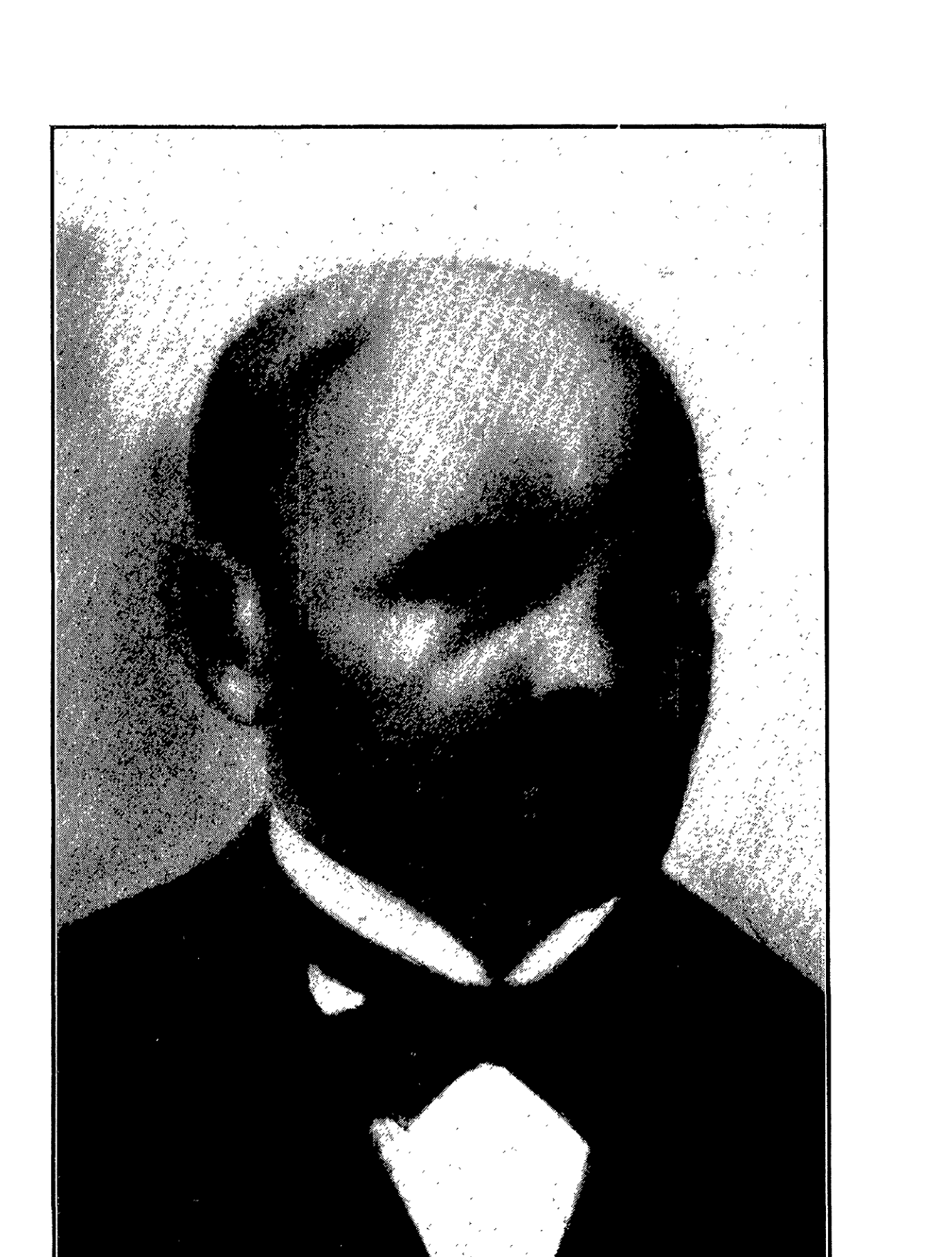
(A plate bound between pp. 506–507 in the original.)
507As far as I remember, the principled side of our debate did not last long. He began to appeal to me in the name of my personal future. I will come back to Russia as a "non-legal," on a false passport, and I will again take part in the revolutionary movement; sooner or later, I will be arrested. I will throw away my life — and for whom? For the Russian people, who make pogroms on us! In Palestine, however, I will help realize an ideal for the happiness of our people, and in doing so I will not risk my freedom and life. And if I want nothing other than to serve my socialist ideal, then why should I travel specifically to Switzerland? Why not to America? He told me that many Jewish socialists from Russia are now setting off there. They do it with the aim of founding communist colonies there. So why should I too not travel there? He conveyed to me some details of this emigration.
I answered that if the Russian people were free and one let them understand the truth, everything would be different. So one must free the whole Russian nation. Then there will be no pogroms, and then Jews will have the same rights as Christians; all will be free and equal.
What he told me about socialists who travel to America, however, made on me a strong impression.
Before me there began to be painted a fantastic picture of a communist life in far-off America, a life where one knows nothing of "mine" and "thine," where all are brothers and all are equal. Earlier I used to 508imagine that such an ideal would be fulfilled only in the future; and here it will be realized on the spot; and I will take part in this realization!
I had read about "socialist" colonies which Robert Owen had tried to found in earlier times. But those had failed, because they had been founded on errors. These new Jewish colonies, however, will be founded on a quite new footing. They will realize socialism as it ought to be. So I reasoned, on the ground of what Belkin had told me.
With his friendly words he had an effect on me. Belkin the "Palestinets" made me into an "Amerikanets." He fired me with enthusiasm for communist colonies in America.
Belkin told me that in Brody, Galicia, thousands of Jewish emigrants are gathered, and that among them there is a goodly number of those socialists who travel to America with the aim of founding communist Jewish colonies and, in such a manner, of beginning a new chapter in the life of the Jewish people.
The idea behind it was this: one accuses the Jews that the majority of them are traders, hagglers, percentniks; they will show the world that they occupy themselves with useful, productive work, chiefly with land-work.
I say "chiefly," because land-work was reckoned as the finest and most honorable form of work. This concept was taken over from the bygone generations; and perhaps it derived from the fact that lands which had large Jewish populations were agricultural lands, and land-work was reckoned there as the most honorable work. The first Russian 509revolutionaries had deified the land-worker as the true feeder of Russia. Jews, again, had not occupied themselves with land-work and could not occupy themselves with it. They had traded, haggled, with those who had such an occupation — with peasants. To transform the Jewish people into a people of land-workers was therefore the greatest ideal, both among the Palestintsy and among the Amerikantsy. Only that the one wanted to do it in the Land of Israel, and the others — in America.
Of communist colonies one did not then speak openly in the Jewish newspapers. Such a matter would have been dangerous to mention. Only from Belkin did I learn that among the Amerikantsy there are socialists who travel to found communes.
Belkin took warm leave of me and wished me a happy journey*.
He made a very good impression on me, and he left me in a fever. I went back and forth across my room in great agitation. America! To travel to that far, far land! To found a Garden of Eden on earth! Men will be transformed into angels!
All my earlier plans suddenly fell away. I felt myself to be an "Amerikanets." I floated on air.
There, in that room, in Maskaver's inn, was born in me the resolve about traveling to America.
* Later I learned that he was one of the founders of the first colonies in Palestine. Some thirty-odd years went by before we saw each other a second time.
510I wanted Passover to pass as quickly as possible, so that I could begin my long journey. But to travel further one needs a passport. A false passport one can easily get in a revolutionary kruzhok; but with the Mohilev socialists I had no connections. And Belkin could not help me in this matter. So I had to get a passport on my own.
I turned to the old Maskaver to tell me where the "sbarshchik"* lives. Maskaver was afraid to meddle in such things. So, on a certain evening, on khol-hamoed (the intermediate days of) Passover, I went out onto the street, and meeting two old women I asked them where "Yekhiel the sbarshchik" lives. The "Yekhiel" I had invented, in the hope that they would correct my "error" and tell me the sbarshchik's right name. So indeed it was.
— Yekhiel? You must mean Shimen — they said (his name was actually quite another, only I do not remember it).
— Yes, Shimen — I answered.
They directed me to where "Shimen the sbarshchik" lives, and I went off there. The sbarshchik's dwelling consisted of one room, and when I came in 511it was full of women. They, however, fled at once, like flies when one gives a slap with the hand. The sbarshchik's business was always regarded as a secret affair; and his wife and her neighbors already had a rule that when a stranger comes in they must disappear.
The sbarshchik was an elderly Jew, with sick red eyes.
I came straight to the point.
— I need a passport — I said.
The sbarshchik gave a wave with his hand, just like my innkeeper, as if to say: "For money one can get anything."
— But I want my true primetes (description of appearance) to be written out in the passport.
— That can be done too — he answered.
I demanded that in the "primetes" my kasoke (crossed) eyes should be marked, so that it should match my appearance.
We took to bargaining over the price. We came through on a certain sum for a passport for three months. I gave him ten rubles as earnest-money, and the rest (I do not remember how much) — when the "merchandise" would be ready.
A few days later the sbarshchik comes to me at the inn and calls the householder into the room.
— Pan Maskaver, I have brought your young man his passport — he said, just like a tailor who has brought a coat — there, see that everything is in order.
Maskaver gave himself a shake and ran out. At such a business he did not want to be a witness.
512In my new passport I was no longer named Lipshitz, but Krugljanski.
— Remember now — says the sbarshchik to me — you are no longer Lipshitz; you are Krugljanski.
That reminded me of my friend, the old Merson of Velizh, who had told me to remember that I am no longer Cahan but Lipshitz.
Well, let it be Krugljanski. As long as the primetes matched. A good passport. A red one it was (a "krasny bilet").
Passover ended, and the next morning I was to set off. I avoided traveling by railway, because on the railways there were gendarmes everywhere. And perhaps they had an order to detain the cross-eyed "uchitel" of Velizh. Therefore I resolved to travel by a parokhod (steamer). Such a parokhod went over the Dnieper as far as Kiev.
The thought about my parents gave me no rest. I was sure that they had come to search for me at their home and that they were frightened and uneasy*.
* What had happened there I learned only some months later. On the first days of Passover, for the first seder, police and gendarmes came to them; they guarded the house (Strashener's courtyard on Ploshchadka) and made an obysk (search) in their dwelling, examining every corner and every pillow, searching for me, or for underground writings that I had left behind, or perhaps a letter from which one might find out where I am. That I had fled from Velizh my parents already knew from Zilshteyn, who had come home for Passover.
513This thought pressed on me like a heavy burden, and in order to be freed from the burden, I sent them a letter through a Zhitomir young man, who was staying at the same inn (I remember him with his lean figure and with his Volhynian accent, which is a great rarity to hear in Lithuania. I remember how we used to laugh at his "kik" and "vos." This young man was to set off the next morning for Petersburg; so I dictated to him a letter, ostensibly from him to my parents, and asked him that on the way he should drop it into a letter-box).
The letter contained approximately the following:
"I am a good friend of your son's, and I have received a letter from him from Paris. He writes me that he arrived there safely and that he has excellent prospects. He will study at the Paris university. He greets you all warmly and heartily, and assures you that things are going very well for him. He feels excellent, and in a short while you will receive cheerful particulars from him."
This lie I composed with the aim of reassuring my parents. The young man assured me that he would drop the letter into a letter-box at the Dünaburg railway station; and I felt as if a heavy stone had rolled off me.
The last evening that I spent in Mohilev left an impression on me. I had grown used to the family and to their house. I felt as if I had to depart from my own people. I had almost forgotten that in my life a great change is coming. As in a dream I had spent the three weeks. Suddenly 514the dream is interrupted. I set off on a journey far longer than the one I had had in mind when I left Velizh. Through foreign lands, into a far, far, mysterious world I travel. I am cut off from my whole past, cut off from my near and dear ones. Who knows whether I will ever see them again?...
The Maskavers and a number of their guests and neighbors had that evening behaved toward me with a special friendliness. The Maskavers themselves, however, were chiefly occupied with their Elye, for he too was getting ready to set off the next morning, and also by ship, only in an opposite direction; his travel-destination was Nevel, by way of Orsha and Vitebsk; thus, he was traveling upstream over the Dnieper, while my forward-course went downward, with the current.
There fell into my mind a thought: to prepare a letter to my Nevel comrades and to throw it into Elye's trunk before it would be locked. Elye had to stop in Nevel and Vitebsk. Before he would arrive in Nevel, three or four days would pass. My plan was to shove the letter to the very bottom, in the hope that Maskaver would not unpack his things until he had already been in Nevel a few days, perhaps more. By then I would already be abroad.
Before sleep I wrote up the little letter. It was addressed to Maskaver himself.
"I lay this little letter away in your trunk, under the things" — I wrote him, approximately — "so that you should read it only then, when you come to Nevel. When we met, I denied to you who I am. But you were right. Tell my comrades where you saw me, and tell them that I am already abroad.
515On the next morning there was a commotion in the house. Maskaver's mother went about like one bewildered. She and her children fussed around Elye, as if he were traveling not merely to the next gubernia, but also to America. They packed his trunk, packed and re-packed it. I turned about with my letter in my pocket, waiting for a minute when they would leave the trunk in peace, and I would be able to smuggle in my contraband.
The wished-for moment, however, did not come. The trunk was left alone only then, when it was already locked. The letter remained with me in my pocket.
There began to resound "Be well! Travel in health!" A doubled leave-taking it was — with Elye and with me.
In the commotion all the guests of the inn and a few neighbors took part. Elye was the hero of his family, and I — the hero of all the rest. A trifle, a young man traveling to America! In those times that had a significance which my readers will hardly understand.
— May God help you! Write how it is over there in America! Perhaps we too will travel there!
We drove up to the harbor. There Elye seated himself on his steamship, and I on mine. The name of my ship was "Marusia."
(End of the first volume.)