Chapter Four
Like a Newborn
66On the 6th of June we arrived in Philadelphia.
The awareness that I was in America filled my whole being. I was no longer in the ordinary world, but in America.
I remember the feeling with which I caught sight of a cat in the harbor.
"Look, a cat exactly like the ones back home" — I nearly cried out.
That cat was proof to me that America was the same world as Russia, Austria, Germany. My heart grew lighter.
We were welcomed by representatives of the "Hebrew Immigrant Aid Society" (Jewish Immigrant Aid Society)*. There were also several officials from 67the government. No one wore yellow trousers or tall top hats, and no one was especially tall.
We were led up to a second floor, seated around a long table, and given food. The place looked like a big barn, and the whole scene smelled to me of charity and of an army barracks.
They registered every one of us, and this made my mood even heavier. They are treating us like recruits at a Russian "prizyv" (conscription call-up), I thought to myself.
I took up a collection among the immigrants to give "the mister" a gift.
When I took leave of him and said to him in English "Good bye!" I felt a longing for the ship on which we had spent nearly two weeks.
In Philadelphia they kept us until late in the evening. Then they took us off to New York by railroad; this part of the journey is erased from my memory. I only remember that we stopped several times and that when the traveling came to an end, day had already broken. Then they led us into a kind of hall — a big one, a tall one, a beautiful one. It was still rather dark out, and the hall was very brightly lit. A long, long row of windows, all flooded with light. It looked to me like a magic palace. When the whole thing began to move, I was astonished. That this is called a "ferry" I learned afterward, and I learned that a "ferry" is a parom (ferryboat). Had anyone asked me then what it is called in Russian or in Yiddish, I would not have known what to answer. Who could have guessed that the poor 68plank that crosses the Viliya in Vilna on a rope, and the Dvina in Velizh, bears the same name as that floating palace.
In about fifteen minutes we reached another shore. We had arrived in New York.
We marched into the historic "Castle Garden," where immigrants had stopped over the course of several decades.
This is at the "Battery," on the seashore. Today there is an aquarium (a museum of live fish) in Castle Garden. The great steamships that sail from New York to Europe pass by not far from this building.
In those years they did not detain the immigrant for long. They would register him and let him go. There were as yet no laws to restrict immigration. The immigrants who had nowhere to go would stay in Castle Garden until they found another place. They were always, however, free to go wherever they wished.
On State Street, directly across from Castle Garden, was the headquarters of the "Hebrew Immigrant Aid Society." I remember my first visit there. An American Jew spoke with me in German, which he mangled in his own fashion, and I in mine. We did not understand each other clearly, and each of us came away dissatisfied with the other. I left with the opinion that he was a heartless bourgeois, and he probably came away with the opinion that I was a "wild Russian," 69for that is what they used to call our immigrants behind their backs, and often to their faces as well.
It should be noted that the fact that the Russian immigrants and the American "Yehudim" (German Jews) understood each other so poorly had a great deal to do with the relations that existed between them. As I later came to understand, among the "Yehudim" there were people who sincerely wished to help us get on our feet in America. They were ready to sacrifice time and money for us. The pogroms had stirred genuine feelings in them, and their participation in the Society was founded on those feelings. But they could not make themselves understood to us. It was not only the language, in the ordinary sense, that stood in our way. That would not have been so serious. Far more important was the difference between our inner languages. Our concepts and habits were altogether different. People with tender hearts and the best intentions offended immigrants without knowing that they were offending them. But there were other "Yehudim" too.
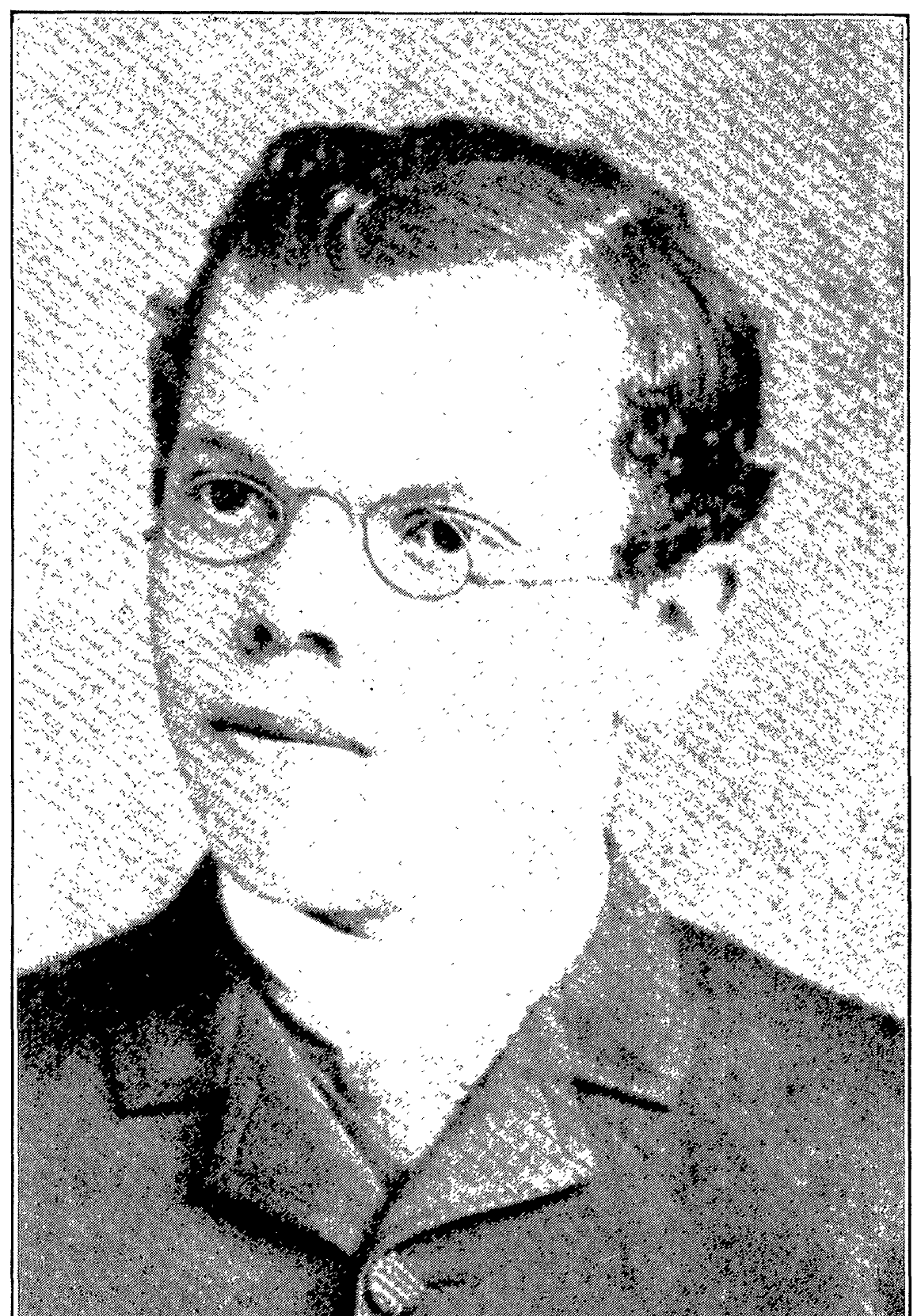
Among the sympathetic members of the committee was a highly educated man, with an interesting past and a noble character, a spiritual aristocrat in the finest sense of the term. I mean Mikhail Halperin.
For him it was not at all difficult to reach the hearts of the immigrants. Nor was it difficult for us immigrants to understand what a precious heart his breast carried within it. People simply idolized him. But about him I will tell separately.
70In the first days that I spent in America, I had little time to take an interest in the committee and its various members. I was busy with other things. First of all, I had to seek out the Vilna socialists. I was in a fever of impatience to see them and to hear what had happened in Vilna with the arrests.
In Liverpool I had heard that they had joined the "Kiev Am Olam" (the People of Eternity, an emigration group). The headquarters of the "Kiev Am Olam" was in Greenpoint, a far-off part of Brooklyn. So I got the address with details on how to get there (later I found out there was a shorter way), and I set off straight for the place. I crossed the river (the East River) on a ferry, and then I sat down on a "horse-car" (the Brooklyn elevated railway was not yet finished). The car was a two-decker, and I sat on the upper "deck"; sitting with my Liverpool dictionary in hand, looking at the signs and searching out the meaning of the English words. Here I read aloud "Itse Kream." But I corrected myself at once: "Ice Cream," according to the instructions of my self-teacher.
At last I arrived in Greenpoint. When my Vilna comrades caught sight of me, they were pleasantly surprised. The joy was great on both sides. They had had no notion of my journey. As if from heaven I had dropped down upon them.
Perhaps two hours we stood about in a
(plate; bound in the original between pp. 70–71)
71small corridor, telling one another what had happened to me in Velizh and to them there, in Vilna — about the "obysks" (police searches) and arrests, about their decision to emigrate, and about the correspondence they had carried on with representatives of the "Kiev Am Olam."
They had come to America (also to Philadelphia) on the 30th of May, a week earlier than I.
From our conversation I learned that the expectations regarding colonies had so far brought them nothing but disappointments and doubts. Immigrants who had come a few months earlier had made attempts to found such colonies; but the reports about them were not happy ones. The hopes, however, had not been given up.
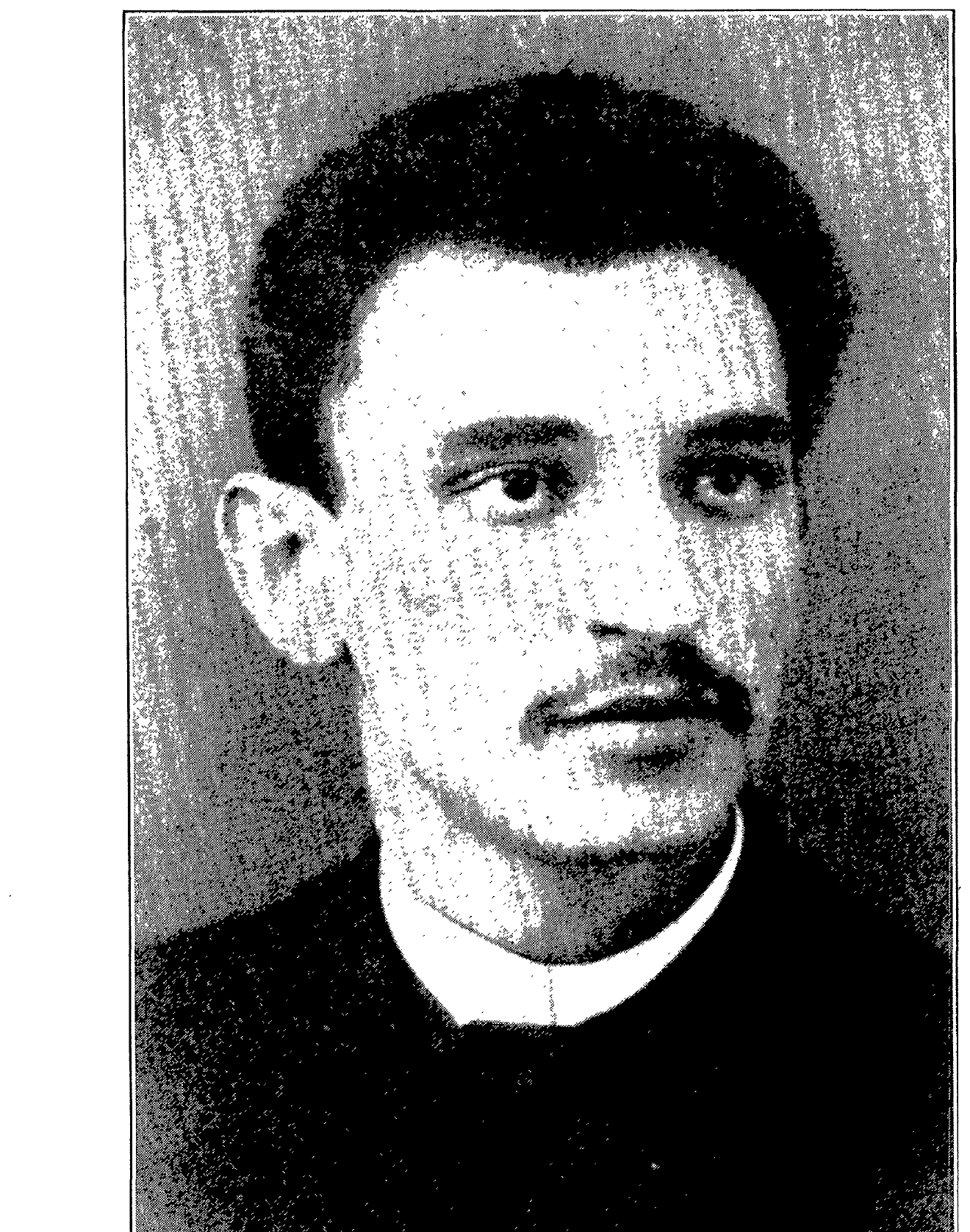
One of the Vilna group was Shaul Badanes, a second was Solomon Menasker, and a third was the elder of the Kospe brothers. Among the others were a few young men who in Vilna had not belonged to our kruzhok (circle), but with whom I was acquainted, and several Jewish artisans who had been "propagandized" at the Pohulanka quarter after my departure. One of them, Spiez, was a brother of my old comrade Hirshke Levenson-Spiez, from Malat. With the Vilna group also came Alexander Harkavy, the now-famous author of dictionaries and English textbooks for Jewish immigrants.
The first night that I spent in America, I lodged in Castle Garden. Menasker took me there, and he stayed there to sleep with me. The bedding was dreadful and the air 72dreadful — as if a thousand cats had been kept there.
We spent almost the whole night talking. From that conversation a small thing has stayed in my memory, one that is very characteristic.
Near us lay two Polish Jews, and they too were talking.
— Polish Jews, — I remarked to Menasker, hearing their accent, — and what are we, do you know?
— Litvaks, — he answered with a smile in his tone.
I knew, of course, that in Poland and in Volhynia they call us "Litvaks," and in Solominka, near Kiev, they had made me feel it. But I was not yet used to the word. That I was a "Litvak" struck me as comical. In Vilna I had never been any Litvak...
My first visit to the Jewish quarter was on an afternoon. I came in on East Broadway. It was toward dusk. On some of the stoops sat Jews. A few of them were older men, with white beards and skullcaps on their heads. I felt as if I were back home.
The Jewish quarter was then very small. On East Broadway there were stores where Jewish customer-peddlers bought the goods that they gave their customers, mostly Christians, white and black, on installments. Such stores were also on Canal Street. In this respect one may say that the 73two streets have not changed from then on, although in other particulars they have changed greatly.
Farther along East Broadway, near Clinton, Montgomery, few Jews lived then. And some years earlier it had been a genuinely American street, even an aristocratic-American one. When I came, the elder William Vanderbilt was the greatest millionaire in America, and a few decades earlier, when he married, his first home had been on East Broadway. The mayor of New York had lived there until a fairly short time before my coming. Besides, the mayor of New York seldom belonged to the "aristocracy."
Millionaires, dollar-aristocrats, were back then on the whole still almost a new thing in America. Before the war between North and South, over the Negro question, the population consisted mostly of farmers and middling and small businessmen. Great factories had not yet grown up, and huge great cities had not either. Industry and commerce, and along with them the great cities, only began to develop after that war, in the sixties. The development, however, went terribly fast. Sixty or seventy years ago America was a country of small towns and villages, a nation without great rich men and with few poor people. Today this is hard to believe.
As these lines are being written, the tallest building in New York is a 53-story tower, and towers of thirty or some twenty-odd stories are an entirely common thing in New York, Chicago, Philadelphia, and dozens of other American cities. When I came, the 74tallest building in New York (and in all of America) consisted of eight stories.
Let us return to the Jewish East Broadway and the surrounding streets, as I found them then. On Henry Street even fewer Jews lived than on East Broadway. Fewer still were to be found on Madison Street; and on Monroe Street Jews were altogether a rarity. On Cherry Street there were absolutely no Jews at all.
On the other side, the quarter extended as far as Delancey Street, and even there the population was strongly mixed. There lived many Irish and many Germans. On Grand Street there were two cafés; one belonged to a German and the other to a Frenchman. There were as yet no Jewish cafés and restaurants. On Grand Street, between Allen and Orchard, was a famous department store, Ridley's, to which Americans used to come and shop from various parts of what is now greater New York. On Grand Street, not far from Allen, was a famous store of Lord & Taylor, a firm now well known for its store on Fifth Avenue, at 39th Street.
On Hester Street Jewish tailors (shop workers) used to gather, and there contractors or "bosses" used to come to take them on for work. A market for operators, basters, "half basters," finishers, bunglers. Back then the place was called the "pig market." A few years earlier Hester Street had been inhabited by Germans and Irish. When I came, the center of the Jewish quarter lay between East Broadway and Grand Street and between Suffolk and Allen.
(plate; bound in the original between pp. 74–75)
75There was also a second center, a smaller one — a few minutes' walk from East Broadway — at Bayard Street and Mott Street (on the other side of the Bowery). They were full of Jews, and a few years earlier this had been almost the entire Jewish quarter.
The midpoint of the Jewish quarter was packed with Jews. But it stretched no farther than three, at most four, blocks in any direction. Toward the East River lived Irish, and uptown, on Houston Street, it was already Germany. On Second Avenue and on the side streets the stoops on summer evenings were full of German men, women, and children. The signs there were in German and in English. And the character of the stores was a genuinely German one: beer halls, delicatessen stores, German groceries and so on. And here and there a little German bookshop. On the streets and in the drinking places people spoke German throughout; they sat on the stoops and read German newspapers.
The Bowery was a good deal more "Bowery" than it is now. I use the name as it is known throughout all America, after the famous old character of the street. There the most dangerous criminals and outcasts of the city kept themselves. On the sidewalks indecent women of the poorer sort used to stroll about. The two or three streets that run next to the Bowery, Christie Street and Forsyth Street, and partly Eldridge Street, were then in the evenings also indecent streets. Few Jews lived there. Now a good part of Christie Street is inhabited by Italians; back then there were no Italians there (in New York there were on the whole then few 76Italians). There lived Irish, Germans, and Americans.
There were as yet no electric cars. The horse-cars used to run. On East Broadway there was a small blue car with one little horse and a driver who played the role of a conductor as well. You would drop a nickel into a glass box, and the coachman, sitting outside by the horses, would see whether it was five cents. If you needed change, a little door would open and he would hand you a small envelope with small change for a dollar, for a quarter, or for ten cents. If anyone tried to ride and not pay, the driver-conductor would stop the car.
The elevated railway was already running in New York then, and my first experience with it showed me that I was still "a complete greenhorn." This was on the second day after my arrival. I do not remember where I had to ride; I went up, paid the nickel, and got my ticket; but what to do with it, I did not know. So the "ticket-chopper" stopped me and pointed with his finger that I had to drop it into the glass box beside which he stood. But he made such an odd motion with his finger that I did not understand what he meant (for in pointing with the finger an American also has a different "accent" than a Vilna Jew). Then the "ticket-chopper" took me by the hand and made me shake it over the box. His idea was to shake the ticket in. But still I did not understand him. I thought he was making fun of me, and I held on to the ticket with all my might. Finally I understood.
There were as yet no subways (in passing I want to note that of automobiles, phonographs, and 77moving pictures no one had yet even dreamed back then either. Telephones, however, did already exist, although they were not as generally widespread as now).
The Brooklyn Bridge was already finished. But it was not yet open. They opened it a short time after I came. The other three bridges over the East River did not yet exist.
The city looked very large to me; but in comparison with present-day New York it was small — no more than a third, perhaps. And just as the tallest building had eight stories, so the city was a dwarf compared to the giant that today is called New York. It was, on the whole, altogether different. Paris and London hardly change. New York is always changing. Not only does it keep growing, but it is constantly being torn down, built up, and altered.
Around the Brooklyn Bridge and on Broadway, near Fulton Street, between five and seven o'clock in the afternoon the crush was tremendous. Such dense, hastily streaming masses I had never seen in my life. But those were the only places like that. The other centers of traffic were much smaller, and such centers were then fewer than today.
I will acquaint the reader a little with the character of the New York Jewish population of that time.
In the Jewish quarter there lived not only Russian and Polish Jews, but also a certain number of German 78"Yehudim" (German Jews); many of them were from Posen, the Polish part of the Germany of that time, and their mother tongue was German. Other Jews were from Germany proper. Many of the young generation were American-born. A few years earlier almost all the "Yehudim" of New York had lived in the Jewish quarter. In my time the richer Posen and German Jews already lived uptown. Of the middle class, however, a fair number were still to be found around East Broadway.
About a year, or two, after I immigrated, a branch of the "Young Men's Hebrew Association" was opened on East Broadway (the main institution was uptown). A good part of the members consisted of American-born Jewish boys, children of German-Jewish immigrants. All these boys lived in the area of East Broadway and Grand Street.
Today a German "Yehudi" in the Jewish quarter is an impossible sight. But back then we had many "Yehudim" there. Almost all the smaller stores on Grand Street, and several of the large ones, were in their hands. They did not remain long in our quarter, however. When the great emigration from Russia began, they gradually started to move farther uptown (it is needless for me to note that uptown did not then reach very far into the numbered streets. Fiftieth Street was already considered far uptown; around the Hundreds open fields stretched out). But their moving away had nothing to do with our coming. As one grows richer one moves uptown; so it goes to this day.
I have already noted that in the earlier years 79very few Jews came to America from Russia. The exceptions were Jews from the Suwałki and Kalisz (Greater Poland) provinces. When I came to New York, the Suwałki Jews made up the bulk of the Jewish population on the East Side. Wherever you stood and wherever you went, you met Jews from Suwałki or from the smaller towns of that province. Almost all the peddlers and customer-peddlers were then from that region, and the storekeepers of East Broadway and Canal Street, who sold clothing, cloth, furniture, or jewelry to customer-peddlers, were for the most part from that same province.
There were some thirty or forty thousand Jewish workers in New York. They were occupied for the most part with tailoring of men's clothing. There were cloakmakers too, but proportionately not very many. The whole cloak trade was then still new in America. A few years earlier the better cloaks used to be imported from Germany. The ordinary American woman used to wear a pretty shawl. The first cloak shops were founded by German Jews, who had never been tailors. They were the bosses of the trade and remained in that role for a good while after my coming. But the cloak workers — tailors, operators, and pressers — were Jews from Lithuania and from Poland.
Among the men's tailors there were many Jews from Greater Poland. There were tailor-workers from the Suwałki province as well, but fewer.
Among the earlier Russian and Austrian immigrants there were very few educated Jews. Almost none. Among the Suwałki immigrants there were some 80Gemara Jews (those learned in the Talmud). In the peddler-stores on East Broadway and Canal Street it was not rare to hear a conversation about a passage of Gemara or about a little book in loshn-koydesh (the holy tongue, Hebrew). These were the intellectual aristocracy of the Jewish quarter.
As for their children, the more prosperous Jews sent them to public school; rarely higher. At the City College in New York there were then a fair number of Jews. But these were mostly German Jews, not children of our own Jews, as is the case now. As for high schools, they then did not exist in New York at all. And had they existed, I do not know whether the Jewish immigrants of that time would have sent their children there in any significant number.
The children spoke English. Yiddish almost not at all. They went to school and afterward took up business.
About the thirst for higher education, which is now so widespread in the Jewish quarters of America, people then knew it in a far smaller measure than today. The quarter found itself under the spiritual dominion of an old-fashioned Jewishness, mixed with an uneducated Americanism.
There is a widespread impression that the first Jewish immigrants were chiefly criminals who had had to flee from home in order to avoid a criminal trial. This is enormously exaggerated. Such fellows I did indeed find, but these were scattered individual cases. The great, great majority of the Jews who came in the seventies and still earlier were honest, plain people, very ignorant, with a minority of Gemara Jews.
One must also add the following: some of the 81criminals from back home, in America, under the new circumstances, began to lead a decent life. But it also often happened the other way around: people who had been decent in their birthplaces became swindlers here. Such things happen, however, all over the world, even under ordinary circumstances — let alone here, where everything is different from back home, and where one is cut off from family, and above all from the people with whom one grew up together.
When I came to America, there was still fresh a sensation involving a certain Rubinstein, a jewelry peddler from the Kovno province, who had committed a murder. He had, namely, killed his niece, in order to conceal the intimate relations he had had with her.
Rubinstein was a pious Jew, an unusually pious one. By this he had a reputation throughout the entire Jewish quarter.
His relations with his niece ended with his leading her off into what is now Brownsville (then the region consisted of swamps and fields) and slaughtering her with a knife of the sort that cigar-makers use in their work.
He actually gave himself away, in fact, by his own doing. He told that the girl had come to him in a dream and told him that her dead body lay in such and such a place (perhaps he was afraid that her not coming to a proper Jewish burial would increase his sin, and that she would come to strangle him; at least such an opinion was widespread in the quarter). This, and the knife, which he had bought on Division Street, led to clues that 82led to complete proof that he was guilty. He was sentenced to death. He took his own life, however, in the Tombs prison.
This was then the only Jewish murder in the history of the Jews in America.
When we appeared, and people began to hear Russian on the streets, it was a surprise. The following scene happened to me personally, and others of our immigrants had similar experiences:
I was walking along East Broadway with another Russian immigrant, chatting in Russian. A Jewish woman with a basket on her arm passed by. Hearing our conversation, she stopped, looked us over with an expression of surprise and mockery, and spat.
— Feh! They speak Russian, no less! — she said. — Wasn't it enough that you had to hear that filthy language in Russia?
Many of the newly arrived Jews knew Russian; many even of the uneducated ones; for they were mostly from Little Russia (Ukraine), where the Russian language was far more widespread among the Jews than in Lithuania. They could speak Russian; but among themselves they used Yiddish. Among the immigrants, however, there was an intelligent minority that always spoke Russian among themselves; and that was, in New York, a great novelty in those times. We were the first group of educated Russian Jews in America.
83Our speaking Russian, however, was not the most important novelty that we brought into the Jewish quarter. The beginning of the great immigration was the beginning of a new influence. There began to come people who carried in their hearts the shem hamfoyresh (ineffable name) of the advanced Russian culture, and they sowed seeds of a new movement with a new life.
In the first period the collision of the various spirits made itself felt: the spirit of the advanced Russian intelligentsia and the spirit of the old-fashioned Suwałki Jew.
The earlier immigrants looked upon us as upon apikorsim (heretics) and madmen; and we regarded them as intelligent people regard ignorant, backward folk.
What is being dealt with here is the intelligent Russian immigration in general. But within it there was a minority that had brought from Russia the banner of idealism. I mean those who back home had sympathized with the revolutionary movement.
The spirit that we spread here was a new thing, not only for the Suwałki Jews, but also for a great majority of our own fellow immigrants; for back home the Jewish masses then knew little of socialist ideas. The censorship and the fear of the gendarmes had fenced socialism in Russia around with a wall of rifles and gallows. Of the "Bund" no one had yet dreamed. It was founded in Vilna fifteen years later. The Jewish workers whom we had taught the socialist ideas in Vilna were very small in number — 84a handful. And this handful had now come, almost entirely, to America.
I had not been in New York three days when it became clear to me that the hope of colonies was an empty dream.
The truth is that for village life, for farm work, and for the sort of existence connected with it, I had no inclination. The city drew me. I was full of temperament and zest for life, an altogether different type from the born colonist. And as the heart feels, so the mind thinks.
But that communist farmer-colonies in America are simply a daydream — this was not merely a matter of feeling; of this one could easily convince oneself. I was not the only one who at once stopped believing in such plans.
I expressed my opinion in this regard openly and sharply, perhaps a little too sharply. Several of our immigrants were upset by my words, and one of them quarreled with me over why I was carrying on an agitation against his ideals.
Issue No. 2 of the revolutionary Russian journal "Vpered," which appeared in Switzerland in the seventies, contained an article, sent from America, about communist colonies. The article was in the form of a letter from a certain William Frey, a learned Russian captain, who, some 85years earlier, had come to America, together with several other Russian idealists, with the aim of founding such colonies.
He had sent the letter from the state of Kansas, where he then lived on a communist farm. This was several years earlier than when I emigrated to America. When I came here, Frey was in New York; and, as we shall see further on, he had for a certain time a spiritual influence on our intelligent immigrants. In Russia he had at first been an ardent follower of Chernyshevsky and a revolutionary. Afterward he went over to a purely idealistic communism and an opposition to revolutions.
Then he resolved to emigrate to America. He gave up a brilliant career and traveled to the New World with the aim of serving his ideal. Later, being in America, he became a follower of Auguste Comte's positivist philosophy. He began to preach Comte's "Religion of Humanity." And to this he added the communist idea with which he had come to America. Together with this he preached against every revolutionary movement, against every struggle; even against the struggle that the workers carry on for higher wages or shorter working hours. All this was a part of his "Religion of Humanity."
In the same issue of "Vpered" there was an answer from the editorial board, in which approximately the following thought was expressed:
The capitalist system must be destroyed through great mass movements; with small communist colonies one cannot accomplish anything in this. The editorial board of "Vpered" speaks with respect about the inspired communists who 86wish to give their strength to such a colony; it does not compliment them; it compares their undertaking, however, to a plant raised by artificial means, under glass, with special heating. In the destiny of humanity such artificial undertakings can have no significance. For it, significance is held only by such a movement as has a n a t u r a l character and proceeds on a great and revolutionary scale.
A few issues of the journal "Vpered" I had seen while still in Vilna. But Frey's letter and the editorial board's remark on it I had not then read. That particular Issue No. 2 I read through only here in New York. It was lent to me by one of Frey's followers, I believe Engelhardt (a Russian).
The answer from the "Vpered" editorial board made a strong impression on me. It opened my eyes.
I thought a great deal about the matter and came to firm convictions about it; these convictions worked themselves out in my mind in connection with a parable that I had read in a Russian chrestomathy (a reader for school children): a fool came to someone to sell a house, and as a "sample" he brought him a brick. I applied this parable in the following way:
Socialism cannot be realized through sample colonies, but only through the great, broad workers' movement. What mamoshes (substance) can a communist colony have, when the whole country is capitalist and the colony must at every step be dependent on capitalist railroads, banks, and stores, and must 87compete with gigantic capitalist farms. The whole social structure of the civilized world must be changed: a separate brick cannot serve here as a sample.
So I argued in my debates with followers of socialist colonies.
As support for this argument, I had living examples. Attempts to found communist colonies had been made in America many times, and with the exception of the religious sect of the "Shakers," among whom the communes hold together on a strange religious foundation, all had failed.
I remember several conversations that I had about this question and the fire with which I tried to convince our colony-enthusiasts that they were squandering their energy and time on an empty dream.
I cancelled my subscription to the Balta circle. I felt a deep interest in the seething life of the great American city. Earlier I had only read about capitalism; now I had seen and felt it in life. It surrounded me on all sides.
We found in New York a daily socialist newspaper: the German "Volks-Zeitung," which had been founded a few years earlier. For us Russian socialists this was a true treasure. In Russia a socialist newspaper was a dangerous, secret thing, an underground article; and such 88writings appeared there only from time to time. And here — quite openly and regularly, every day!
At first the reading came to us with difficulty; but how long does it take a Jew like one of us to learn German? Some of us had learned a fair bit of German a good while before we became acquainted with the English language — indeed, through the socialist "Volks-Zeitung."
This newspaper played a great role in the spiritual life of our first intelligent immigrants.
It was a strictly social-democratic organ. In every issue we found a Marxist illumination of the daily happenings — food for new thoughts.
Back home our socialist development had been almost limited to a few underground booklets and pamphlets, and these were taken up with the secret revolutionary struggle; and here we had every day the daily news with a socialist interpretation, a Marxist commentary on the daily life in a great capitalist country. Every day brought us practical lessons in Marxist socialism.
From this it became clearer to me by the day how little mamoshes (substance) the plan for socialist colonies had.
One of the two chief editors of the "Volks-Zeitung" was then Sergei Shevitch, who was himself from Russia. He was a German baron from the Latvian region. His education, however, he had received in a Russian gymnasium and university; and besides Russian and German, he spoke and wrote French, English, and Italian well. His socialism he had learned partly 89in Russia and partly in Germany. His wife was the famous Helene von Racowitza, on whose account Ferdinand Lassalle had fallen in a duel.
Shevitch was a talented writer and speaker, and his connection with the "Volks-Zeitung" had much to do with the influence that the newspaper then had on us.
A little later it will fall to me to tell about a Russian speech that I heard from this gifted man. This was in mid-July. Earlier I had attended a German workers' meeting, on Second Avenue, near Houston Street, where he spoke in German, he and Alexander Jonas, the chief editor of the "Volks-Zeitung" (Shevitch was editor of the Sunday issue and co-editor of the daily newspaper). This was the first workers' gathering that I had ever seen. The German speeches I did not understand entirely; their general sense, however, I grasped. And I cannot find words to convey the impression they made on me. I sat in a fever of enthusiasm.
How then could a communist colony somewhere far, far from the seething life with its workers' struggle any longer have a place in my mind — a colony that could fight with the great capitalist world only as a fly with an elephant? If there still remained in me a trace of a dream about a gan eydn hatakhton (an earthly paradise), where we would realize the socialist ideal on a small scale but on the spot, it had now vanished like smoke.
The "Volks-Zeitung" and the German socialist meetings took the place that the colony idea had earlier held in me.
90America's freedom I felt every minute. It seemed to me that I breathed more freely and deeply than I had ever breathed. At the same time, however, I said to myself: "All this is a prison of capital."
As we shall see further on, the first several months I worked in factories, and there I felt myself even worse than a slave. In my mind there was a tangle.
I remember my plan to print "socialist proclamations" and distribute them in the streets while the workers were going home from work. In and of itself this would not have been foolish at all. For me, however, it had the flavor of an underground agitation, which would have had no sense in America. From Russia I had a notion that only that is holy which is done under the ground, only that which one is not allowed to do; but there, in Russia, when one distributed proclamations, it was a secret work, and it smelled of Siberia. Here, again, it was not bound up with any danger whatsoever.
The outward form of the thing had for me the revolutionary Russian flavor. Just in this lay the holiness. I wanted to talk myself into believing that, by distributing socialist pamphlets, I was leading the life of a Russian revolutionary here in New York. The word "proclamation" itself had for me a holy ring. Forbidden fruit, which is not forbidden.
In another manner, but with the same essence, hundreds of 91Russian revolutionaries felt and conducted themselves here in America in later years. Since in America there is no secret socialist movement, the Russian revolutionary looked with contempt upon the local movement. What kind of socialism is it, if one need not hide with it? Does not socialism itself teach that one must bear in mind the special circumstances of the place and of the time? It makes no difference! The power of ingrained notions is greater than the power of logic and of practical understanding. But that is perhaps not the most important thing. The romantic feeling of danger, while one does what one is not allowed to do — this is what probably played the chief role in it. Since one is permitted, and there is no danger, one is no hero; then the whole of socialism is a "so-what kind of thing."
In the eighties it was easy to get land in America. The government gave it away almost for nothing. But one cannot found a large farm with bare hands; one must, in addition to the land, have a house, a barn, tools, machines, livestock, wagons, and so on. For hundreds, if not thousands, of immigrants all this would have amounted to a fortune, and the committee did not possess it. The result was that even those who remained true to their plan to found an idealistic colony also had to lay it aside.
There was only one exception — the group "New Odessa." It really made an attempt to found a 92communist colony — an experiment, let us say it plainly, which in the end also came to nothing.
Well, colonies or no colonies, in the meantime one had to have something to live on. So all the immigrants began looking for some kind of occupation — in New York or in other cities. Everyone talked about "making a living." This was one of the first Americanisms that we picked up against our will. I say "against our will" because American Yiddish grated on our ears back then, as it did on the ears of every "greenhorn."
Those who had come here without parties and without social ideals either looked for work or took up peddling; but those who had come as members of idealistic organizations had only work in mind. They did not so much as consider peddling.
In the Vilna circle "Am Olam" there was a member whom an Americanized cousin had set up as a peddler, and he vanished. He was ashamed to show his face before the other members, as though he had taken up some indecent occupation.
The radical immigrants, of course, did not consider peddling. But even ignorant, orthodox Jews among the immigrant parties also held peddling and trade to be a disgraceful occupation; only working, and indeed working with one's hands! Only that was regarded as a respectable means of earning a livelihood.
The committee tried to find work for the immigrants, and I turned to it for such an occupation. Among the members of the committee were not a few manufacturers, and several of them took a 93certain number of us on with them. A wealthy manufacturer named Stachelberg had a factory of high-grade cigars. A second had a toy factory, a third a pipe factory, and so on. I got a job at Stachelberg's factory. It was on South Fifth Avenue (now called West Broadway), between Grand and Broome. They sat me down in a cellar to "strip" tobacco — that is, to pull the "stems" out of the leaves.
Stachelberg himself was from Great Poland, not far from the German border. But he had probably lived earlier somewhere in Germany proper, since he spoke German. He was not a tall man, somewhat stout, with red cheeks. He was always dressed like a dandy, and I remember him with his low, light-colored "derby" hat, which was the fashion that summer. I remember him with a cigar in his mouth, standing in his shirtsleeves and talking to the two or three immigrants to whom he had given jobs at his place.
I felt that he really did mean to do something for the immigrants, and that robbing them was not on his mind. He said openly that he could keep us only a few weeks, until we grew a little accustomed to America and were able to find some other occupation; for afterward he would take on new immigrants, also only for a few weeks. It was easy to understand that he did not really need us, since "craftsmen" like us he could get plenty of among the Irish, the Germans, or the Americans. And a wage he paid us such as all the manufacturers paid for such work — three, four dollars a week. I also knew that he spent considerable sums on the committee and that he was very active in it. On the whole he 94made no bad impression. But he carried himself proudly, and his appearance impressed itself on my mind as a picture of a "genuine bourgeois"; it seemed to me that all my life I had imagined a bourgeois in just such a form as Stachelberg's.
The stripping did not come easily to me. I was simply not accustomed to physical work. From the time I was five years old I had been studying, reading, writing, doing arithmetic. Every hour of bodily work was like a year to me; had it not been for the fellow worker who sat beside me, it would have been even harder.
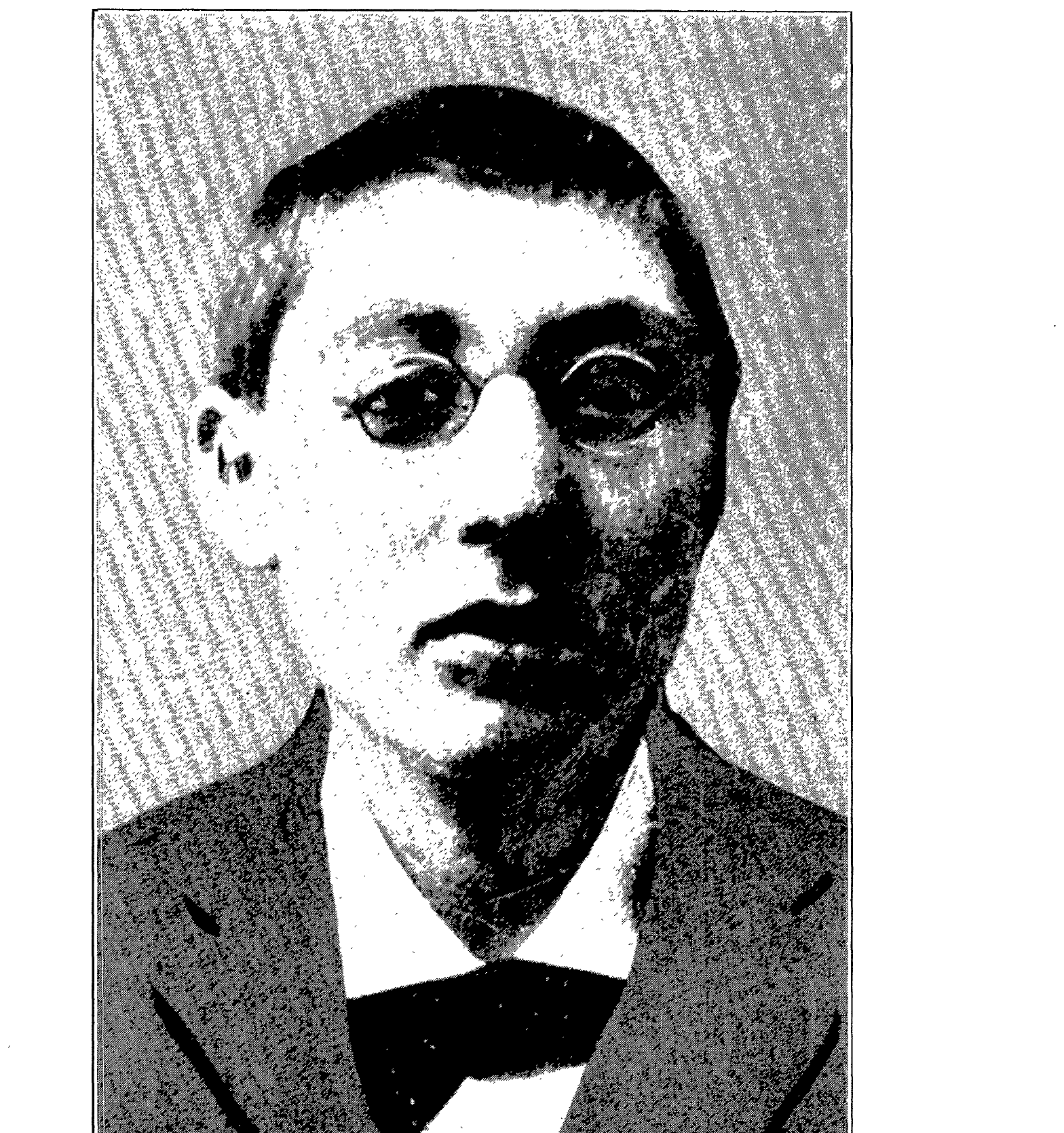
This neighbor of mine was Bernard Weinstein, who is quite well known in the Jewish labor movement. There we met for the first time. He was six years younger than I. An Odessa lad, very likable, honest, good. Between ourselves we spoke Russian, and the conversations we had were a dear pastime for me. I explained socialism to him and told him about the Russian revolutionary struggle; he listened with deep interest, and that gave me pleasure. Sitting and chatting like that, I would forget the tediousness of my task. I would give the "stem" a yank with an inspired vigor, like a crack of a whip. From the force of it, it would wind itself around my hand. And so, pulling one "stem" after another, cleaning one leaf after another, I would tell stories and hold forth, until the foreman cast a glance at me.
Herman, the foreman of that department, was a German "Jew" with large, sparse, black side-whiskers. He too was a good man; and that also helped to ease my burden.
On the upper floors worked the ci-
(plate; bound in the original between pp. 94–95)
95gar-makers, the bunch-makers, and the packers.
One of the cigar-makers at Stachelberg's factory at that time was Samuel Gompers, who later became the chief leader of the American trade unions, the influential president of the American Federation of Labor. I do not believe that I saw him then. My friend Weinstein, however, used to do certain work on the higher floors as a helper, and there he became acquainted with Gompers.
When the few weeks were over, I went looking for work at another factory. I found a job working tin on Hubert Street, a little alley on the West Side, downtown, not far from Canal Street. There it fell to me to stand all day at a machine, into which I would insert lids for tin cans. With every step I made with my foot, the piece of tin bent, and it became a lid. The work was very light, but it was even more tedious than my job at the tobacco; the "always-the-sameness" tormented me. Stand all day, lay down little pieces of tin, and press with your foot! For me it was penal servitude.
I would literally count the minutes. I would look at the scenes around me, at the people around me, the girls. Every two or three minutes I would turn my head to take a glance at the clock. When they would sound the whistle for lunch, I was the happiest man in the whole factory; and later, at six o'clock, when the whistle sounded to go home, I would be beside myself with joy. I remember how I would walk along Hubert Street and then along Canal; like a prisoner freed from his prison, I would stride along.
96Once they gave me a different job: to assemble several parts of some kind of can and press them together with a machine. This already required a bit of brains. So I worked with an unusual interest. I now hardly looked at the clock. But this work did not last long.
In my tedious jobs I saw a living example of how capitalist industry divides every task into many parts, so that each part can be done by just anyone and requires no skilled craftsman; I saw how such work is done mechanically, without interest; how the worker is transformed into a dead tool. What I had earlier read in books on political economy I now lived through on my own self. "Here I am, a dead tool!" — I would think to myself. The fact that it came out exactly as it was written in the book was interesting to me.
At lunch many of the workers would run into a nearby bakery and buy something there to eat: rolls, cake, pie. I used to do the same. While doing so I listened to the English that flew between the storekeeper and her customers.
— What else? — she asks.
— Nothing else, — a girl answers her.
The question and the answer stayed in my memory; for the first time, the answer struck me as very odd. I understood the words; and yet I mimicked the shopkeeper. "What more?"
— "Nothing more" — I rendered it for fun in my mind.
And so I would repeat it dozens of times: "What more? Nothing more."
97As with everyone who begins to become acquainted with a foreign language, many English expressions sounded ridiculous and wild to me. In my mind I translated the question and the answer literally, for fun.
"What more? Nothing more!" — I would repeat it with a feeling of mockery and disgust.
Once, at work, I fell into a reverie. I stood there and gazed like one lost in a dream. This used to happen to me quite often. Earlier, though, the foreman had not noticed it, and this time he happened to catch sight of it, and not he alone, but the manager too. For they happened to be passing by together.
I was so absorbed in my thoughts that I did not even notice them. The foreman shouted at me, and the manager remarked with a smile that I did not want to work.
I was fired.
My first lodging in America was in a cheap lodging house across from "Castle Garden," beneath the Second Avenue elevated, there where it turns into a narrow lane, a few steps from South Ferry. But this was only a temporary night's shelter, with which the committee provided us for a few days, when we had come off the ship, until we should find ourselves a place to live.
Four of us (besides me there was another young man and 98a young couple) spent the nights in one small room. We had all come on the same ship, and the couple were on their "honeymoon." He was older than she and madly in love.
They were intelligent, quiet, refined people. On the ship I had often strolled about with him, and it turned out that I had become acquainted with a younger brother of his in Vilna, at Kaspe's lodging. And with an uncle of hers I had become acquainted in Brody; so we felt like good acquaintances.
The second young fellow who shared the room with us was also an intelligent man. I had become acquainted with him too on the ship. So I introduced him to the couple, and we became like one family.
This young fellow was a bit older than I, and for fun he played the role of an uncle to all of us. Seeing how hard it was for the young husband to restrain himself from kissing his wife, he gave him permission to do so. He demanded only that the husband first give us a signal, so that we should shut our eyes and our ears. The couple were at first embarrassed and made fun of the proposal. Little by little, though, the husband took courage.
We stayed there only one week.
My next lodging was at number one Monroe Street, on the corner of Catherine Street, at a cousin of Badanes's, a widow named Mrs. Zosem. She was a custom peddler-woman, and she lived with her two small children — a boy of about nine and a little girl of about eight; as boarders there lived with her 99a married daughter of hers with her husband. There was also a girl of about eighteen who took her "board" with her.
This was my real first home in America.
The little boy and the little girl and the eighteen-year-old boarder had been born in America. The married daughter and her husband — a cutter at women's wraps (cloaks) — had come to America when they were still small children. To the house there often came an older daughter of the widow's — also Americanized — with a little girl of hers. They all spoke almost entirely English. With the exception of Mrs. Zosem, they spoke Yiddish very poorly, with an American pronunciation and with American expressions. For example: once, in the evening, when I was joking with Becky, the eight-year-old little girl, she said to me:
— You can't make me laugh ("Du kenst nit mokhen mir lokhen").
This struck me as so comical that for many months afterward I would mimic these words of hers.
Becky always said "du" (the familiar "you") to me. And so "Reytshke," the eighteen-year-old boarder, also spoke to me. All this was for me a source of fun. But not only of fun. It was unpleasant to me. Just as an unpleasant smell is in the nose, so this un-Jewish Yiddish was in my ears.
My "Mrs." gave me to understand that in the English language there is no "ihr" (the formal "you"); that one says "du" to everyone. I already knew enough English by then to understand that it is exactly the opposite. But Mrs. Harris, her younger married daughter, backed her up in her opinion, and my "greenhorn" arguments did not help.
So in the house far more English was spoken than Yiddish, and that was important for me.
For my lodging I paid not with money, but with 100lessons. The boy, Sam, a pretty, quiet little fellow, was my pupil. I taught him to write Yiddish and to read Hebrew (which I did not know myself). I learned far more English from him than he learned Hebrew from me.
In those months, in my free hours, I would study English from a textbook called "Appleton's Grammar" — a thick volume, for Germans who want to learn the English language. It was a practical work with the pronunciation of every English word, with grammatical rules, with translations from English into German and from German into English. I studied this book with great diligence. When I was not sure of the pronunciation of a word, I would turn to Mrs. Harris or to her husband.
In those days I mostly worked day and night. All day in the factory, at the tobacco or at the tin, and in the evening, at home — over my "Appleton's Grammar."
During the time that I worked in Stachelberg's cigar factory, I delivered my first speech before an audience and began my career as a socialist activist in America.
Once, in the evening, my Vilna comrade, Shaul Badanes, conveyed to me a sad piece of news from Vilna. It concerned our comrade Rabinovitsh, who had been arrested at the time of the searches and arrests on account of which Badanes had left Vilna and also Velizh. Rabinovitsh was confined in the Vilna political prison, in "Number Fourteen." One 101time, when his mother came to see him, an official of the prison told her that he was being sent off to penal servitude. The unfortunate woman fell dead on the spot from apoplexy.
What the official had told her was not true; her son was not being kept for deportation at all; within a few days he was let out entirely free. The official had simply told a lie in order to provoke the Jewish woman. But Badanes and I believed it was true, and that Rabinovitsh really was being sent off to penal servitude. The story made a heavy impression on us.
The next Friday, a few days off, the first socialist mass meeting of Jewish immigrants was to take place. What kind of meeting it would be, we did not know. We had only heard that Shevitch would speak in Russian and other socialist speakers in German. We waited for the gathering with impatience. Because of the news about Rabinovitsh, we were in an especially socialist mood, and the meeting held for us an especially great interest.
Actually this was the second socialist gathering for our immigrants. The first had been held a few weeks earlier. There had then occurred a strike of those who work on the "docks" of the New York harbor, and a considerable number of Jewish immigrants went there to "scab." They simply did not understand.
In New York there was at that time a young Russian Jew from Petersburg, a revolutionary named Mirovitsh. So he called together a meeting of our immigrants and explained to them what the matter was. The result was that the Jews immediately stopped scabbing. Then Mirovitsh organized a "Jewish Propaganda Association," and 102now, then, the first propaganda meeting of this association was to take place.
The immigrants were scattered and dispersed throughout New York, and of Mirovitsh's first meeting Badanes and I had not even heard. About this second meeting, however, we did find out.
I awaited the gathering with impatience. I felt drawn to be at a meeting where a revolutionary would speak in Russian. But my chief thought was to go to the meeting in honor of Rabinovitsh. So, roughly, I expressed myself to Badanes.
The Friday evening came (the 27th of July). We set off for the gathering. It took place at 125 Rivington Street, a hall where in later years hundreds of meetings of our Jewish workers' organizations were held, chiefly of the cloakmakers' union.
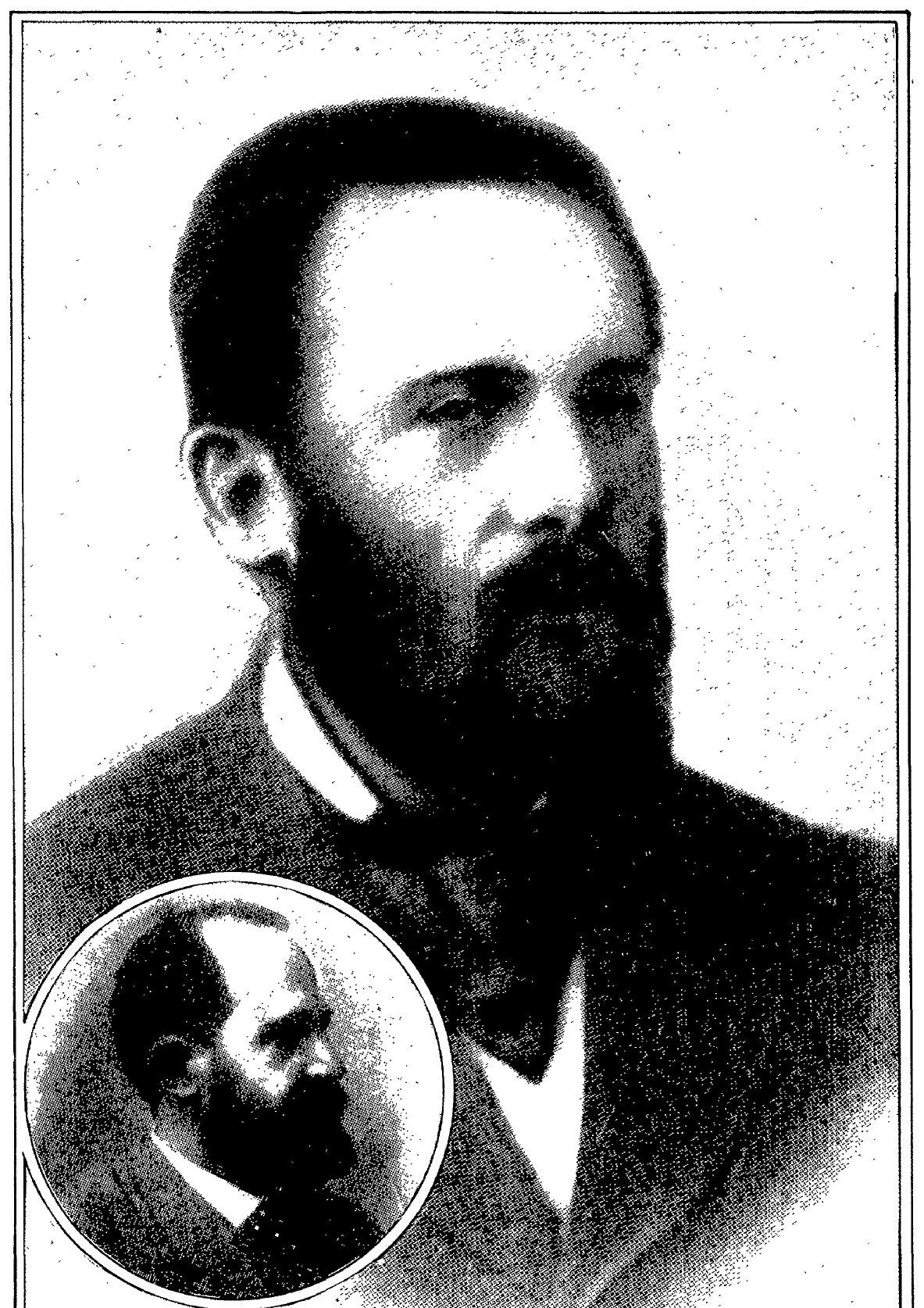
The gathering was opened by the aforementioned Mirovitsh, a young man of middle height, with long, very black hair and a black beard. As the first speaker he introduced a tall, handsome man with black hair, with a neat black little beard, with aristocratic manners. This was Sergei Shevitch. I have already said that he was a brilliant speaker and that he was at ease in several languages. It has also already been noted that he was one of the two editors of the "Folks-Tsaytung" (People's Newspaper). Here I will add that he was the most important agitator at the German socialist meetings. Often he would deliver a speech in English. In Russian, however, he had never before spoken in America; and this speech of his he delivered in Russian.
The fact that his wife was the heroine of Ferdinand
(plate; bound in the original between pp. 102–103)
103Lassalle's novel lent his person a special magnetism. His Russian pronunciation had in it an aristocratic Russian ring. Such an impression, at least, it made on us; and that accorded with the fact that in the Russian struggle for freedom the children of the gentry take part. All this magnified the spell of his words. But he really did have an extraordinary oratorical power. To this one must add that this was the first socialist Russian speech that I had ever heard at a large, open meeting.
He made an indescribable impression on me.
The content of his speech, in brief, consisted of the following:
"The pogroms which forced you, Russian Jews, to seek a new home, were carried out by ignorant peasants who do not understand what they are doing. If they did understand, they would fall not upon Jewish houses, not upon the Jewish inhabitants of Elisavetgrad, Balta, or Kiev, but upon the Tsar's palace in Petersburg. There they would make a pogrom. They would destroy the despotic rule, and they would organize a government that should be founded on freedom, on equality, and on brotherhood."
We drank in every word.
The hall was packed. The majority consisted of not very educated people. But there was a considerable number of educated listeners as well. And Russian, in any case, almost everyone understood, for they were mostly from Kiev, Odessa, and other southern Russian cities, where the Jewish masses were by then already well acquainted with the Russian language.
After Shevitch there spoke a gaunt German anarchist named Kaiser, a fiery agitator; and after Kaiser 104— a second German anarchist, a shorter, stouter young man, by the name of Nelke. I understood little of the German speeches. That Kaiser was a fiery agitator I could sense even from the few words I managed to catch. Nelke I understood even less.
The speeches came to an end. The chairman announced that the floor was now open, and several young men all at once began rushing toward the platform, jostling and shouting. A commotion broke out. Then the chairman declared that, in the interest of order, everyone should sit down, and that whoever wanted the floor should raise his hand. At that, those who had been pushing so hard toward the platform stopped moving. I was the only one who raised his hand. The chairman asked my name, and I was given the floor.
With a pounding heart I stood up and started toward the platform. I was then a thin, pale young fellow and looked much younger than twenty-two; and since in Russia people were generally not used to meetings, our crowd assumed that a speaker ought to be older and look more dignified. That such a "maltshishka" (little brat) should presume to deliver a speech struck many of those present as a piece of sheer effrontery. People began heading for the door.
The reader can imagine how I felt about this. But the hall was a long one, and I was sitting not far from the platform. So the way to the door was much longer than my way to the platform; that was my good luck; otherwise the whole crowd would probably have left 105the hall before I had managed to open my mouth. As it was, however, I reached the platform when only a few were already on the other side of the threshold; the rest were still in the act of leaving. One of those who had begun to leave the hall was an immigrant by the name of Paul Kaplan. He was already one of our most prominent immigrants. Later he became one of my best friends, and he afterward told me details of this scene.
I began to speak with a special firmness in my words, in an angry tone. When I had reeled off a dozen words and the crowd heard my ringing voice and good Russian, the human stream came to a halt; faces turned back from the door toward the platform. People stood, watched, and listened curiously. Little by little they began to edge back. That this "maltshishka" should speak like that became interesting. People grew curious and sat down again.
When I saw this, I took on still more courage. I continued with fresh fire.
The content of my speech consisted of the following: We find ourselves in a land that is comparatively free. We are seeking a new home here. But we must not forget that great struggle for freedom that we left behind in our old home. While we worry only about ourselves, our comrades are fighting back there, or they are suffering in the Russian prisons — our heroes, our martyrs.
We must not forget the struggle for freedom of our old home. From far away we can do little; but we can collect money. We must support that holy movement. The struggle of the Russian revolutionaries must 106be dear to us, deep in our hearts. We must not forget the martyrs who are tormented in Siberia, at hard labor.
When I finished, a stormy round of applause broke out. I was simply intoxicated.
There were no other speakers. And no collection was taken. The crowd was still too poor then. People were still very "green," and rarely did anyone have work and earn a living.
Mirzovitch closed the meeting. A crowd gathered around him and me. Everyone wanted to know who I was, where I was from. I was the "hero of the day."
I began to ask Mirzovitch about his society, and he explained to me that it was called the "Propaganda Association," and that its purpose was to spread socialism among the Jewish immigrants.
— If this is for Jewish immigrants — I asked — then why were the speeches delivered in Russian and in German?
— In what language, then, should one deliver a speech? — he asked mockingly. — What Jew doesn't know Russian?
— Why, my father understands very little Russian — I answered.
I have already said above that Mirzovitch was from Petersburg; he was not acquainted with the Jews of the Jewish towns and shtetls. He himself could not speak a word of Yiddish; so he could not imagine such a Jew, one who does not understand Russian.
When I expressed the opinion that one must deliver speeches to Jews in Yiddish, he burst out laughing, and a few of those standing near us laughed along with him — even some who themselves spoke Yiddish 107quite well. That one could deliver a speech in Yiddish struck them as comical. The Yiddish language was reckoned a tongue one speaks at home, in the cheder (religious elementary school), or in a Jewish shop; that something as weighty as a speech could possibly be delivered in Yiddish — to such a thought they were not accustomed.
— Well now, will you deliver a speech in Yiddish? — Mirzovitch asked me in a joking tone.
— And why not? — I shot back with pride and with stubbornness.
In short, more in jest than in earnest, the Propaganda Association took a hall for the following Friday evening, and it was arranged that I should try to deliver a Yiddish speech on socialism.
I prepared all week. For a few of my own cents I had "handbills" printed in Yiddish, and Bernard Weinstein and I distributed them on the Jewish streets.
The meeting took place on the 26th of July, in a small hall, behind a German beer saloon, at 625 East 6th Street.
The hall was packed; but I do not believe there were more than four hundred people there. Before this crowd I delivered my first lecture; it was the first socialist speech that was ever delivered in Yiddish in America.
I explained Karl Marx's "theory of surplus value," the theory of class struggle, and the natural transition from capitalism to socialism. I spoke in the plainest Yiddish. The lecture lasted nearly two hours.
108As a result, Mirzovitch asked me to deliver another lecture, for a larger crowd. The next lecture was somewhere on Suffolk Street. The number has not stayed in my memory. There were two halls, separated by "sliding doors" (doors that can be pushed apart). The doors were pushed apart, and the two halls became one. It was packed beyond capacity; every seat was taken and a dense crowd stood. Several of the listeners, among them a young lady in a pince-nez, were standing on a table.
I spoke for an hour and a half; a "recess" of fifteen minutes was taken, and then I spoke again for an hour and a half. After that questions were put to me and I answered them.
This lecture took place on the third of August, 1882. Its content I later remembered only in general, not distinctly. But Goldgar, the secretary of the Propaganda Association, remembered it in all its details, and thirty years later he reminded me of it through a letter.
It was the speech of a boy who had more fire than practical sense. I shouted, for example, that the workers must march up Fifth Avenue with crowbars and axes and seize the mansions with their riches, for everything is their own property. The millionaires I cursed with Vilna curses. It was a foolish speech, but I was not the only one who delivered such speeches in those days. More developed and older men than I used to utter such revolutionary "witticisms," and even greater ones. The leaders of the anarchists, or "social revolutionaries," as they called themselves, always used to speak that way. And a few months before the time when these lines are being prepared for print, 109leaders of the New York communists delivered exactly the same sort of speeches — even more foolish ones — and wrote exactly such articles in connection with a strike of Jewish fur workers.
There were many minutes of homesickness. Every immigrant longs for home in the early days. But in this respect I suffered more than the average "greener." Almost every night I would see in my dreams someone close to me from Vilna: my father, my mother, my one little brother, my aunt, my uncle, their children, my comrades, acquaintances. Sometimes I would dream of Velizh. But the main thing was Vilna. My heart would gnaw and gnaw.
Because of this homesickness, America at first was not dear to me. Every single thing I encountered was unpleasant to me.
The reader has already seen how the Yiddish I heard from American-born children grated on my ears. The same I felt with regard to the Yiddish of the "greened-out" immigrants — toward the English expressions and words with which their language was peppered. When I would hear a phrase like "er makht a lebn" (he makes a living), I would nearly grind my teeth. I especially remember this expression, and also the expression "er iz vert tsen toyznt dolar" (he is worth ten thousand dollars). And then the "winders" with the "ceilings" with the "potatoes"!...
It was in the height of the heat. To such a blazing 110and heavy air as the New York air is in July or August, I was not accustomed.
There were as yet no very tall buildings in New York. The highest house, as I have already said, was of eight stories. The city was much airier and cooler than it is now, but compared with the temperature of my birthplace the heat here was unbearable.
My bodily sufferings mingled with my homesickness and with the unpleasant impression that American life made on me. Now, some forty-odd years later, when the heat comes, in July or August, I often recall my condition of that time, and that heavy mood revives in me with a sharp ache.
Mrs. Sas's apartment (several rooms with carpets, oilcloth, with handsome furniture in a parlor) was much richer than the dwelling of such a family would have been in Russia. And such, comparatively, were American flats in general. The better class of worker lived as Mrs. Sas did; that is, as a well-to-do, respectable family lived in Vilna. But none of this held any charm for me. That one lived better here than in Russia, I did not feel. Somehow the furniture was not furniture, and the "kovyar" (carpet) was no kovyar; just as it then seemed to me that American apples were no apples; the cucumbers no cucumbers, and the melodies no melodies. From the melodies I used to hear on the street, or from the girls who used to visit Mrs. Sas's daughter, I felt disgust.
Home I used to write long screeds. I did not complain. I tried to smooth everything over; my work
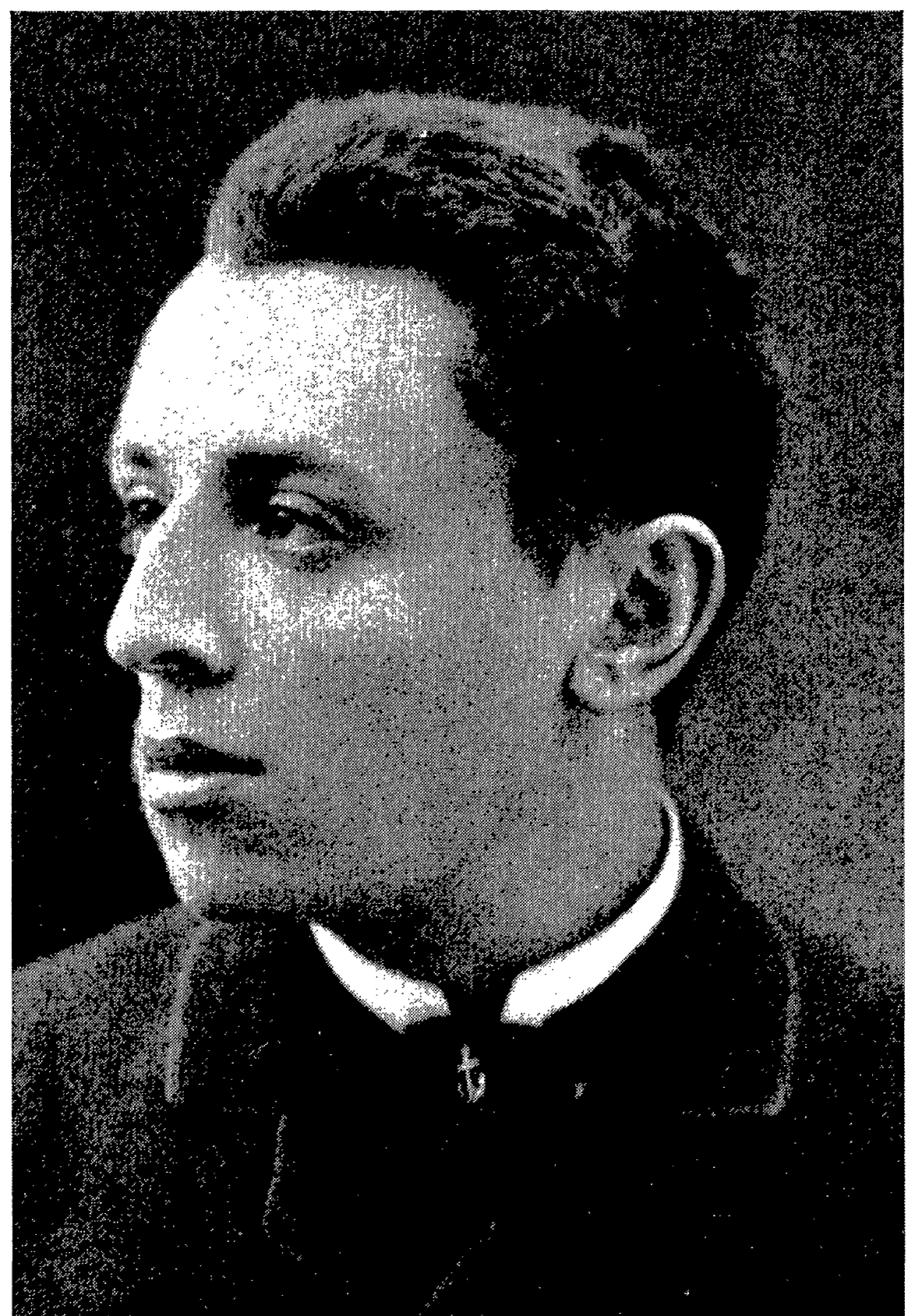
(plate; bound in the original between pp. 110–111)
111at the factory and my feelings toward America I strove to present in the loveliest colors; I did not want my parents to eat their hearts out.
Oh, how pleasant it was to write home! I wrote as often and as much as I could. I would convey to them my impressions, describe American life.
This was the first time that I tried to describe anything in Yiddish. Up until Velizh I had never written a single letter in Yiddish; from Velizh I had corresponded with my parents, and in Yiddish, naturally; but such long letters as from New York, I had never sent them from there.
While in Velizh I had also longed strongly for home, but far from as strongly as in the first few years of my life in America.
Often, walking along the street, I would quietly sing one of the melodies I used to hear from my father. Or, if not, I would sing to myself a Russian folk song from among those we had been taught at the Vilna Teachers' Institute, or a certain melody that Doctor Yatskevitch's elder daughter used to play on her piano.
The Russian folk songs are imbued both with the poetry of melancholy and with a feeling of broad fields and quiet skies; and with this double freight they were rooted in my heart. And now their poetic melancholy found a passionate echo in my longing soul.
The melodies that my father used to sing were not folk tunes. They did not possess the poetry and the breadth of the Russian village songs; but they had a virtue that was dearer to me than all the enchantments of music: they were my father's melodies.
112Everything was strange and repugnant to me. It seemed to me that everything here was different from at home, from all of Europe, from the whole world.
Much really was different — countless things, customs, concepts, tastes. And this made on me — and on all the other immigrants — the impression that everything was different.
I had, for example, seen how an American drinks coffee: the coffee is too hot for him, so he pours a little cold water into it, and drinks on.
Or I would sometimes see how an American eats bread with butter, not at all the way we do: instead of spreading the pat of butter on the bread, he lays it on top of the bread and so takes the bread into his mouth.
This very water in the coffee, the bits of butter, the "all right" with the "never mind," with Hester Street, which sounded to me like "Esther Street," with Suffolk Street, which Jews call "Sfeyk Street," with "Vinegar Street" instead of Essex Street, with the terrible heat, with the great four-cornered chunks of ice that were dragged into the houses with tongs, with the coarse cry: "Ice! Ice!" from the "ice-men" — this and hundreds of other things would never cease to tangle themselves up in my heavy, longing mood.
Today, when an immigrant of ours comes to America, he finds a great Jewish world. This Jewish world is indeed full of features and colors that are foreign to him. But it is, all the same, a Jewish one. The greened-out Russian, Polish, Galician, or Romanian Jew is a Jew just as the greener is. He quickly becomes accustomed to the greened-out one, and through him — to America.
With many American Jewish words and with many American customs the present-day Jewish immigrant is 113even familiar from back home — from letters or from newspapers, or from guests who come from America.
We, however, found here quite few Jews, and a quite small little Jewish world. Back home we had known absolutely nothing about America. Our feeling of strangeness was far deeper, our loneliness — much sharper.
The cat that I had spied in the Philadelphia harbor, when I came off the ship, had been for me a living proof that America belongs to the same world as Vilna, as Petersburg, as Lemberg, as Berlin. But when I began to become acquainted with America, in the first months of my life in it, the opposite impression grew in me: it seemed to me that it was an altogether different world.
A new world — in the literal sense of the words!
It was unpleasant to me. But it strengthened me too — like the strong, healthy scent of a freshly plowed field.
It seemed to me that America lived more in one day than Russia in ten.
America intrigued me, kindled my curiosity.
I saw around me astonishing riches, an astonishing activity and spirit of enterprise, broad prospects for leading a useful and interesting life.
Of the expression "the land of unlimited possibilities" I did not yet know then. But the sense of the phrase I felt — felt it with regard to America in general and with regard to my own future in particular.
It seemed to me that, willy-nilly, I too was becoming someone else.
114Almost every minute brought a new impression, and I took it in with thirst. I examined everything, listened to everything, observed everything. And everything both repelled me and called me to itself; both poured poison into my homesickness, and teased me with promises.
My success as a speaker and lecturer, the unexpected taste of applause, the sudden feeling that thousands of people knew me — this intoxicated me. But it did not ease my homesickness and my various other spiritual pains.
My restless nature filled those months for me both with torments and with delight.
There were minutes when I did not recognize my own "I."
I still spent many hours over "Appleton's Grammar." But often I would spend an evening with my countrymen or with the German anarchists. Often Badanes would come to me, and we would go off together to the German comrades.
These few months present themselves to me in the form of the streets through which I used to pass, striding from the tin factory to my lodging at Mrs. Sas's. Hubert Street, Canal Street, across Broadway, Elizabeth Street, Mott Street, then across the Bowery to Catherine Street, corner of Monroe.
The sign on a certain bakery on Canal near Mott, the omnibuses of Broadway and the horse-cars of the Bowery — this is what I always see when I recall the longings and strivings that filled my heart then.
Notes (the original's footnotes)
[p. 66] This society existed for a few years, and then it went under. Many years later our Russian immigrants founded a society exactly like it, with the very same name. It became known by the initials "HIAS." As these words are being written, it still exists. It is large and has branches all over Europe.