Chapter Eight
First Attempts in the Jewish Labor Movement
226The first attempts that were made to found a tailors' union ("schneider union") — when, by whom, and how they were made — are not easy to establish. Hertz Burgin tells of this in his "History of the Jewish Labor Movement," on the basis of information that he gathered with much effort. But most of the people who took part in those movements were already dead by Burgin's time, or could not be reached for other reasons. His chapters about those years are therefore not always free of inaccuracies, though in general they contain valuable material.
Here I give what I remember about the matter from my own experiences — about things in which I personally took part, or which I observed.
On the night after Yom Kippur (the Day of Atonement), in 1884, on the upper floor of 227165 East Broadway, a tailors' union of Russian and Polish Jews was founded, and I took part in the founding as a speaker and educator. The meeting at which this happened was a very small one. But it was the cornerstone on which an organization of several thousand members soon grew up.
Hungarian and "Great Polish" Jews of New York had tried to found a tailors' union a year earlier; but nothing came of it. Their tailors were employed in the better work of the trade, though also in small shops and for contractors, just as one worked on the cheaper clothing. The shops and dwellings of these better workers were located some ten or twelve blocks from the center of the Russian-Jewish quarter, over there where today is the Galician quarter.
The cheaper work was done by the great mass of Polish and Lithuanian Jewish tailors, and they lived and worked in the Russian-Jewish district.
The two kinds of tailor-workers remained separated for a long time, and later, even when a large tailors' union had already been founded, they remained for a good while split into two separate organizations.
The meeting on the night after Yom Kippur grew out of a conversation I had with a Jewish presser ("fresser" — presser) from Great Poland, a tall, bony man of about forty, with broad shoulders and Japanese-black eyes. Unfortunately I do not remember his name, though he was active in the union for a long time, and over the course of many years we would often meet at assemblies.
My first acquaintance with him took place on the street. He stopped me and said that he 228had heard my socialist speeches. We got to talking about the tailoring trade, and he described to me the troubles that the workers had to endure from the contractors in their sweatshops. We talked our way to the question of founding a union of the pressers, as a beginning. I offered my help and gave him my address. It was then the eve of Rosh Hashanah (the Jewish New Year), and we agreed to wait until after the Days of Awe (the High Holy Days); for the Jewish tailors in those years were mostly religious, old-fashioned Jews, many of them with beards and sidelocks.
The presser afterward conferred with several of his fellow workers. So a couple of hours after Ne'ilah (the closing prayer of Yom Kippur) we came together. In the hall stood an ark for the Torah scrolls and a prayer-stand, at which people had prayed all day long.
165 East Broadway, where the small assembly took place, was a building of meeting-halls, and in those years most of our socialist speeches and lectures used to be held there. But like all the meeting-halls and dance-halls of the Jewish quarter, they were transformed into synagogues for the Days of Awe.
I do not remember any details of the assembly. I remember only how the tall, lean presser introduced me; how I stood and spoke, and how afterward the first members were enrolled.
I also remember a couple of the tailors' meetings that I addressed a little later, when the union was already organized. The largest assembly at which I took part as the main speaker at that time took place in Concordia Assembly Rooms, on 229First Avenue, near Second Street (later the place was called Progressive Assembly Rooms). This assembly I remember with complete clarity.
The hall was a large one, and it was packed. There were probably over two thousand people there. That was then the largest assembly of Jewish workers that had ever taken place in America (and probably in the whole world too). I had never before spoken to such a large crowd.
I remember the strong impression that the two-thousand-headed mass made on me. I was introduced, and the crowd began to applaud. When I stood up before this sea of human faces, for a minute I was as if bewildered.
My speech was listened to with the deepest attention, curiosity, and enthusiasm. With the exception of Rayevsky (Shamrayevsky) and a couple of other Russian socialists who had come to this meeting, among the two thousand listeners there was probably not a single one who had ever before heard such talk. It was a great novelty for them. They nodded their heads, winked at one another that what I was saying was "right as gold," clapped bravo, and laughed thunderously at every witty remark that I made.
The chairman of the meeting was an Americanized Polish Jew named Shapiro, a man of some thirty-odd years, somewhat lame in one foot. He was mixed up with Tammany politicians, and chewed tobacco. The other leaders of the union were of the same sort of people. One of them kept a beer saloon on Essex Street. They were 230tailors, or former tailors, and the union was in their hands. I used to console myself with the hope that in time, when the masses would become permeated with our propaganda, they would drive these men out.
A German anarchist once asked me why I had anything to do with such a union. I answered him: "If I were allowed to preach my ideas in a gambling-house, I would not dare to refuse there either. It is my duty to carry on the socialist propaganda wherever I can. And this, after all, is an organization of workers. They surely must be enlightened."
The president of the first tailors' union was named Aronson. Shapiro was the secretary, but at the meetings he often used to be the chairman.
That a man like Shapiro should be a leader of a Jewish workers' union was not at that time an unnatural thing. He and the other leaders were people who knew how to make a speech. They knew how to run an assembly. Among our Russian immigrants such a quality was a rarity. Those who knew how to run assemblies naturally became the leaders in the lodges, and they also moved among politicians. So, when people began to found a union, the masses chose them as chairmen. For they knew when a "motion" was out of order; when one gives the floor, and when one does not. In short, they knew how to command with the wooden gavel. So, when our unions began to be founded, they became the ringleaders. It could not have been otherwise then. Our tailor-masses were then incomparably more ignorant than today.
231In the Hungarian quarter it was a little different. Among the Jews of Hungary, chiefly in the larger cities, popular education and modern culture were more widespread than among the Jews of Russia or Poland. Among their tailors in New York there were already at that time several intelligent people who had been acquainted with socialism back home. To this Hungarian group also belonged a half-intelligent tailor who was not from Hungary but from Great Poland; but his birthplace was near the German border, and he had lived for a certain time in Germany. His name was Louis Smith, and he was one of the leaders.
The following conversation, which took place between me and a young Jewish tailor on the same day when I delivered the above-mentioned speech in Concordia Assembly Rooms, is characteristic.
Rayevsky and I were walking along Canal Street, and a young man stopped us. He had been in Concordia Assembly Rooms when I gave my speech, he explained. After he had paid me a compliment for the speech, he asked how much I had been paid for it. Rayevsky and I assured him that those who give such speeches take no money. The young man laughed. He thought that we were making fun of him. It was impossible to tear out of him the conviction that without money one does nothing. He judged according to such leaders as Shapiro.
And this was not the only such experience I had.
To break down this notion among our masses; to ac- 232custom them to the idea that there is such a thing as principle in the world; to accustom them to the idea that for a citizen to sell his vote on election day is a far greater sin than to smoke on the Sabbath — these were some of our tasks in those times.
Our movement made progress. The number of people who responded to our agitation grew.
The crowd at the mass meetings of those days often displayed a crudeness and a childishness that one does not often meet now. I will give an example.
There was a meeting in Everett Hall, on Fourth Street near the Bowery. The chairman was Gregory Weinstein, one of our own people, a young man from Vilna, who was then an American typesetter and an active member of his union. I was one of the speakers. A debate developed over the question of whether a union should take in as many members as possible, or first limit itself to a smaller number. Our immigrant mass was then still so incapable of being organized; and the first unions made so little sense, that my opinion was that one should first properly organize the few members who were already in the union, and only afterward take in further members. In this connection I gave a parable about a cook, how she cooks fish. She does not pour in a lot of water all at once; she puts in a little and lets it cook down; then she tastes it, and when she feels that more water is needed, she adds it. The parable went over strongly. But after the meeting, already at the exit, a group stopped to debate with me about it. One of them, a middle-aged Jew, entirely overgrown with hair, argued that I had compared 233trade unionism to a cook; that I regarded the worker as a servant-girl; and several others agreed with him. We came out of the hall and walked along the street together, debating, and the hairy Jew and his followers stuck the whole time to their own position.
Among the active members of the first tailors' union was the above-mentioned tailor-actor, the clean-shaven Israel Barsky. Through the union I became better acquainted with him, and I found in him a highly honest person and an interesting idealist.
At the end of 1884 several of the Russian immigrants, with Aleinikov as chairman, founded a society under the name "Russky Rabochi Soyuz" (Russian Workers' Union), which every Sunday afternoon gave a lecture with debates in Russian, at 106 East Broadway. I was a member and one of the lecturers. The union did not exist for long. A difference of opinion arose — more accurately, a personal clash — and another Russian association was founded under the name "Labor Lyceum." Louis Miller (also from Vilna) and I were the founders.
In the middle of a meeting of the "Russky Rabochi Soyuz," when the conflict took place, we walked out and rented another hall (the same hall where I had given the speech at the founding of the tailors' union). Then we returned to the 234assembly at 106 Broadway and there announced that next Sunday there would be a Russian lecture at 165 East Broadway.
As our first lecturer we prepared Alexander Jonas, the chief editor of the German "Volkszeitung" (People's Newspaper). I went to invite him, and he gave me as a topic: "Issues of the Day"; then we had a handbill printed about it and distributed among the immigrants.
Jonas spoke in German. The speeches of the debaters were in Russian, and they were translated for him into German.
The further lectures were given by Shevitch and by our own people: by L. Miller, M. Zametkin, by me, and by others.
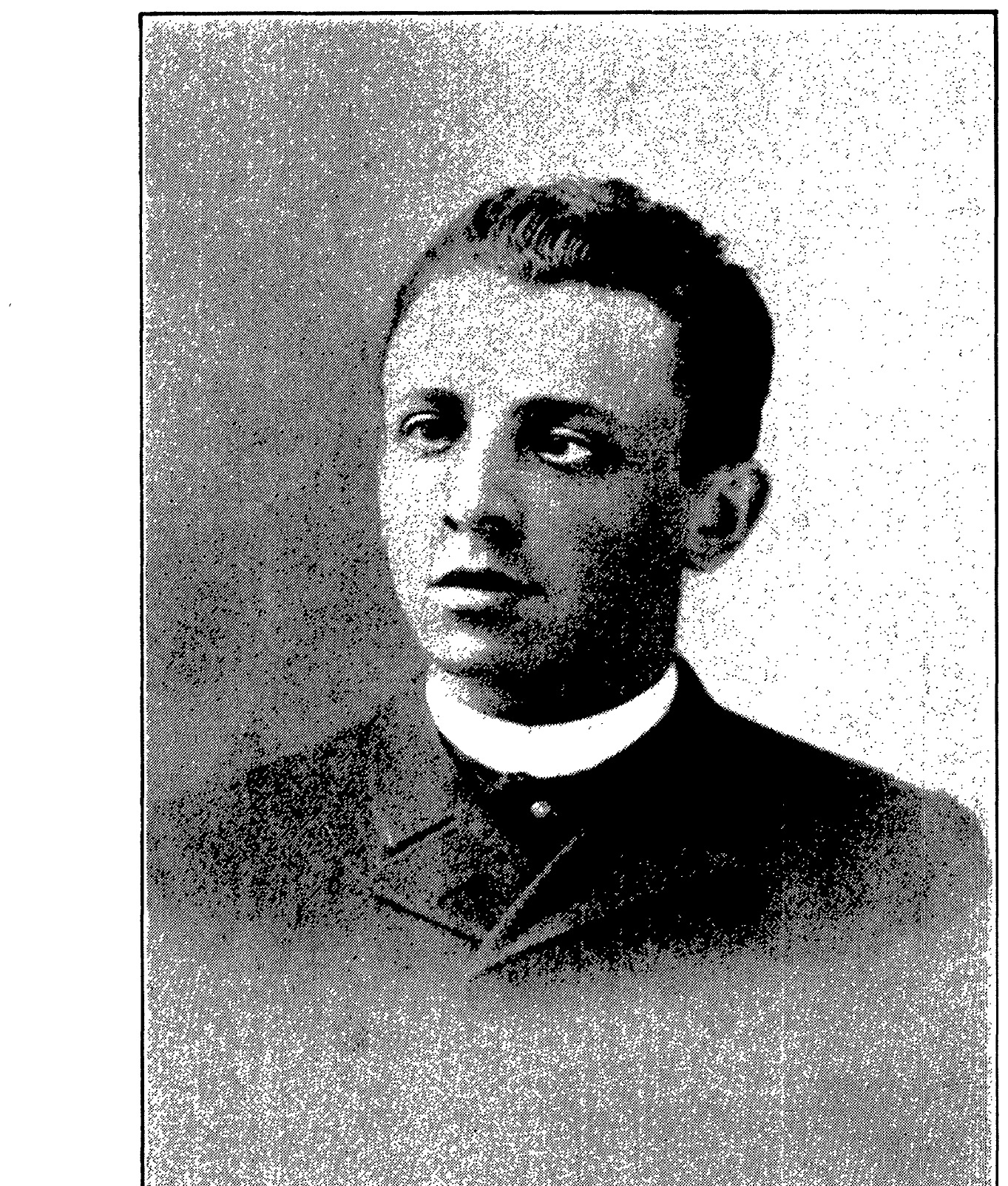
Later we got hold of a new Russian lecturer, who was older and more important to us. This was Dr. Merkin, a Jew from Dünaburg, of some thirty-odd years, a tall, broad-boned man with a thick blond beard, nearsighted, with gold-rimmed glasses. He was a rarely capable, well-read, educated person, with the power of an orator. His Russian, however, was of a peculiar sort. He spoke with a Gemara (Talmud-study) chant, and he often used to end words in no Russian manner at all. He had earlier lived a good number of years in Germany, where he had finished studying to be a chemist. He knew the German language excellently, and he spoke it too with a Gemara accent and with a Lithuanian-Yiddish pronunciation. His Russian was even more comical. But all this was a trifle, to which we easily grew accustomed. He had something to say; his lectures had rich content. We used to await them with impatience.
235In Germany he had been active in the Social Democratic Party, which then had to carry on its work in secret. The Bismarck law against the socialist movement existed at that time, and the comrades used to conduct their agitation "underground," though at the elections they used to take part and, despite all the oppression, used to elect a large number of socialist deputies. He was thoroughly acquainted with the movement in the whole world, and in Marxist theory he was a scholar and a sharp mind. And everything he explained in an interesting manner — with color and with original ideas.
When he used to become strongly inspired, he used to speak with a genuine maggid-like (preacher's) tone. In the middle of a lecture, pacing back and forth across the platform, he used to go up to the window, stop, look out, and speak to the street; he would let his hands drop under the long flaps of his black German coat, and while he sang out his words with a Gemara chant out toward the street, he used to shake his black coattails at us from behind. Soon he used to give himself a turn back to the crowd, look someone in the eyes, and sing his Gemara chant right into that person's face.
He was on the whole a peculiar man. For the smallest thing he used to take offense, and quite often without the least cause.
Once, when he was in the midst of looking for lodgings, I invited him to stay with me until he would find a suitable room (I was then living no longer at 213 Clinton Street, but on the opposite side, at 224 Clinton Street; and not in an attic, but in a good, large room, with a level ceiling and with two large windows 236to the yard). Three or four evenings passed very pleasantly. We would drink tea together, chat, and spend the time in the best of friendship. On the fourth or fifth evening, just as we were getting ready to go to sleep, he suddenly grew sullen and began to get dressed.
— Why don't you tell me openly that you want to be rid of me? — he asked. — Do you think I'm such a fool that I don't understand?
I was astonished. I begged him to explain what I had done to give him such an impression. But it was impossible to get an answer out of him. I assured him, almost with tears in my eyes, that I considered myself fortunate to have him as my guest. Only with great difficulty did I calm him, and he lay down to sleep. The next morning he wished me a warm "good morning," pressed my hand several times, and apologized to me.
— I've thought it all over, — he said, — and I've come to the conviction that I accused you entirely without cause. You really are a very hospitable person.
How he got the idea that I wanted to be rid of him I simply could not figure out. He must have interpreted some word of mine according to one of his twisted notions.
Around that time two brothers from Odessa, Mitia 237Gretsch and Niuma Gretsch, founded an organization called the "Jewish Workers' Association" (Arbeter Farayn).
Niuma, a young man with nearsighted eyes and a balding head, was under the strong influence of the New York "Folks-Tsaytung," the organ of the German Social Democrats, and he founded the association with the explicit aim of steering the Jewish movement not in an anarchist direction but in a purely social-democratic one. As an outspoken social democrat, he was decidedly opposed to anarchism, which at that time was still tangled up strongly in my mind. He had given himself over so completely to the German movement, and read the German "Folks-Tsaytung" with such diligence, that he had learned to speak and write German well before he became acquainted with the English language.
He and his brother, then, organized the "Jewish Workers' Association." Since they were no speakers themselves, they would often invite me to give a talk. They always demanded, however, that I avoid any statements that ran counter to their principles. Niuma, the most active member of the association, was a quiet, gentle person. He used to argue with me that there were enough points on which we agreed, and that we could work together in the labor movement. I could not join his association, because I considered myself an anarchist. But invitations to give talks and lectures there I would accept.
Gretsch did much good with his workers' association. He helped found a few of the first unions, and was the chief founder of the first cloak-makers' union. The first mass meeting of this organization took place at 177 East Broadway (Hurst's Assembly Rooms).
238I gave a talk and Gretsch enrolled the members.
This activity of Gretsch's did not last long. Little by little he devoted himself entirely to the German socialist movement, until he was elected national secretary of the Socialist Labor Party — an office he held for several years.
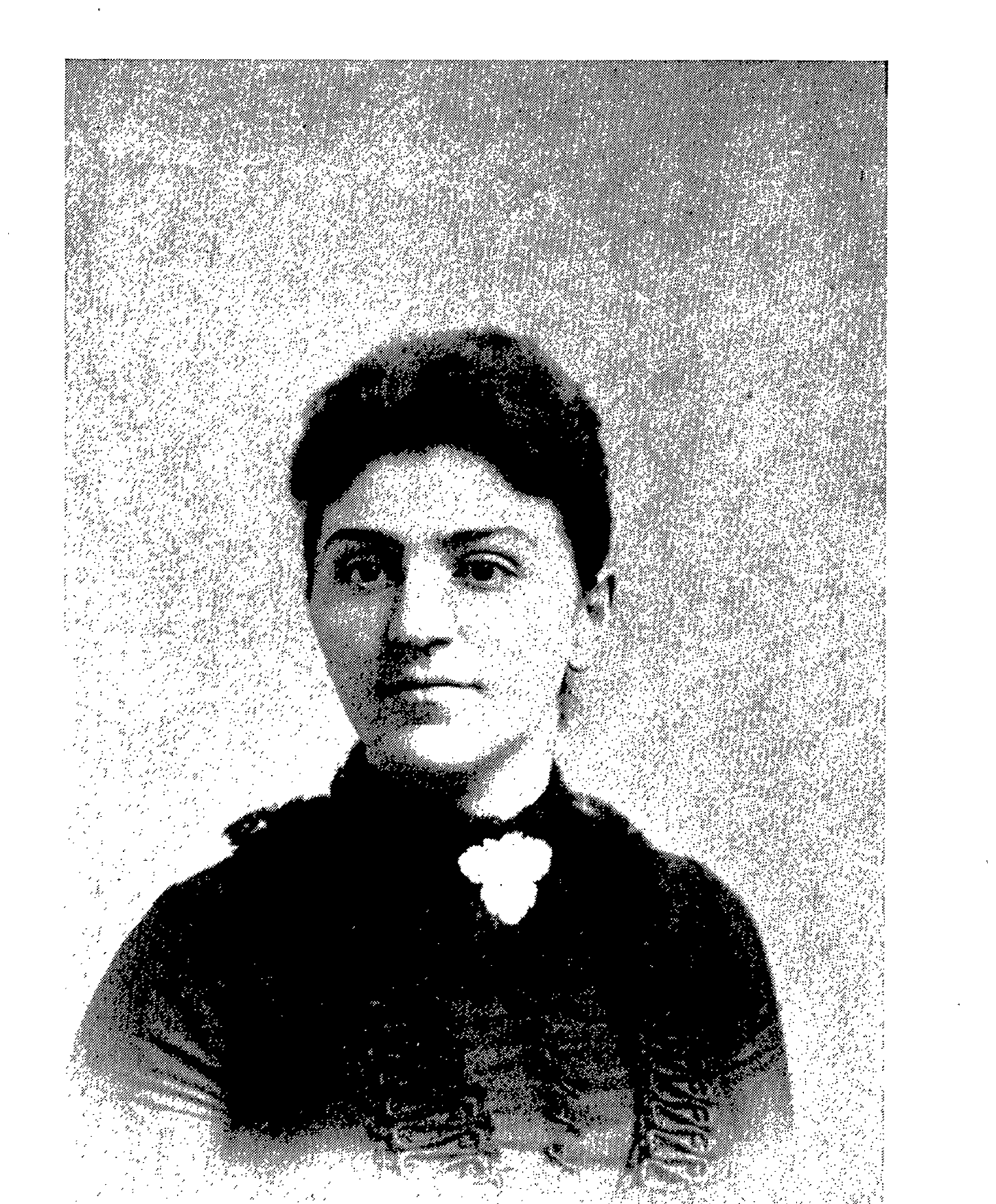
In February 1885 I married. My chosen one was Aniuta (Anna) Bronstein, a Kievan, the daughter of an interesting, cultivated father. She had finished gymnasium. After the Kiev pogrom she had become enthusiastic about the "Am Olam" and became a member of the company, or party, that Nikolai Aleinikov led from Kiev to America. In the "Am Olam" she was one of the central figures. In the Russian colony of New York she drew attention with her delicate intelligence and original good sense, and above all with her personality.
The reader may perhaps remember that among those who attended my second lecture (in the hall that consisted of two rooms with "sliding doors") was a young woman with a pince-nez who was standing on a table. That was Aniuta Bronstein.
Our first apartment was on Division Street, between Suffolk and Clinton. If you now walk through
(plate; bound in the original between pp. 238–239)
239brand-new. We were the first tenants to move in there. The furniture I bought on installments from one of my students, a customer peddler.
In those years our intellectuals used to earn so little that our home was considered a fine apartment among our colony. Three new rooms, freshly furnished — they really did look fine.
The Board of Education of New York took over to itself the evening school of the Young Men's Hebrew Association. We, the teachers, took an examination, and on a certain evening in October 1885, after we had received our diplomas, we marched over with all our students from 206 East Broadway to the public school located on Chrystie Street near Rivington. There I held the position for twelve years.
I had always dreamed of putting out a Jewish socialist newspaper. The reader will recall that a plan to found such a newspaper had already been born in the "Propaganda Association" three years earlier. At that time the plan was not realized. But I never gave it up. And now, as the Jewish labor movement had begun to grow, the need for such a newspaper was felt all the more strongly. Raievski had had such thoughts as well; so we decided to make an attempt at putting out a weekly.
No sooner said than done. About capital we did not worry. I earned only enough to live on, and Raievski no more than I. But since he was not married, he could save something. He worked in a factory (his father had a silk factory in Kremenchug, so here he sought out a job in the same trade). I say that he 240could save something. His entire fortune consisted of ten dollars, and that was our whole "investment." The rest the printer gave us on credit. Under these circumstances we began to put out the newspaper.
All day long Raievski worked at his factory and I was busy with my lessons; and our free hours we both devoted to our plan. During the day I had enough time, so I used it for preparing the venture.
We gave the newspaper the name "Di Naye Tsayt" (The New Era). The first issue appeared on Shevues (Shavuot) 1886. Everything was written in the simplest Yiddish one can possibly imagine, so that the least developed worker would be able to understand it.
— How can one write Yiddish exactly the way one speaks? — some of the intellectuals asked me. — When one writes, one has to dress up the Yiddish language so that it looks "more respectable."
I remember a conversation I had with an intelligent immigrant named Shur, from Zhitomir. He was one of the well-known figures in the colony — a clever man, with independence in his character and with a sharp, venomous humor in his speech.
— Cahan, — he says to me, when our first issue appeared, — you deserve a medal for your newspaper.
From his little smile I could see that the compliment had "barbs" in it.
241— What do you mean, Shur? — I asked.
— I always knew that Litvaks have a great deal of nerve, — he answered, — but as much nerve as you show with your "Naye Tsayt," not even a Litvak has ever yet displayed. Your newspaper will have a great success.
Then he began to needle me: how does a person dare to write such plain Yiddish as papa and mama speak?
The rule that to use simple Yiddish was not refined was observed on the stage as well at that time. In the Jewish theater they used to speak "daytshmerish" (Germanized Yiddish). Often even a Hasid or a synagogue beadle would speak "German" on the stage.
I mentioned above the Jewish actor Karp, who came to America with the first professional theater company (in the summer of 1884). I once asked him why he spoke "German" on the stage instead of Yiddish, and his answer was that the duty of a Jewish actor is to educate the public, to teach them to speak a refined tongue.
That his own "German" was nothing more than ridiculous Yiddish — that he probably did not know. In any case he was convinced that to speak a broken German was finer than to speak a complete Yiddish.
Shur predicted that our weekly would have a great success, precisely because it was written in such "impudent" mother tongue. He believed that the masses would buy it. And his prophecy might perhaps have been fulfilled, had the editors of the newspaper had at least a few hundred dollars to start with. As it was, however, I was 242both editor-in-chief, proofreader, manager, bookkeeper, and advertising agent. And all these duties I carried out during the hours when I was free from school and from private lessons. Raievski, in turn, worked hard all day in the factory, and his share in our work was limited to the evenings.
The newspaper was printed at a printer named Katton, in a little cellar located on the spot where Canal Street meets Division. And there, at a bit of a desk that Mr. Katton allowed us to use, was our "editorial office."
It was a hard struggle. I used to run around after advertisements and after the few dollars that were owed us for them. I was quite a wretched businessman. My work as solicitor and collector was mixed with propaganda. When an advertiser made fun of the socialism that our newspaper preached, I would draw him into a debate and lose time. In one case I even lost the advertiser as well. I got heated and told the businessman that he was a leech living off the worker's blood, and marched proudly out of his store.
A Jew named Sandler, who kept a shoe store on East Broadway near Rutgers, has stayed in my memory because I saw him often and had long talks with him. He used to question me about how people would live without money and how there would be no rich and no poor. The "plan" pleased him greatly; and he would let me wait while he finished off with a customer, so that he could go on listening about the socialist messianic times; but more than one dollar I could not get out of him for his advertisement.
When our third issue appeared, competitors showed up. Two young men came along with eight hundred dollars that they had saved up while working 243in American factories, and they founded a radical weekly with Moses Mints and Abel Broslavski as editors. The name of their newspaper was "Folks-Tsaytung." They set up their own printing shop and occupied a whole floor. Their newspaper was much larger than ours, and they took on print work from others as well.
Had we been able to get a few hundred dollars to support the newspaper through the first months, "Di Naye Tsayt" would probably have withstood the competition. But we did not possess a cent. Every week we had a hard fight before we managed to come up with the money to pay the printer. He was quite a friendly man; but he himself was no rich man. With the greatest difficulties and anxieties we kept it going up to the fourth issue.
There was then a strike among the tailors, and the union wanted to support our newspaper, but taking support from a workers' organization we considered a crime; we took payment only for the announcements the union placed, but that did not save "Di Naye Tsayt" from death.
What kind of a newspaper was it? To my regret I cannot get hold of a single copy of "Di Naye Tsayt." But I remember its face and its content. It contained the very beginnings of socialist agitation. My article in the first issue was rather naive. Linking the appearance of our newspaper with Shevues, I spoke about matn-toyre (the giving of the Torah); I told the Jewish workers that the socialist ideas which we would explain to them should be their Torah. Thus, our newspaper was a new giving of the Torah.
Besides my and Raievski's articles, the first 244issue contained an article by Alexander Harkavy about "The Workers in the Times of Moses our Teacher." A feuilleton in this issue contained a socialist parable with its moral.
The whole Jewish newspaper business was then very little developed. The "capitalist press" of the Jewish quarter was "Di Gazeten" — the mother of the "Tageblatt." A short time earlier a second Jewish newspaper had appeared, also a "capitalist" one. Its name I do not remember. They were both of the same sort: orthodox and small-town. The language was peppered with "daytshmerish" (Germanized Yiddish) and with bits of Gemara. Both were weeklies. Of a daily Jewish newspaper no one yet dreamed at that time.
A little later a third Jewish newspaper appeared, also a weekly. On the newsstands you could not find it. The reason for this was the character of some of its advertisements. The editor and proprietor had talked Christian firms into believing that he could give them a "hekhsher" (kosher certification) on such merchandise as shoes or suspenders, and he actually printed an advertisement stating that the suspenders of a certain firm were recognized by rabbis as "kosher." He used to print only a small number of such copies — just for the advertisers. In the copies he used to send to his Jewish advertisers, these "hekhshers" did not appear. "Jewish" copies he printed only few of, anyway. His main income came from the non-Jewish ones.
The "Folks-Tsaytung" was a radical workers' newspaper. It existed longer than "Di Naye Tsayt," but also not very long — no more than about three years.
(plate; bound in the original between pp. 244–245)