Chapter Ten
I Come to a Shore
281The noisy events of 1886 and 1887 had thrown my inner contradiction into confusion. In the heat of the Henry George campaign I cared rather little that I was going against anarchism, which was officially my creed. I told above how my former apartment-mate Mashkovitsh threw this in my face. At that moment it caused me pain, but really only at that moment. In my heart I already knew then that anarchism was not my creed, and that in general I had no definite direction. I firmly believed in socialism, but in socialism plain and simple. I could not pass judgment between the social democrats and the anarchists.
Later on, when the bold revolutionary meetings began, the social democrats and the anarchists almost forgot their usual hatred. Most, Hasselmann, and Schewitsch in fact gave more or less the same sort of speeches. And in the first days after the eleventh of November the bitterness grew weaker still. Anarchists and social democrats fel 282t like two quarreling brothers at the funeral of a third brother. This mood created in me an opinion that the difference between the two parties was no difference at all.
But once the uproar had passed, I felt the contradiction between the two directions more strongly than ever. New questions appeared in my mind. They would not let me rest.
It seemed to me that my fog had suddenly grown denser. But this was like the fog that a ship's passenger sees when he comes too close to a shore. I sensed that the time was near when I would have firm ground under my feet.
If there was turmoil in my mind, I had nonetheless begun to suspect that not everything was in order in Most's mind either. In any case, I had begun to understand that the violent means he preached made no sense whatsoever. All the anarchists and socialists together were a tiny handful against tens of millions. If they had followed Most and gone out into the street with rifles, they would have been crushed like flies. He began to look to me like a madman.
I mentioned above an intimate letter that I wrote to the present Dr. Spivak (Spivakovsky); I wi 283In this respect I had nothing to envy in Frey or in Most. I saw that their greater age, broader reading, and richer life-experience had brought them no enviable results.
With all his great knowledge, Frey had arrived at a firm belief that to struggle for liberation, or even for better wages, is a sin. He used to tell us how he had taught himself not to fight, not to show any resistance, but to accept everything with love. That such a notion is built on a beautiful idealism, but that it is childish — this I had long since understood.
I now had a similar feeling with regard to Johann Most. Just as Frey preached a senseless theory of not fighting, so Johann Most preached a senseless theory of struggle. He taught a strange sort of terrorism — how servant girls, for instance, should put poison in the soup and in this way poison their capitalist masters, how to make bombs and kill individual manufacturers. I still did not clearly know why anarchism had no foundation; but that this side of Johann Most's teaching made no sense, this too I had long since understood. I lacked, however, the courage to say it out loud.
One thing that hindered me was that Most always declared himself a Marxist, and his anarchism was mixed together with Marx's theory. In this respect he was an exception among the prominent anarchist writers. There was a tangle in his mind, and I was under his influence even then, when I understood how childish his terrorism was, or "propaganda by pistols, bombs, and poison."
284Now, however, as a result of the strong impressions the Henry George campaign had made on me, I began to put new questions to myself. I had seen what enormous significance that campaign had, and yet I had entered into it as a "transgressor," a criminal against anarchism. I now felt that my transgressions were really good deeds; for the political struggle had in those months stormed up New York, and through it the propaganda against capital and against the corruption of the politicians had flared up. That this brought more benefit than the anarchist "propaganda of the deed" — that a child could understand.
The senselessness of Most's attacks against taking part in an election campaign became clearer to me than ever; and this brought me to strong doubts about other particulars in the tactics of the anarchists, and also in the theoretical side of their teaching.
In what does the chief point of anarchism consist? It is against any rule whatsoever, even against the rule that a majority itself hands over to its elected representatives through free elections. The will of one person is as important as the will of a thousand — they argue — so what right have, for example, five hundred people to compel two hundred people to live as they — the 500 — wish? Therefore anarchism is against voting, against elections, and against every form of politics.
On the surface the principle sounded most just to me. But when I began to think my way into it, I had to admit that it only muddled my mind. How can one give in to everyone? How can one manage without voting, unless everything is left to a despot or to a group of despots? If one may not 285vote, then how will it be decided who is to be this or that official? And how will it be decided whether to introduce a certain thing or not? How will one be able to have any sense or order in a free society?
That word "sense" I often used that winter in the debates I held with myself. I used to ask myself: how can one run a society with any sense, without voting?
My mind works by means of comparisons. I picture a thought to myself in a concrete, tangible form, which I see as if before my eyes. Thinking about anarchism and its principle with regard to elections and voting, I used to imagine the pupils of the Vilna institute sitting at the long tables in the dining room, and everything is free; we ourselves are the masters over ourselves and over everything. There is no director, there is no "steward." A question comes up about the dinner hour: should it be at two o'clock or three o'clock? Some pupils want it one way, others another. How then should it be decided? Give in to both sides, that is, have two dinners? But that involves extra cost and effort, which one cannot afford. So what is to be done? How can one arrive at any sense?
A second comparison that used to come to my mind was of several people in a room, where some want to open the window, while for the others it would be too cold. Someone surely has to give in. But which side?
I read through a second time a little pamphlet by Johann Most, titled "The Free Society," in which he sets forth the essence of anarchism. I looked over anew the works of the fathers of anarchism — Proudhon and Bakunin — and two pamphlets by Peter Kropotkin. I read through a second time Herbert Spencer's 286work "Social Statics," which contains the philosophy of individualism (the foundation of anarchism) and an attack on socialism. I sought an answer to my questions (kashes) and did not find one.
Most's "The Free Society" contains a few lines that did indeed treat my chief question directly; but when I reread them with special attention, I came to the conviction that he passes over the main point, that he answers the question with words that contain no answer.
I suspected that he himself could find no answer, that he was deceiving his own mind. Of his absolute honesty and sincerity I had no doubt. But I saw that for him this was a matter of belief and feeling rather than of understanding; and here, where understanding does not agree with his belief, he shuts his eyes and talks his logic over with words.
I have already mentioned above that my personal relations with Most were not friendly. But this had absolutely nothing to do with the impression his little book made on me. Despite that clash, I used to listen to his speeches with enthusiasm, and his pamphlets I now read with the expectation of finding light in them. But I did not find it.
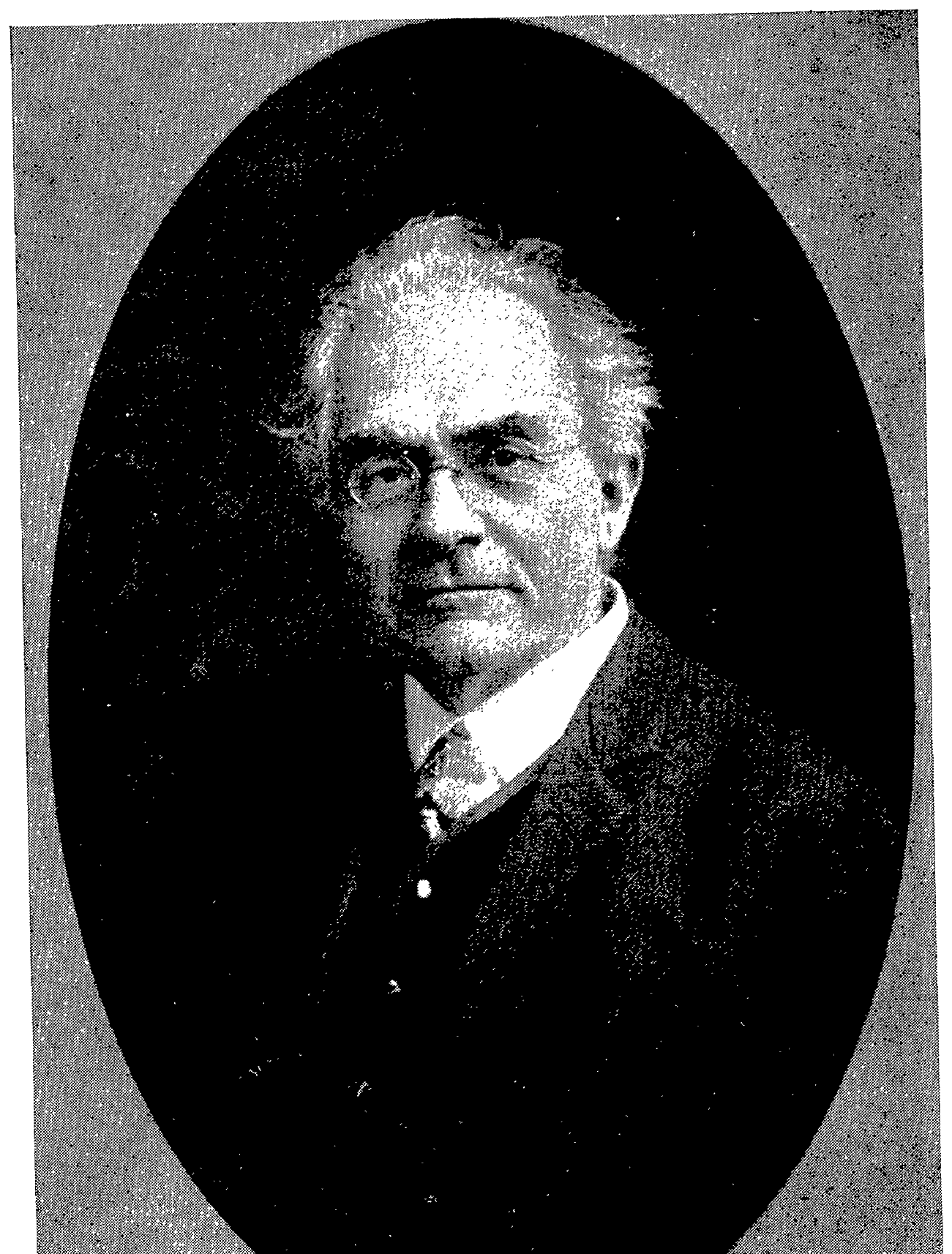
I longed to have a personal conversation with an anarchist theorist and to put my ques- 287tions to him. Since I could not have such a conversation with Most, I resolved to do so with another recognized anarchist authority; I picked out a man named Bachman, a German, who in those days had among the anarchists a reputation as a very well-read man and a deep thinker, and who was one of their leaders. I sought him out through the above-mentioned Justus Schwab, the handsome anarchist, whose saloon at number 50 First Street was a headquarters of the German anarchists.
Bachman was an older man of middling height, with gray hair, a pale face, with a mildness in his eyes and in his voice. We arranged to meet at Schwab's place on a certain evening. At the appointed time he came, accompanied by his wife — a German woman of the same height as he. The air outside was pleasant, and so, at Mrs. Bachman's suggestion, we went out into the street and held the whole conversation while walking.
We walked along Houston Street, which was then one of the genuinely German streets of New York. We went from Second Avenue to the East River and back. So we walked back and forth until day began to break.
Speaking in my broken Yiddish-German, I put my questions, and Bachman answered them, or tried to answer. He was a sincere man, and where he had no clear answer, he openly admitted that to my question no answer could be found.
I heard from him several things that were new to me. He brought explanations from in- 288teresting books. But to the question of how, without elections and without voting, there could be any sense and order in a free society; how one could give in to everyone — on this, he admitted, there is no answer. But what then? The rule of a majority over a minority is a tyranny. One must fight against it. It is a matter of principle, and this must be adapted to life as far as one can.
Often his words did not agree with one another. And a couple of times, when I pointed out his contradictions to him, he conceded that I was right.
I gave him my comparison with the window. He spoke in a lovely tone about the inner goodness of human nature. He argued that where people feel like brothers, a way is already found. People do not dig in. It is a pleasure to give in, to get along. To this I answered that not all people are as good-hearted as he, and Mrs. Bachman thanked me kindly for the compliment.
"But what, after all, should be done with those who cannot bear the cold? — I asked — and what should be done if, for the other side, a closed window is too hot and too stuffy?"
Bachman kept arguing that people somehow or other find a way out: they make a compromise. And I did not let him off, and demanded that he tell me none other than how it would be done in such a case where no compromise can be made.
One of the arguments that had worked itself out in my mind consisted of the following: convictions are sacred. There are times when to retreat from an opinion is a crime against a person's conscience. And this agrees precisely with the anarchist principle that everyone's will and opinion is sacred. Thus, there are
(plate; bound in the original between pp. 288–289)
289cases where the good-hearted person who wants to give in commits a crime against his anarchist self; that is, he lets his will be violated. When I brought this argument before Bachman, he conceded, in his mild manner, that this was an important point. He had only one answer: majority rule is tyranny, and freedom is the most sacred thing that exists in the world. Therefore anarchism, with all its difficulties, is still better than any other system.
I went away with the conviction, first, that Bachman is a very sympathetic man, and second, that anarchism is a tangle of contradictions and nonsense.
I came home no longer an anarchist. That night I was very agitated. My conversation with Bachman was for me a great life-event. I wrote down the important points of our conversation, and the arguments I had set forth against Bachman's explanations I later used in articles and lectures.
But what about the arguments that anarchism gives against social democracy? About this I made an appointment with Alexander Jonas. With Schewitsch, the Russian, it would naturally have been much easier for me to speak. Besides, I was better acquainted with him. But for that very reason I was ashamed to admit to him the turmoil that reigned in my mind. With Jonas I felt easier altogether. He was so good-hearted, so lovely. I regarded him as an uncle, or as a good teacher. Schewitsch I held in high esteem and admired, but I did not feel as close to him as to Jonas. Perhaps 290Schewitsch's aristocratic manners were the cause of that.
The German "Volkszeitung" was on William Street, in the block by the Brooklyn Bridge, and Jonas's office was in a tiny little room (partitioned off with boards) on the ground floor, toward the yard. There I had a two-hour conversation with him. I told him the whole truth, conveyed to him all the questions and doubts that disturbed my peace.
He resolved everything for me. So, at least, it seemed to me that evening. I went away from him excited with satisfaction.
In the morning new questions (kashes) attacked me. I seized upon every book or pamphlet about socialism that I had or could get hold of in English or Russian (German I could also read, but still not without difficulty). Right around that time there appeared in New York an English translation of Karl Marx's "Capital" (which I had read in Russian while in Vilna), and I now seized upon it. This profound work has no bearing on such matters as voting and the morality of majority rule. But it made clearer to me the foundation of everything. It made the whole world clear to me. I also reread other socialist works; some for the second time, and others for the first. Again I was often in an agitated state. But this time it was 291With a passionate diligence I read all these books. Since I had read Marx for the first time, six years had passed. I was now six years more developed. Marxism took on for me an entirely different face. But the six years of development were not the only cause of this. Several new books and pamphlets helped me to understand Marxism.
The most important help I received from two books. One was "Nashi Raznoglasiya" (Our Differences of Opinion), by the Russian revolutionary and thinker Plekhanov, and the second — a Russian translation of a work written by Karl Marx's collaborator, Friedrich Engels; more precisely, of the most important part of that work. The translated part bore the title: "The Transition from Utopian Socialism to Scientific Socialism."
Plekhanov's work was in the form of an open letter to Peter Lavrov, the most important thinker and teacher of the Russian revolutionaries of the seventies and the beginning of the eighties. The book had already been lying with me for a good while; but I read it only now for the first time; it had no direct bearing on the difference between anarchism and socialism; but it made the socialist theory clearer to me; and if the smallest trace of anarchism still remained in my mind, this book drove it out.
Plekhanov had once himself been an anarchist. Now he had become a complete social democrat. Earlier he had been against Lavrov's ideas on the ground of anarchism. Now he was against them as a convinced Marxist.
This book of Plekhanov's was the foundation of 292his social-democratic theory for Russia, a theory of which Nikolai Lenin later became an adherent*.
Plekhanov's "Our Differences of Opinion" contains a brilliant exposition of Marxist socialism, and brought me the greatest benefit.
But still more help I received from Engels's above-mentioned work (the Russian translation was issued by the Russian Social-Democratic Party, which Plekhanov founded). The essence of this work I afterward popularized in lectures.
The fog in my mind had long since cleared. I now had clear convictions as a social democrat, as a Marxist. I had come to a shore. I felt firm ground under my feet.
I enrolled as a member of the Socialist Labor Party. When I received the membership card, I felt as if a stone had fallen from my heart.
(plate; bound in the original between pp. 292–293)
293That winter the Socialist Labor Party had guests from Europe, and their coming was useful to me. It helped make the ground under my feet firmer.
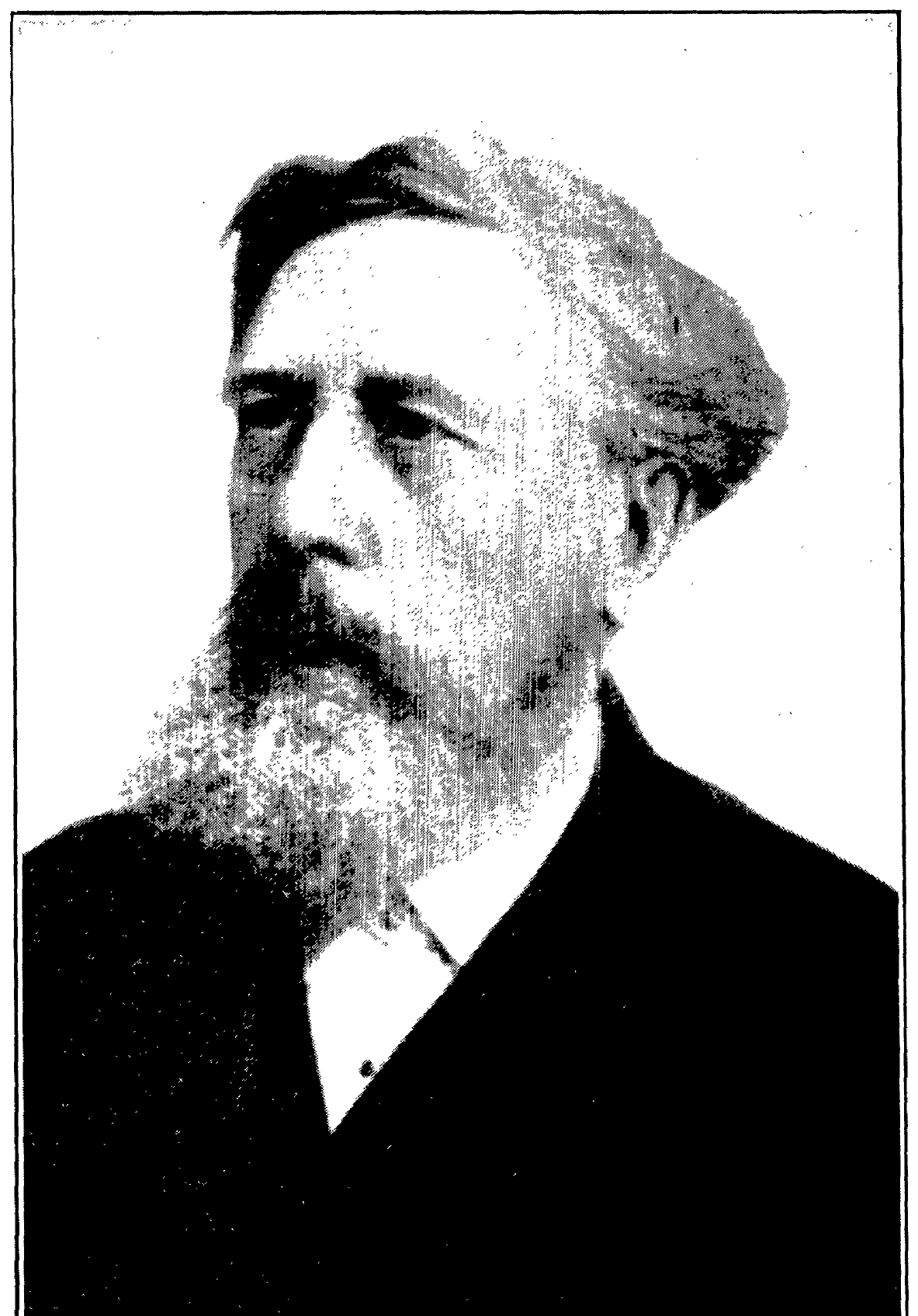
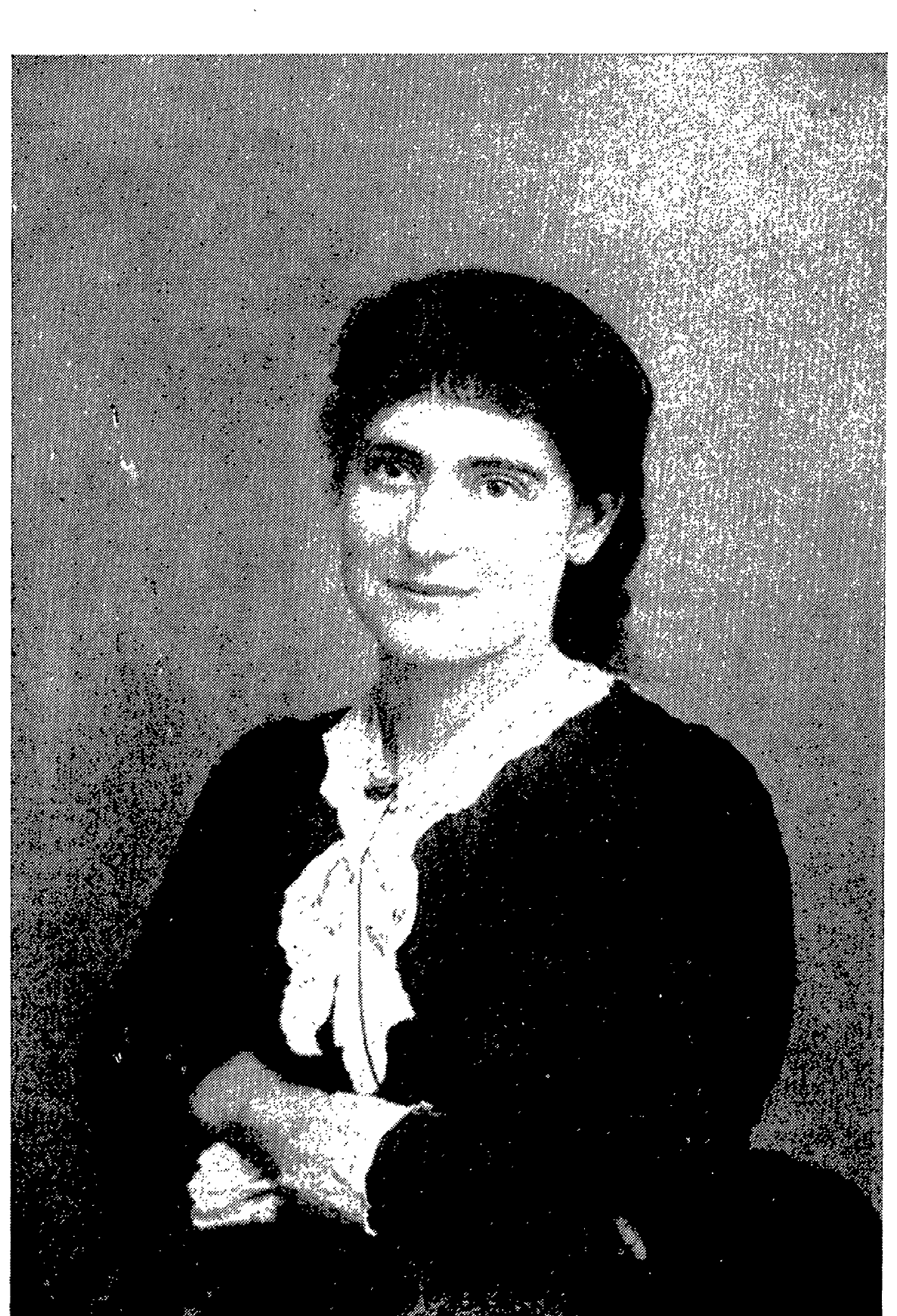
The guests were: the famous Wilhelm Liebknecht, one of the two founders and leaders of German social democracy and editor of its chief organ, the Berlin "Vorwärts"; Karl Marx's daughter, Eleanor; and her English husband, Aveling.
The reception gathering was held in the great hall of Cooper Union. It was packed, mostly with Germans. Liebknecht was then a man of over sixty — with a handsome gray beard and an interesting, highly intelligent face. Eleanor Marx-Aveling was a woman of about thirty-two. She had a charming Jewish-looking face, a dark rosy complexion, with beautiful black eyes. She wore an ancient Greek costume of green velvet, and her appearance was very striking. Her husband was not tall, with a clean-shaven face like an actor's. They were all received with warm applause and enthusiastic cheers. But toward her a special interest was shown. First, not for one minute did anyone forget that this was Karl Marx's daughter; that Karl Marx had been the father of the woman who stood there speaking. Second, she was a brilliant orator. And when, standing before the crowd in her green-velvet Greek dress, she delivered her English words in a beautiful voice full of fire, the effect was un- 294usual. As if she had indeed descended from ancient Greece. She spoke a splendid English. Her pronunciation had a soft German "r" and was somewhat thick on the tongue; but that only added charm to her speech. The main thing, however, was the content of the address. She brought forth interesting ideas.
She was a rarely educated and capable woman, spoke several languages as if they were her mother tongue, and was a brilliant writer.
A second speech of hers that has remained in my memory she gave at a bazaar in aid of the "Leader" (the newspaper), also in the Cooper Institute building, but in the basement, at the corner of Eighth Street and Third Avenue. The bazaar lasted a whole week, and her speech, too, which she delivered one afternoon, was one of the attractions the committee had arranged. Her theme was "The Pilgrim Fathers" (the first immigrants who came from England to America).
Liebknecht's most important lecture was given again in the great Cooper Union hall. This time he took up the entire evening. He spoke about the movement in Germany, but his lecture was interwoven with remarks about social-democratic tactics in general, and for me that was important. He was a talented journalist, with imaginative power and with flashes of poetry in his writing. And these qualities could be felt in his speeches as well. For me the most important thing was what he said about the social-democratic program itself.
That evening he repeated a reply, which had become famous, that he had once given to a capitalist depu- 295ty in the Reichstag. The man had remarked that he, Liebknecht, was no longer young, that he was already sixty years old. Liebknecht answered that when it was needed, he was "not sixty, but twice thirty."
Another well-known remark of his, which he repeated that evening, was:
"Tactics is a question of practicality. If circumstances were to change every 24 hours, we would change our tactics every 24 hours."
Aveling was a man of science (his specialty was natural science); but ever since he became acquainted with Eleanor Marx, he had taken up scientific socialism and had written a popular exposition of the teaching of Karl Marx. His lectures on Marxism in New York were rich in content and successful. I missed none of them. After each lecture I used to stay behind to put questions to him about the subject of the lecture or about other points of Marxism. Once we thus spent a long time together. A certain passage in "Das Kapital" had been difficult for me. I pointed out the passage to him, and he gave me his answer. I was not satisfied, and a little debate developed between us. On another occasion Liebknecht was present. He spoke English (he had lived for a certain time in London), and to one question of mine about a certain objection that the anarchists raise against social-democratic tactics, he answered me with a complete explanation.
During the time the three guests were in New York, the following episode befell Liebknecht and Aveling: a rich American, who had become acquainted with Ave- 296ling in London, invited him here to his club and, together with him, his traveling companion Liebknecht (in London Aveling had shown that man hospitality, so he wanted to repay him). The club was the aristocratic "Union League Club," one of the most reactionary.
The two guests came. The club member honored them with dinner. Suddenly a representative of the club drew the American aside and explained to him that his guests must leave the place at once. It had become known that Liebknecht was the leader of the socialists in Germany, and that Aveling was a son-in-law of Karl Marx. There was an uproar. The members could not tolerate the presence of such "unkosher" people in their club.
The next morning all the newspapers told the story. The conduct of the "refined" millionaires simply smacked of boorishness, and several rich Americans condemned it as well.
Aveling spoke about the matter at one of his lectures. Someone put a question about the affair, and he dwelt on it for a few minutes. He explained that the people of the aristocratic club were simply not well-bred people, and that in England such a thing would have been impossible.
In November of that year my friend and former neighbor, Paul Kaplan, and several other members of the New Odessa commune returned from Oregon, and indirectly
(plate; bound in the original between pp. 296–297)
297this, too, helped my social-democratic convictions.
Their commune had collapsed. More than half of the members had left the society. The rest, with Kaplan among them, had kept up the organization, and they came to New York with the aim of continuing their communist life in the city.
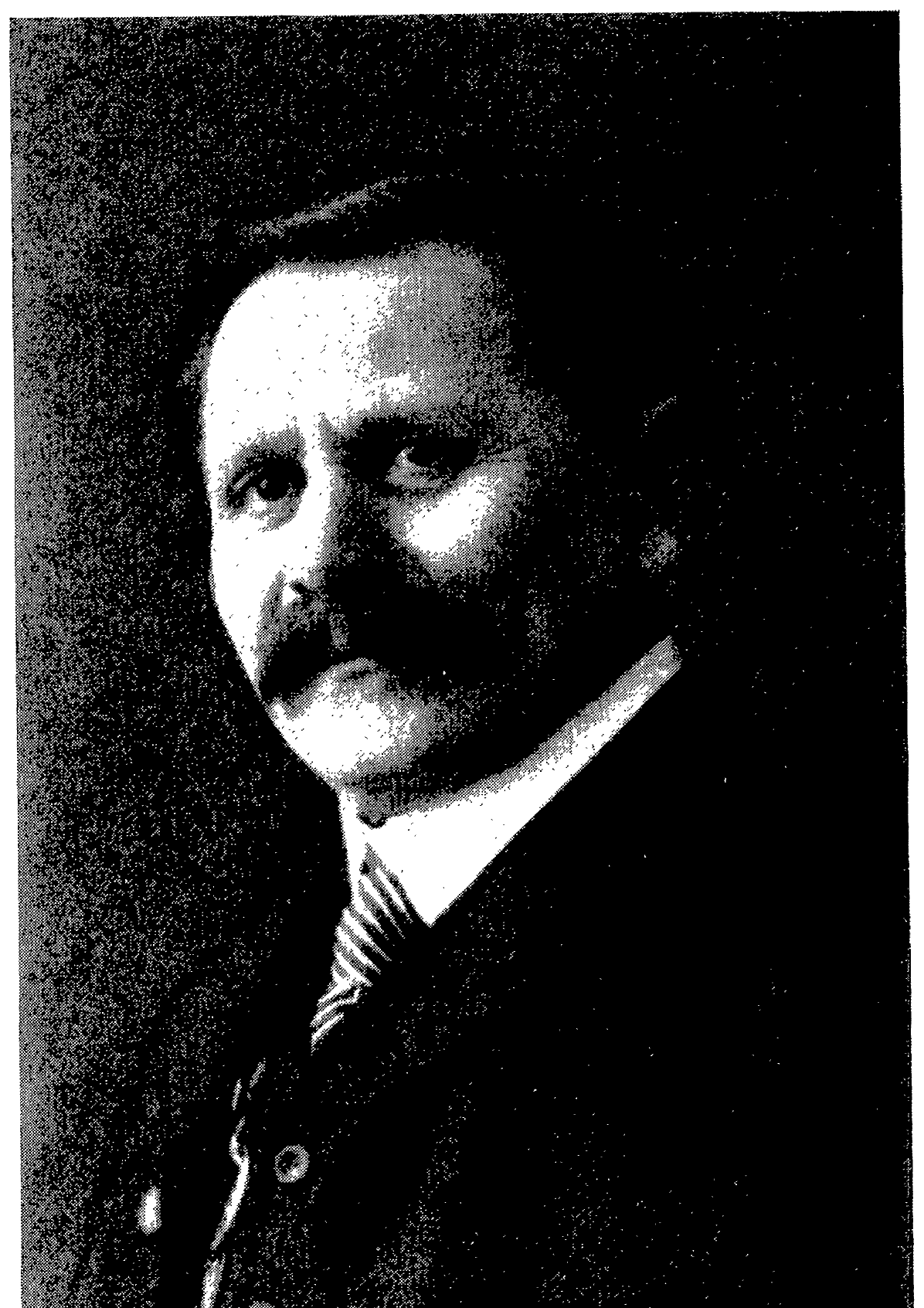
They settled like a family (in a new tenement house on Hester Street, not far from where it meets Grand), and the money they had brought from Oregon they put into a laundry, which they founded on Essex Street, near Grand, and which they equipped with the newest machinery. Almost all the work was done by the members. One of the most important and most likeable of them, a well-read Odessa student named Fierman, a tall young man with dark-red mustaches, used to go from customer to customer with a big sack collecting dirty laundry. The rest worked in the laundry itself. Kaplan was the manager.
Why had their communist farm in Oregon failed to survive?
Some of the causes that stood in their way were economic in character; others spiritual. In both kinds I saw a confirmation of the Marxist theory.
But let me first relate the facts as I heard them from the members of the commune. I mean as I heard them right then, when they had returned from Oregon, and again some thirty-odd years later. For a few days before these lines were written, I made a point of meeting with a couple of the former New Odessa communists and compared my "second-hand" recol- 298lections with their own original recollections. In any case this should not be uninteresting, for of all our immigrants who came to America after the first pogroms with communist plans, this group was the only one that took seriously the task of realizing its ideal. Why, then, did their experiment end in failure?
In all there were about forty members, men and women; and most of them, if not all, had gone there with genuine enthusiasm. But the experiences they went through were bound up with unpleasant circumstances that these young enthusiasts had not foreseen beforehand. Their enthusiasm broke each day against the hard reality, just as a ship is dashed against cruel rocks. The ship was smashed.
Right from the start it began to be felt that the heavy physical labor the members had to do was beyond their strength, habits, or inclinations.
The farm would have done well, chiefly thanks to the participation of an American named Gaskin, who had joined the commune. He was a skilled farmer and ran everything with ability and order. But that would not have been enough for forty people to live on. So they had to chop wood into "splits" for the nearby railroads. The communists felled trees and chopped them into "cords," according to the needs of the railroads. Most of the young people had never before done any physical labor. And although from the start they had believed in the holiness of such an occupation and dreamed about it, it turned out that dreaming is one thing and realizing the dream is quite another.
299Still, if the spirit had been content, the body could have overcome everything. What does one not do for spiritual happiness? But here there was no happy spiritual life. The friendly relations were destroyed.
Some were absolutely incapable of doing the heavy work, and they spent the time either on side trifles, useful or useless; or they did nothing at all. It was through this that troubles began.
Those who did do the heavy work tried, in the first days, to talk themselves into believing that they were highly content, since they were all, after all, like one family; but even within one family sisters do quarrel, when one is too lazy to work and the other has to work too much.
While member number 1 saws and chops wood, member number 2 stands there pretending to stir the porridge and chats with the women. Member number 3, who is a tall, healthy young fellow, a giant, is absolutely unable to do any physical work, because he spent many years as a bookkeeper in an Odessa bank and the only tool he is accustomed to use is a pen. And so he wanders about all day long and does some little trifle, at which the woodcutters scoff. How the former bookkeeper feels when he learns of this can easily be imagined.
It never came to any violent scenes, not even to quarreling out loud; for the forty members all happened to be quiet people. But in a quiet way a mutual discontent spread, which grew and grew. And from this discontent there sprouted misunderstandings, gossip, venomous jokes behind people's backs, and so on.
300A second kind of discontent, one of the most important, stemmed from the fact that life in the commune was too boring for the members. They were mostly city people, the majority from Odessa, and they were not accustomed to the quiet life of a village. The monotony with which the days and evenings passed was felt ever more strongly as time went on.
A great deal of trouble arose over the sex question. There were various cases of jealousy. Among the members there was a small number of married couples; then there were a few girls, and a great majority consisted of young men. There were too few girls. Various love tangles arose. Partly open, but mostly not open. In the commune free love went on, but on a small scale. Young people who longed for love added to the general heavy mood the discontent that mostly stemmed from sexual loneliness, and often from jealousy as well.
Many members also suffered greatly from the fact that in the colony there was not enough privacy. When someone wanted to be alone with himself for a certain time, that was not easy for him to manage. The unmarried men all slept together in a barn. Each married couple had a separate room; but they could not feel fully private there either. Here, for example, because a married couple stay a couple of hours in their room apart from the others, one of the members comes in with a book and sits down at their table to read. He is asked, in a refined way, to find himself another place. But he does not want to. He protests in the name
(plate; bound in the original between pp. 300–301)
301of communism. The room belongs to him just as much as to them, he says, and their demand that he leave is a crime against the communist feeling.
Some members often confused their communism with a notion about eating from one bowl and sleeping in one bedroom. They imagined that the one was impossible without the other. That one could live communally while dwelling inside in separate rooms and respecting the other's private life — this never occurred to them.
Yet from such causes no great clashes arose; and on the whole the general peace was not destroyed by them. Had there been among the members several people with angrier or hotter temperaments, it would probably have been far worse. But although outwardly the brotherly spirit was not broken by such causes, inwardly, in the hearts of the members, there accumulated through them a mood that ate at the commune as rust eats iron.
A greater and more open disturbance arose from differences of opinion between William Frey and Kaplan. Frey strove to make the colony a positivist one. He wanted the members to live according to his "religious" manner: to conduct themselves throughout according to Auguste Comte's "religion of humanity," and on top of that to eat no meat; and Kaplan set himself against this and sharply criticized Frey's program.
In the commune there was an organ; positivist hymns used to be sung and accompanied on it. All this was through Frey's influence. And most of the members were content, simply because it was a bit of a pastime. Kaplan, however, used to 302smile venomously at this; and through this the peaceful temper of the members used to be disturbed.
Truly converted to positivism there were in the commune only a couple (one of them was a brother of the famous actress Sara Adler); the rest simply did not have the heart to refuse Frey. For he did everything in a friendly manner; he never treated anyone rudely; he never grew angry at anyone. And he himself really lived like a saint. One could do him the greatest personal wrong, and he would bear it and remain genuinely friendly. He was respected for that, and he was also respected because he was a highly educated man and much older than most of the members, and a Christian and an aristocrat besides.
His influence was therefore far greater than Kaplan's, but his positivist propaganda gradually became a burden to the members.
One cannot say that the colony was divided into two parties, Freyists and Kaplanists; but through the debates and through Kaplan's unfriendly smiling, the peace within it was much damaged.
Special meetings, on appointed days, used to be set aside for mutual criticism. One takes the floor, for example, and begins to point out the faults of another member. This was called examining one another's morals, in the interests of the whole commune, and of each member separately — somewhat, for instance, the way two Jews flog each other with lashes (malkes — the symbolic flogging done on the eve of Yom Kippur). The intention in this was a good one; but people are people, and the following scene was a quite frequent occurrence: a mem- 303ber is criticized, and instead of hearing out the criticism with a brotherly feeling and with pious good nature, that person grows angry and leaves the meeting.
The result was that almost right from the start it began to be felt that the commune would not hold together for long. Some immediately began to think about freeing themselves. Others were at first enthusiastic and tried to talk themselves into believing that they were happy, but with them this feeling, too, did not hold for long.
The Oregon enterprise was finally given up, and many of the members withdrew from the organization entirely.
In New York, then, those who remained tried to continue the communist life. But here it had just as little survival as in Oregon. The laundry was finally sold and the members dispersed. They remained good friends, and their attempt to found a commune remained for them a memory — both a pleasant and a sad one, as many memories are.
The failure of the New Odessa commune was for me a confirmation of the Marxist teaching. In the tragedy I saw chiefly two points, both purely Marxist.
The chief cause of the discontent was, in my opinion, the heavy labor and the heavy mood it created. And why did the members have to work so hard? Because the railroad companies, for which they sawed and chopped wood, 304and the capitalist world in general, exploited them.
"You were not a true commune; as woodcutters you were simply a group of proletarians" — I used to argue in my conversations with Kaplan — "and as farmers you were robbed by the whole capitalist system, just as it robs all other farmers. Upon every dollar you earned there descended all sorts of idlers: shareholders of the railroads that carried your products, big merchants, middling merchants, small merchants, bankers, agents, and so on and so on. That is why your members had to work so hard; and from that came the bad mood. Had you worked fewer hours, the work would have been a pleasure even for those who were not accustomed to physical exertion; they would not have wriggled out of their duties. And the others would not have looked at them askance. Life altogether would have been better, and a better material life would have created a more pleasant mood and friendlier feelings of one toward another."
My second argument consisted in the following:
Present-day man, with his character, is not suited to a communist life. Our morality is a product of the economic conditions under which we are born and raised.
So, if the members of New Odessa could not get along in a commune, that means that the natures they brought there from the capitalist world are not capable of a communist morality. The economic conduct of the world must first be changed to a communist one; then, gradually, there will emerge people with 305communist souls; and only then will communism be able to exist.
I remember in every detail the arguments I gave Kaplan. For I delivered lectures on this theme several times — first in Russian, and later in English.
Kaplan did not agree with me. He explained the failure of his commune by certain accidental causes which, in his opinion, could have been eliminated. He hoped that the New Odessa commune would, in the end, prove successful after all. And I used to think that he was not answering my arguments, and that he spoke this way because he had not penetrated into Marxism.
Even five years earlier, in the first few months I spent in America, I had understood that socialism, or communism, cannot come as a small sample of a great worldwide thing, just as a single brick cannot serve as a sample of an entire wall; and now I understood this even more clearly and deeply. I was now convinced that socialism must come through a social revolution; that a social revolution is a world revolution, and that this transformation from capitalism to socialism must come as a natural social change. So what bearing on it can a group of idealists have, who wish to live in a communist manner already now? That is one thing. Secondly, how can a small, poor communist society survive when it is surrounded by a giant, all-powerful capitalist world, on which it is dependent at every turn? The capitalist world exploits it. It robs it; it devours its body and its spirit.
306When I became a member of the Socialist Labor Party, I devoted my activity chiefly to its American section (that is, the division in which only English was spoken). Sunday afternoons I usually attended the Russian gatherings at 165 East Broadway, where I often gave a lecture and almost always took part in the debates. I also used to agitate at Jewish meetings; but my greatest interest was in the American gatherings.
The headquarters of the "section" was a long hall on the first floor of an old building on 8th Street, not far from Broadway. Along one wall stretched long shelves, and on a few of them stood or lay books and pamphlets. It was a quite pitiful little library. The number of socialist books and pamphlets in English was then small altogether. Besides those, our library contained ordinary radical or freethinking books and pamphlets, several volumes of Herbert Spencer's works, and a few dozen other books, some of them official reports from Washington.
In this hall the section's lectures and business meetings used to be held, mostly Sunday evening. And when it was free, members would gather in it, sit, and chat. This was really our c l u b. We called it, however, the "Socialist Library."
In the "section" there was then a certain number of genuine 307Americans. The rest were Americanized, or locally born children of German parents. Of the Russian immigrants, my wife and I were for a good while the only members.
The position of librarian was held by a Miss Johnson, an American spinster of some thirty-odd years. She used to be there all day and all evening. She was paid no salary. There was nothing to pay it from. Very often she simply went hungry. An American boss-carpenter, an older man with radical ideas, used to come in often and invite her to a restaurant. This was almost her only chance to have a dinner.
She was a good, naive woman, and in her head spiritualism was mixed up together with socialism. Sometimes she would tell how her dead relatives had spoken to her from the other world; or that a spirit had appeared to her in the form of an animal or a bird. Once she related how a beautiful tiger had spoken to her and bidden her go to such a place and do such and such. All this she had seen and heard not in a dream but in waking reality — so she used to tell.
Among American spiritualist women it is no novelty to hear such tales. Many of them know that the whole business is a swindle. But there are some who really believe. A third sort pretend that they "believe," so as not to fall out of the company, because in their circle it is a fashion to believe in it. A fourth sort half believe, half do not. A good percentage of the American women who called themselves socialists were then made up of spiritualist women of the various kinds.
One of the most important figures in our "American section" was then Mrs. Leonard, the mother of 308the American actress Lillian Russell, who was then already famous throughout all America as a vaudeville performer and as a beauty. Mrs. Leonard was a woman of over sixty, tall, slender, with a fine head crowned with white hair — an intelligent woman with radical convictions. Most often she would be our chairwoman.
Besides the members of the branch, various other radicals used to gather. Many of those who used to attend the above-mentioned Bowery gatherings now used to come here: "single-taxers," "greenbackers," "temperance" people, various "cranks," each with his special remedy to cure all the troubles of the world.
Not far from our club, on Lafayette Place, was the office of the newspaper "Truth Seeker" (der emes-zukher), which preached freethinking. And so some of the freethinkers from there often came in to us. Anything that was at all unusual went by the name of socialism among them. But there were already then some Americans who could really be counted as socialists.
Several times the place was visited by the American writer Edgar Saltus *, who later became famous. I spent an afternoon with him a couple of times, chatting about socialism and about Russian literature, of which he knew only about Turgenev.
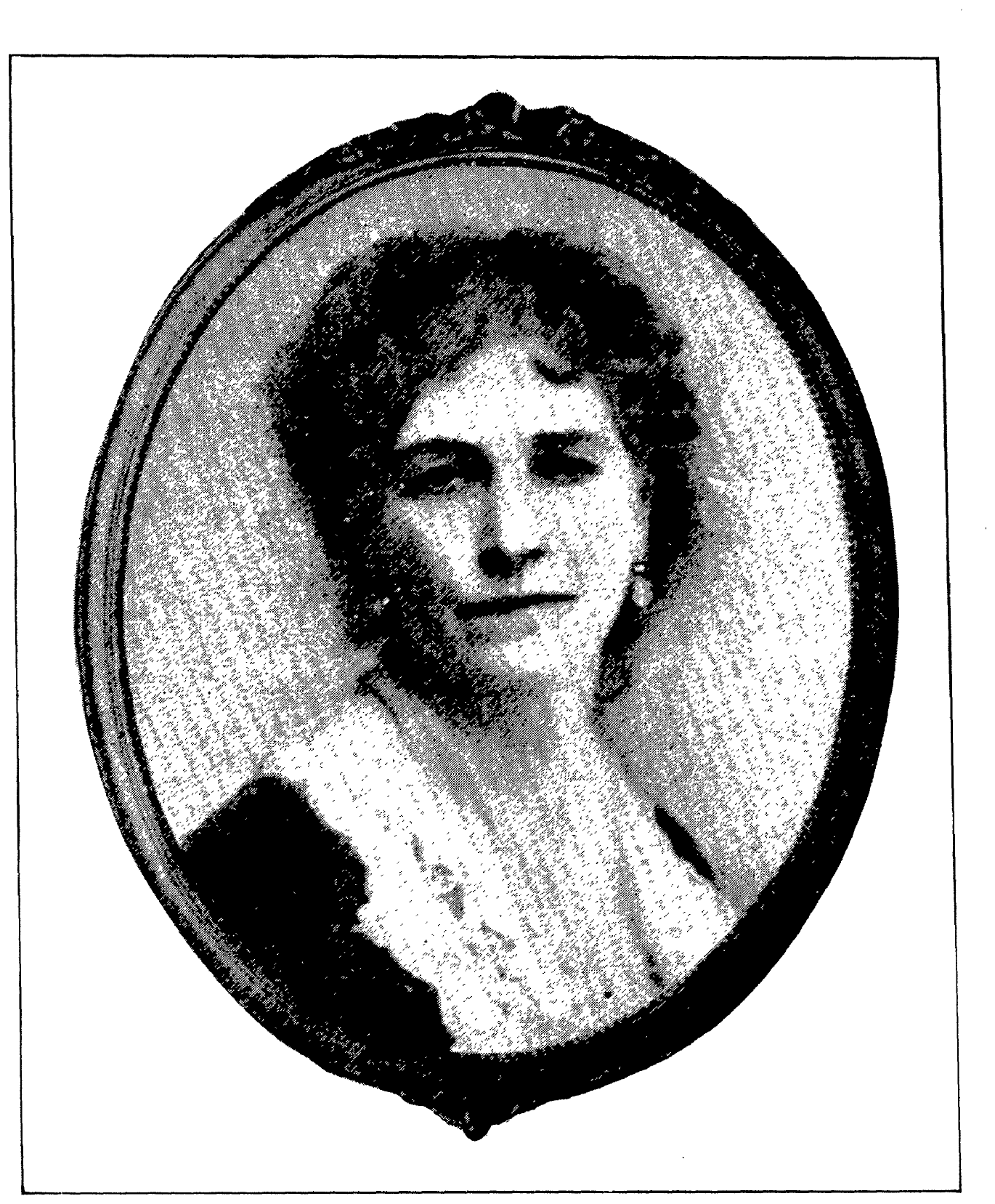
(plate; bound in the original between pp. 308–309)
309One of those who used to take part in our Sunday lectures was a German by the name of Yuga Pacht, a small, thin man. From a distance he could look like a boy. He was a capable, educated, and well-read man. He always had something to say, and said it interestingly and with sense. He spoke English a bit with a German accent, but very well.
He was then a prominent figure in the German socialist movement; and little by little he came to play one of the most important roles in the entire party. Then he stopped taking part in the German meetings, and gave all his time to the English movement.
I often used to spend time with Walter Vrooman, a young American who was known in our movement as the "boy orator." That is what he was called when he was still really a boy. When he came to us, he was already about twenty — tall, slender, blond, a genuine Yankee in appearance, with an intelligent smile, with a fine power of oratory. He was active as a socialist agitator. His voice and his smile made an impression as though they were much older than he was. And he really did have more understanding than a young man of twenty usually does.
310In America there are many "smart" boys. But for the most part they are early plantings that quickly lose their sap. Not many of them later become capable and intelligent men. Vrooman's abilities and intelligence, however, were not of the childish sort. He was not merely "smart"; he understood people and was really intelligent.
Had such a young man been born in Germany, he would have had a great field before him in the Social Democratic Party. In America, however, socialism was then a quite insignificant movement. The Americans themselves were not interested in Vrooman's speeches. So it fell to him to conduct his agitation among Jews and Germans. He had no real ground beneath him. Our movement could not even provide for his means of livelihood.
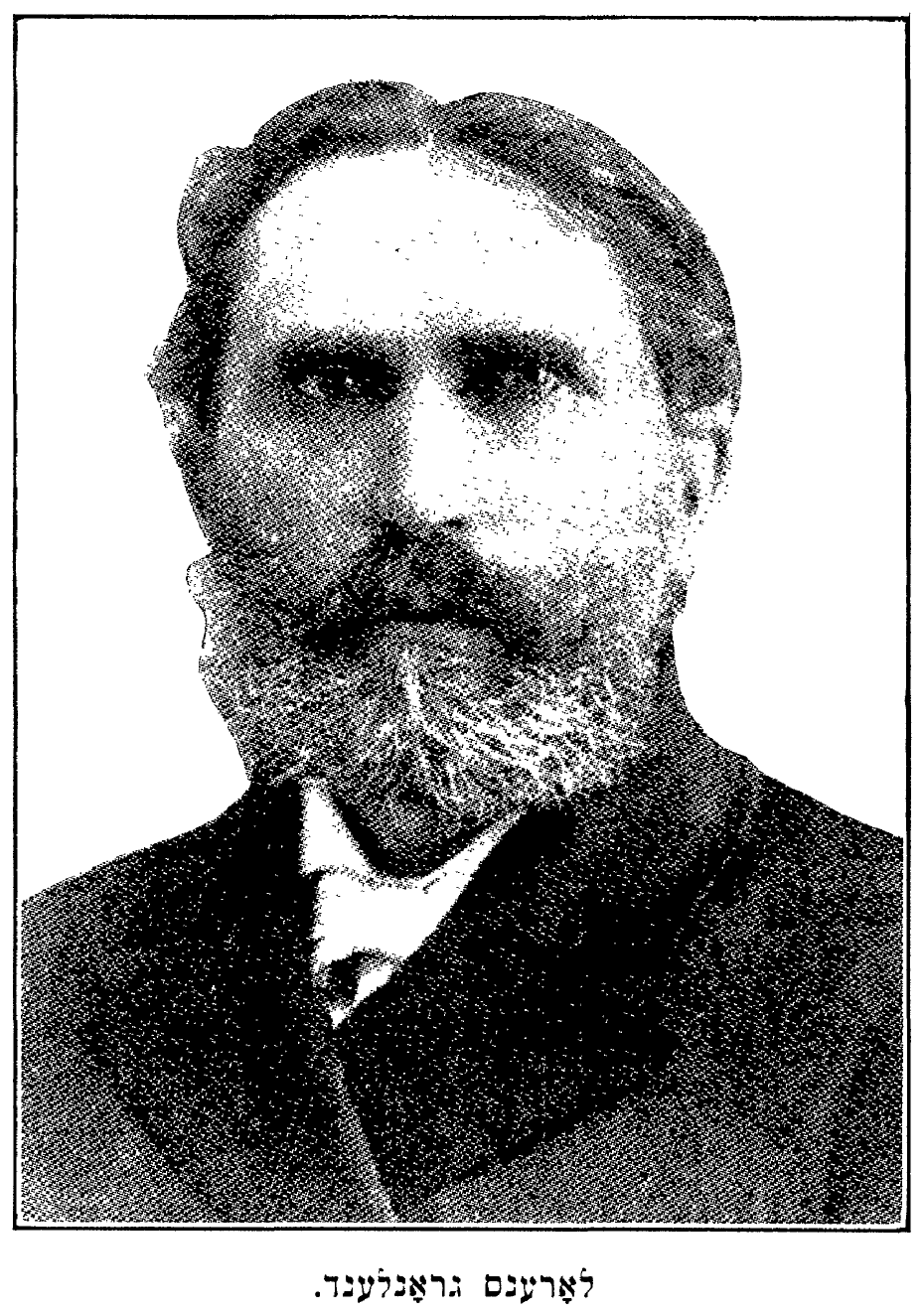
Speaking of our library, I said that the number of English books on socialism was then very small. A very useful socialist work appeared around that time in New York itself. Its name is "The Cooperative Commonwealth" (di kooperative gezelshaft), and the name of the author was Laurence Gronlund. It was a brilliant popularization of Marxist theory.
Gronlund was from Denmark. But he wrote good English. After this book he brought out a work by the name of "Danton and the French Revolution," in which he also carries through the Marxist idea.
311The first book quickly became very popular among us socialists, and the expression "the cooperative society" American socialists often used to employ in their speeches. The words "socialist society" could then have no meaning in America; for the average American did not understand what was meant by it. The words "cooperative society," however, everyone immediately understood. He pictured to himself a whole society where all are partners, a society where no one needs to hire himself out, and where in industry one cannot compete with another.
I became acquainted with Gronlund personally. He was neither tall nor stout, with a short, somewhat blond little beard. The bookish man lay upon his face. He spoke English well, though a little with a foreign accent. He used to speak quietly and mostly about books. With practical life he was little acquainted.
A German-American judge (a Jew) by the name of Steckler, of Second Avenue, had invited him to work in his office (the office was run by the judge's brother, who was his partner as a lawyer). Gronlund was then studying law (jurisprudence), and the story was that the Stecklers were giving him a position as a jurist.
Once, when I visited Gronlund in this office, he praised the Stecklers to me. He said that they were very friendly to him and that they let him read and write what he wanted and when he wanted; that they gave him no work at all, really.
He thought that the lawyers were liberal men and that they did this simply in order to give him a chance to write his socialist books. But 312Judge Steckler was then a candidate for a second term, and it was only a few weeks until the elections. And so I began to suspect that it was not simply out of goodness that he was keeping Gronlund. When Gronlund heard this from me, he laughed it off.
— If he wanted me to do something political for him, he would surely have asked me about it, — he replied.
But he soon discovered his mistake. One morning early, the judge actually turned to him with a demand that he write and deliver speeches for him.
The author of "The Cooperative Commonwealth" was for a moment left as if dumbfounded. When he came to himself, he said: "Oh, no, no! That I cannot do!"
He immediately gathered up his papers and left.
What bearing did the socialist club have on the Socialist Labor Party? The honest answer is that it had very little bearing. The connection between the two was very weak. The whole activity of the party was in German hands; and the Germans, with the exception of Pacht and a few others, were quite little interested in the American movement. The number of American socialists, in turn, was very small, and since in the party almost everything went on in German, they had little connection with it.
(plate; bound in the original between pp. 312–313)
313Jewish socialists were then comparatively few. The character of the socialist movement was then a German one.
When the "Leader" was shut down, there was no socialist organ in English in America at all, not even a weekly. Whereas in German there was both a daily newspaper and a weekly. And that was in New York alone. In a couple of other cities there were also German socialist weeklies. And the Chicago daily "Arbeiter-Zeitung," after the tragedy of 1887, was mostly "nonpartisan"; that is, both social democrats and anarchists took part in it.
The above-mentioned Dr. Merkin then edited a weekly socialist newspaper somewhere in Indiana. A second socialist weekly existed in Cleveland, and a third in St. Louis.
The New York socialist weekly was called "Der Sozialist." This was the official party organ, for the "Volks-Zeitung," though it was closely connected with the Socialist Labor Party, did not belong to the party, but to a special publishing association, which was made up of party members.
The German comrades naturally understood that the Germans alone would not realize socialism in America; they understood that the idea must be spread and the party organized among Americans, and they worked at this and sacrificed themselves for it. But it would not be an exaggeration to say that they did all this as if merely for form's sake. In truth, they looked upon the American masses with a smile, and they conducted their activity as though their German movement were the whole movement.
314Shevitch, despite the fact that he was a brilliant speaker in English, used to associate little with the American comrades. Alexander Jonas also knew English well, and he wrote a brilliant pamphlet in English ("The Socialist and the Reformer"); yet he had no connection with the English socialist movement.
The only significant personality among the German socialists who was active among the Americans was the above-mentioned Yuga Pacht.
New York was then, above all, to a great extent, a German city. The immigration from Germany was still large, and a good part of the East Side was densely inhabited by Germans. German daily newspapers had many readers, and their word carried weight. The largest of them, the "Staats-Zeitung," had no less significance and power than the great English newspapers. Wealthy Germans and educated Germans played a great role in the life of New York, in private businesses and in communal activities.
Socialist mass meetings used to be packed with Germans. Little by little, considerable numbers of Jews began to appear at them. But the great, great majority was for a long time a German one.
One of the most usual "features" of a great socialist holiday was the singing of a numerous German singing society. Onto the stage would step sixty or seventy tall, broad-shouldered Germans, tenors, baritones, or basses, and they would thunder through Cooper Union with German song.
This explains to the reader why in the American Yiddish that developed among us socialists, there is felt to this very day the influence of the German 315language, chiefly in such expressions as pertain to socialist party life, and to meeting life in general. The word "Genosse" (comrade), for example, or "Tagesordnung" (agenda), or such an expression as "der miting hot shtatgefunden" ("the meeting took place"), etc. These and a good number of other phrases we took over from our German party comrades of those years.
Notes (the original's footnotes)
[p. 292] The chief idea of Plekhanov's theory consists of the following: Russia is no exception among other countries, and before socialism could develop in her, she would have to develop capitalism within herself. Many years later, when Lenin carried out his Bolshevik revolution, he and Plekhanov, his teacher, were on the most hostile terms. Plekhanov stuck all along to his old opinion, while Lenin set about founding a Communist Russia before the country had a developed capitalist industry. But as these lines are being written, there exists in Russia Lenin's "New Economic Policy." Lenin was compelled to permit capitalism once again, as a necessary transitional system, without which socialism is impossible. Plekhanov is already dead; but his teaching has triumphed.
[p. 308] Years have gone by, Saltus has long been dead, and I have forgotten whether it was actually Edgar Saltus, or whether he spoke with me about Edgar Saltus. I used to kept meaning to disentangle this riddle, and never got around to it. Finally, a few weeks before this book was handed over for printing, a biography of Edgar Saltus appeared, written by his wife. The book contains an excellent portrait of the writer. When I took a look at that portrait, I recognized in it the man with whom I had become acquainted in 1887 in our library.