Chapter Thirteen
The “Workmen's Advocate” and the Socialist Labor Party
416The Socialist Labor Party of America bought an English weekly called "The Workmen's Advocate." Its founder and editor was a certain Louis Bushe (Busch), and the place where he had been publishing it was New Haven. There the paper had been created as the organ of the trade unions. Our party took it over together with its editor, who was socialist in his leanings, and moved it to New York along with him.
The party's headquarters were then at 25 East 4th Street, near Lafayette Place. It occupied a three-story house with larger and smaller rooms and with a sizable assembly hall for lectures and general meetings. In this large hall the English lectures used to be held. There the general party meetings of all the districts of New York also used to take place. In that same hall people would also gather on election night to hear the "returns."
417In this building was the editorial office of the weekly German party organ "Der Sozialist," and there too the meetings of the National Executive Committee and various other meetings of the movement used to be held. So now, in that same building, the party set aside a room for the editorial office of "The Workmen's Advocate."
The house as a whole we used to call the "Labor Lyceum."
At Bushe's invitation I began to contribute to his paper. I wrote longer pieces under my signature, and shorter ones without a signature. In almost every issue there were at least a couple of notices of mine.
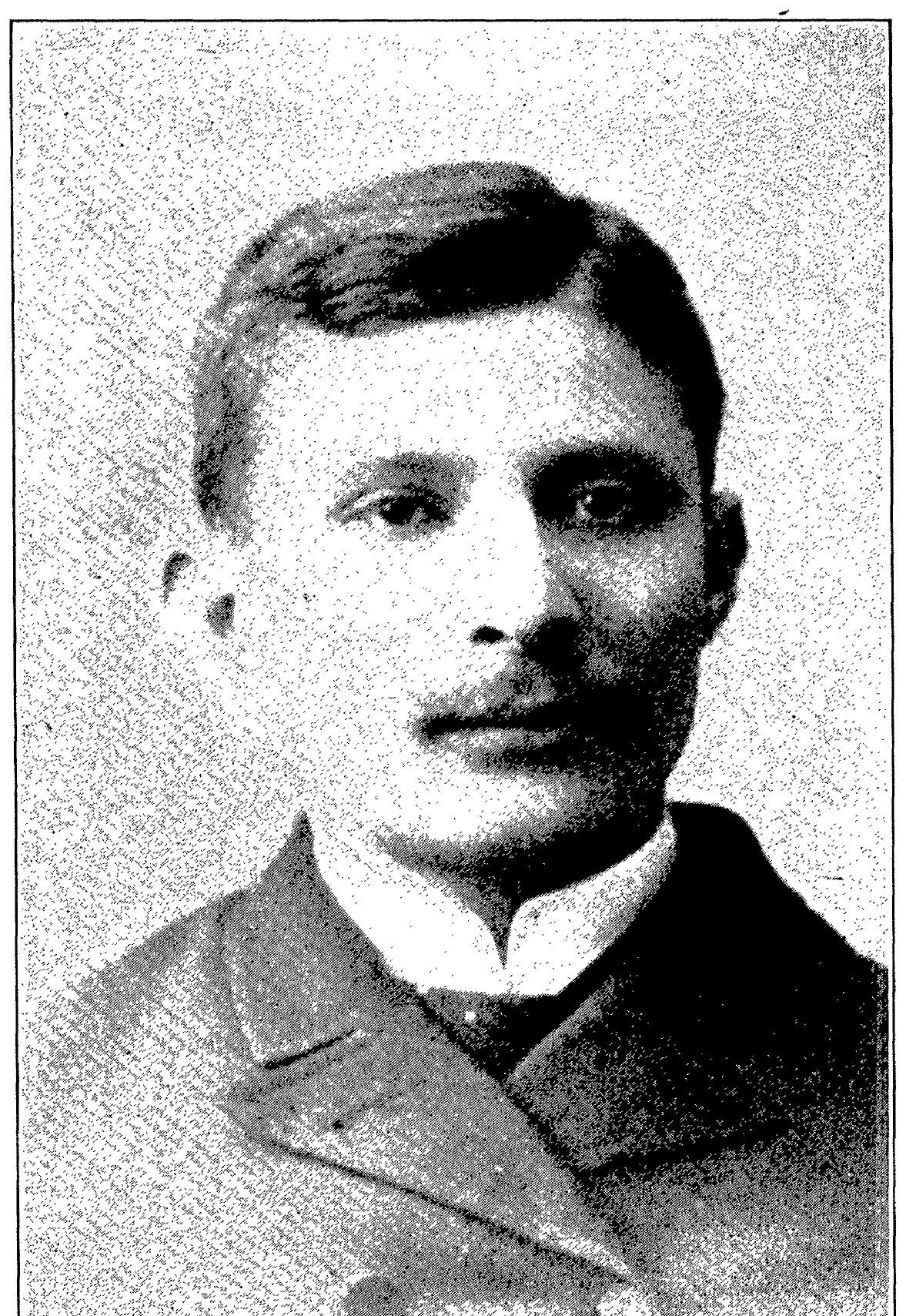
In the office of Benjamin Tucker's philosophical-anarchist journal "Liberty," in Revere Station, near Boston, there then worked Victor Yarros (Yaroslavsky), who had come to America with the Kiev "Am Olam" [a back-to-the-land emigration movement] in 1882. He was from Kremenchug, where he had belonged to the same revolutionary circle as Spivakovsky and Shamrayevsky. He was one of the ablest young men among the educated Jewish immigrants who had come to America in those years. He sympathized with Tucker's ideas and became personally acquainted with him. He then came to work in his printshop. And working thus as a typesetter, he soon became Tucker's co-editor. At the same time that Yarros was contributing to "Liberty" in Boston, I was taking part in our English party organ, "The Workmen's Advocate," and a couple of times we carried on a polemic across the columns of the two papers — he as a "philosophical anarchist" and I as a socialist.
418The essence of Tucker's and Yarros's "anarchism" consisted in free competition, "absolutely free." We socialists say that as long as there is competition and wage labor, there will be no justice and no real freedom. Tucker's view was exactly the opposite. He argued that there is no justice and no freedom precisely because there is no absolutely free competition — because there exists a state, which restricts this freedom.
In one of our debates Yarros once issued this "challenge": if socialists are convinced that it would be better for the government to run the industries, then let a socialist government allow private industries to compete with it; let it prove that it can outdo private enterprise. But if it does not permit private enterprise at all, that is a sign that it is afraid of their competition.
My answer to this was a short article with the title "Mental Anarchy" (mental confusion, a tangle in the brain). Its content consisted of the following: socialists say that the social question cannot be solved unless competition in industry is entirely abolished; Yarros says: if you are certain that non-competition is better than competition, then let the two systems compete with each other, and let socialism show that it will win. That is, Yarros demands that through competition we prove that the abolition of competition is good*.
(plate; bound in the original between pp. 418–419)
419I carried on this polemic while I was attending the Law School of Columbia College and was associated with Seerwing [Schering]. The article "Mental Anarchy" I wrote at my secondhand desk, in Seerwing's office. This was, then, in the winter of 1888 and 1889.
That same winter I also had an oral debate at the "Labor Lyceum" of the American socialist section, in the large hall of 25 Fourth Street.
One of those who used to come regularly to our meetings was an opponent of socialism, but not from the anarchist standpoint, an American by the name of Gunton, who called himself "Professor." He always wore a long black coat and a white bow tie. He used to take the floor against our speakers and would defend the capitalist system, but with great courtesy toward our party. I was one of two or three members who used to answer him. When we did not do so ourselves, the other attendees, or the chairwoman, would call on us to speak.
Later Gunton found a wealthy American, and with his help he put out a journal called "Gunton's Monthly."
Several times I delivered the Sunday lecture of the section, and once, instead of the weekly lecture, there took place a debate between Professor Gunton and me.
His main weapon was Darwinism — the usual argument that is put forward against socialism.
420Darwinism teaches that competition and the struggle for existence are the foundation of development in nature; that to compete and to struggle is a law of nature, which governs all living creatures and plants. Socialism wants to abolish competition, the struggle. If so, that surely means that it wants to go against nature.
In my reply I explained the essence of Darwinism and showed that Professor Gunton was mistaken about the whole matter. I showed that in the struggle of which Darwin speaks, unity plays an important role. That unity is often a powerful means precisely in this struggle. I brought proofs from Darwin himself and also from the history of prehistoric culture. As an example, I pointed to the fact that certain baboons unite at times to lift a large stone, and while some hold up the stone, the rest gather the worms and beetles found beneath it, and all together they make a feast. Alone, none of them would be able to do this.
In this case, then, the uniting serves as a weapon in the struggle for existence.
I brought other examples like these. And my conclusion was that socialism would require unity as a weapon in man's struggle for existence with nature.
It is possible that someone had already brought out this idea. If so, I had not heard of it. Several years later Prince Kropotkin developed the same idea with original examples in his book "Mutual Aid." Into that book went articles that he had earlier printed in an English journal. When I had the debate with Professor Gunton, those articles had not yet appeared.
421A short time before these lines were written, I leafed through "The Workmen's Advocate" of the year 1889. The issue of April 6 contains a large article of three dense columns, which bears my name. The article is called "Realism." It has no direct connection to literature. It is a kind of philosophical reflection on the essence of art in general.
But the theme had sprung up in my mind out of my growing interest in realistic fiction. Howells and James, the most important American writers of those times, used to be called realists, and I read their works diligently. At the same time I reread the most important of Tolstoy's works. English translations of these works had begun to appear. And in the reviews of them that were printed in the American newspapers, the word "realism" used to be employed quite often. Still more often I would see the term in reference to Howells and James.
Literature was then for me only a pastime. When I would fall into thought about literary matters, my mind would let itself into abstract ideas about them, and for the most part it would inevitably arrive at a connection between these matters and social questions.
In part the theme "Realism" had to do with the pictures of the famous Russian painter, Vereshchagin. He had visited America and had exhibited his famous war pictures in a New York gallery. I went to see them. The art critics of the New York 422newspapers had praised his talent; but they had condemned the content of his pictures. The task of art is to give pleasure, they wrote. Vereshchagin's pictures, however, cause pain. It is dreadful to see a war hospital, where dozens of soldiers are crippled — one without a hand, one without a foot — and bandaged in such a way that the blood seeps through the bandage.
These reviews irritated me, and I gave a lecture about them at the Labor Lyceum. I began to read about art in general. I read through Spencer's treatise on the matter. I did not agree with everything. A clear notion of the question worked itself out in me, and this notion I conveyed in my article on realism. My main idea consisted of the following:
The secret of realistic art lies in the fact that a person feels pleasure when truth is mirrored back to him. When that which exists is presented to him with paint, carving, or words, but faithful to the original, he takes delight in it. The very fact that the representation is a correct one gives him an agreeable feeling. What is meant here is not a dead photograph, but an artistic revivification. If this artistic reproduction accords with the thing itself, then this very fact, this correctness, this artistic truthfulness, is a source of aesthetic enjoyment. The ground of this consists in the fact that the truth is dear to us; the truth is a source of pleasure. When we recognize an acquaintance in a portrait, the heart gives a tremor of delight. The recognition is dear to us.
Capitalist critics do not want the truth, because it disturbs the class that they represent.
This is the main idea of my article. When I 423reread it 37 years later, I found in it, to a certain degree, a satisfaction, although today I would express the same thing quite differently. The article passes over to the social question, and then a good portion of it consists of propaganda ideas, which spoil the impression of sincerity.
Reading the article now, roughly when these lines are being written, I could point with my finger to which passages were written from the heart, with conviction, and which were written only as a propaganda duty.
But I wrote such propaganda passages with the most honest intention. We used to think that one had to do so, and even now there are still enough socialists who think so. It was done of itself, as a quite natural thing. From this fault nearly everything I wrote in those years suffered.
The longest article I had in "The Workmen's Advocate" appeared a few weeks after the article "Realism." It was printed in two issues, May 25 and June 1. Together six dense columns. The name was "Social Remedies" (social cures). In it I examined the means that non-socialists propose for freeing the world of its injustices, and our ideas. Before the article was printed, the National Executive Committee read it over, and it was decided that after the six columns had appeared, the type should be used for a pamphlet. The pamphlet appeared in June.
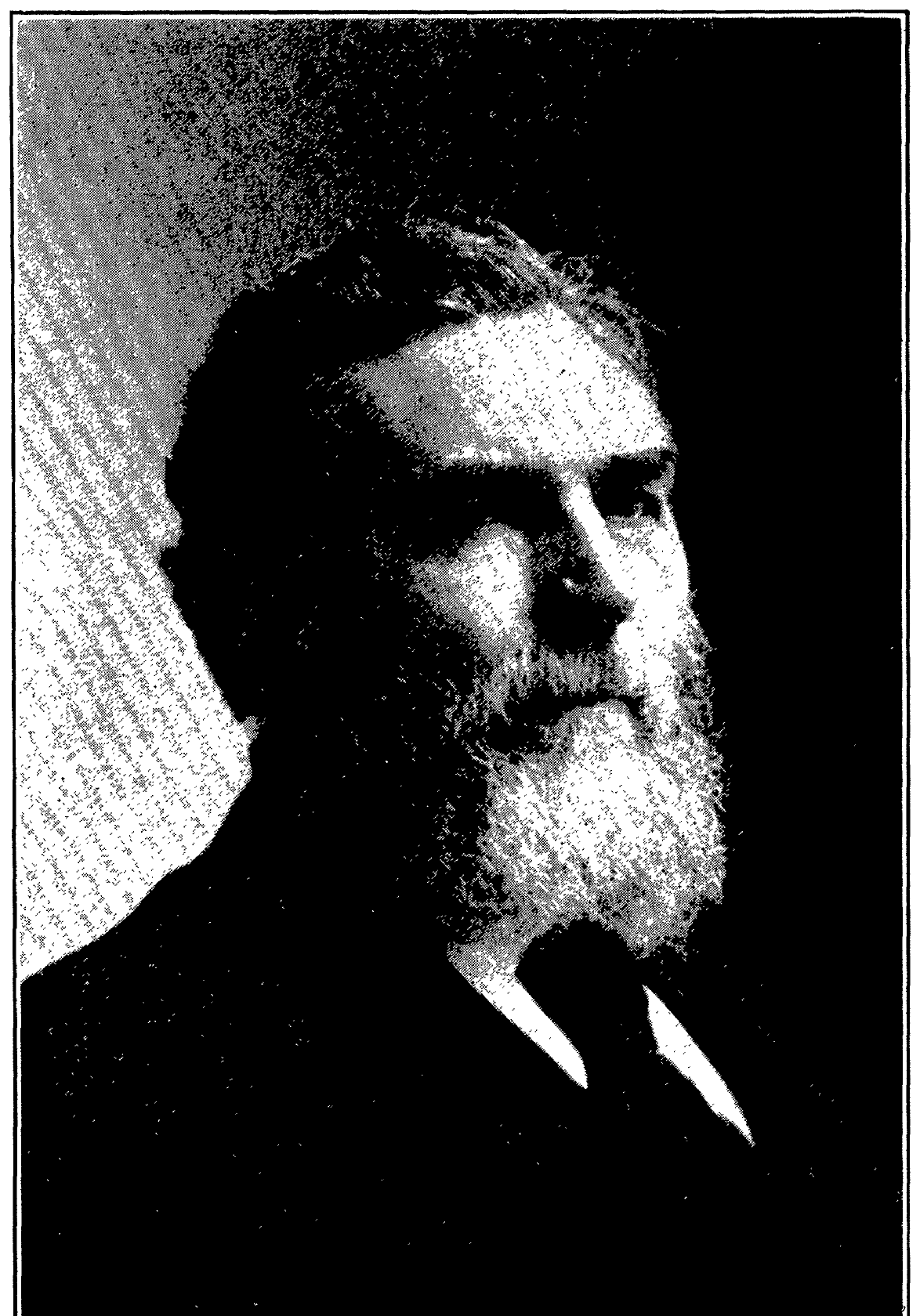
In the editorial office of "The Workmen's Advocate" I became closely acquainted with Lucien Sanial. He was 424the most important contributor to the paper. We both wrote for it without pay. He was already then in his late middle years — a tall man, with broad shoulders, with a large, handsome French face, with dark-brown hair, somewhat sprinkled with gray. He used to take snuff. The only educated man I ever knew who had this habit.
In the "Short Lessons in Political Economy," which he wrote for "The Workmen's Advocate," his abilities as a thinker and his talent as a writer showed themselves in a brilliant manner. He wrote a masterly English, and he also spoke English brilliantly. His pronunciation, however, was a strongly French one, full of non-English sounds.
By his personal character he called forth the highest respect and the warmest love in everyone who became closely acquainted with him.
I have mentioned here the Russian painter Vereshchagin and his picture exhibition. This exhibition is bound up in my mind with an episode and a mood that belong to my dearest memories. I shall therefore relate the details.
This was a year before the time at which we are stopping here, in one of those weeks when my wife and I used to be acquainted with the taste of want. Probably I then had too few lessons, and the earnings from my writing in the English newspapers were just then surely also very small. In any case I re-
(plate; bound in the original between pp. 424–425)
425member clearly that for several days we barely, barely managed to get by. But we very much wanted to see Vereshchagin's famous paintings of the Russo-Turkish War of 1877. So we asked no questions, and almost for our last dollar we bought tickets. We spent many hours at the exhibition. Several rooms were taken up with pictures, larger and smaller, quite large and quite small; and most of them have a connection to the battlefields of the Russo-Turkish War.
In one famous picture it is depicted how a priest walks about over the graves of the fallen soldiers; he holds an incense censer by a little chain, and swings it over the little mounds of earth, saying his prayer. We stood and gazed at the rich, delicate colors of the great painting, at the holy mystery that hovered over the graves.
Much attention was drawn by three small pictures, in which the same soldier was depicted. There is a dreadful blizzard, and the soldier stands on watch. In one picture he stands with the rifle on his shoulder. In the second we see him huddled together from the snowstorm and the frost, with his feet buried in snow, with the rifle slipped down and pressed to his heart with frozen arms. In the third he is already buried in snow, the rifle lies off to one side.
The above-mentioned picture of the hospital on the battlefield was dreadful to see. A mass of soldier figures, each one as if real. A shambles of mutilated men, of raw, blood-soaked wounds, of pale faces frightened by the angel of death, eyes full of an indifference that is more dreadful than the fear of death. It 426It was horrible to look at, and yet it drew you to look again and again.
A similar painting Vereshchagin had shown at his exhibition in Petersburg, and when the Russian czar, Alexander II, saw it, he asked his adjutant: "Does this really represent reality?"
And the adjutant answered: "Ah, no, Your Majesty! That is merely a fantasy of the painter's."
When this was reported to Vereshchagin, he took the painting down from the wall and destroyed it.
It was not only with the paintings of wounded or dead soldiers that Vereshchagin's exhibition made a deep impression against war and against military power in general. Even the living, healthy soldiers in his pictures had the same effect. He had painted them with a deep artistic fidelity, with a deep truthfulness. And the result was that, instead of seeing before you a heroic soldier full of fighting spirit, you saw an unfortunate little soldier. His military clothes hung loose on him. They looked so poor, so wretched. The whole man made the impression of a pitiful creature. Instead of feeling his fighting spirit, you felt pity for him.
Among the very large paintings was one that depicted an execution, a gallows.
Vereshchagin himself strolled through the gallery rooms with some of the visitors and chatted with them about the paintings and about other things.
Downstairs there was a "reception room," where a Russian 427waiter in a Russian folk costume served everyone who sat down at the table a glass of samovar tea with Russian pastries.
When we were sitting there and drinking tea, Vereshchagin and a couple of other Russians sat down beside us. It turned into a kind of "party." The artist sang Russian songs, which were so dear to us.
What a remarkable mood it was! The impression of the likable great painter, of his Russian singing, of his hospitality and simplicity, mingled with the soul-piercing mystery and poetry that looked out from his colors. We went home in a frame of mind that we can never forget.
This was on a Sabbath. The next morning, Sunday, when I got up, my first feeling was that I would very much like to go to the exhibition once more. And the desire would not leave me. But in my pocket I had just enough to pay for a dinner for the two of us. If we went to the exhibition again, there would be nothing to eat. A plan occurred to me: they serve tea there with Russian cake, so that would be our dinner.
Well, with my own stomach I could afford to be charitable. But who knew what Anyuta would say? It was hard for me to put the plan to her. But at last I did it.
Her answer was a smile. She had had exactly the same thought, and she had not had the courage to make me the proposal.
We went off to the exhibition, and there we again spent the whole day.
428The Socialist Labor Party gradually began to become active among Americans. As we already know, it was actually entirely a German party. But after all, one is in America, so people began to work for American agitation. We saw above how the party bought the "Workmen's Advocate" and made it its organ. It also began to arrange meetings with English-language speakers. In 1889 it engaged a special English agitator named Thomas Garside. He was a handsome young man with a small, yellow little beard. He himself was from Scotland, but now his home was in America. He lived in Baltimore, where he had a wife and children. Earlier he had studied for the clergy; but now, among German socialists, he had become known as a socialist. He had a fine baritone voice and was a good speaker. So the party engaged him to travel from city to city, holding lectures and speeches. Everywhere he would stop with a German comrade. He was given travel expenses, and his wife was paid 15 dollars a week to live on. In those times and under those circumstances of our party, that was considered enough.
On a certain afternoon one of the German comrades, a member of the executive committee, and also Bushe, introduced him to me. This took place in the great hall of our Labor Lyceum. We stood for a certain time and talked. Later, when the 429German comrade asked me how I liked Garside, I answered:
"I don't know; he makes some kind of not-good impression on me. He brags, he talks only about himself, he puts on airs like a grandee, and his deeds do not ring sincere to me."
The German comrade scolded me for saying such things about such a fine man and such an important person as Garside.
Later, an unpleasant report came in about this "fine man." A strange story was published about him.
When he was in New Orleans, he raised an outcry one night that someone had attacked him with a razor and tried to slit his throat. On his neck he showed marks of the razor. He explained the "assault" by the fact that his agitation was dangerous to the American capitalists. They had sent an assassin to kill him, so it went.
The story took place in the dwelling of a German comrade named Bemtsh. Garside related that the man had broken into his room through the window. He, Garside, had grabbed him by the throat before the other could manage to slit his throat. Then the attacker fled, and as he ran he threw the razor away into the yard, among some logs. They searched among the logs and they did indeed find a new razor. But Bemtsh's wife recognized the razor: she had seen it before, and indeed in the possession of no one other than Garside. Garside denied this. He had never owned a razor, he declared. But young Bemtsh was absolutely certain that he had seen such a razor in his possession.
All this agreed with several reports that 430had been received about Garside from other cities that he had visited on his tour. For example: while in Chicago he attacked the eight-hour movement as not radical enough, and afterward, while in St. Louis, at a meeting of a local union there, he delivered a fiery speech in favor of the eight-hour movement. In Chicago he related that he had received letters in which he was threatened with death, and in Minneapolis he related how someone had invited him to have a drink, and into the drink he had poured poison.
The story with the razor was printed with all its details in the New Orleans newspaper the "Globe-Democrat."
The national executive of the party investigated everything, and the result was that they gave the agitator with the yellow little beard a "passport."
This took place in the month of May, 1889. In the issue of the "Workmen's Advocate" of May 25th an editorial was printed under the following headline:
"It has been discovered who he is and he has been driven out. — Foolish boasting and a burning wish to become famous. — Sensational tricks in order to play the role of a hero. — His great bluff in New Orleans. — His upbringing as a clergyman."
The above-mentioned German comrade, who had introduced Garside to me, then came up to me and said:
431Johann Most, the leader of the anarchists. He presented himself to him as a victim of the social democrats and declared that he was being persecuted because he was too honest a revolutionary; because we wanted him to talk only about the ballot box, while he insisted on talking about revolution.
The anarchists immediately engaged him, and he continued his agitation now as a burning "social revolutionary."
At the end of the summer of 1889, the First International Socialist Congress assembled in Paris. This was the first of the second series of such congresses, the beginning of the "Second International," which still exists today (the First was founded by Karl Marx in 1864, and it ended its existence in the 1870s). Bushe, the editor of the "Workmen's Advocate," was elected by the national executive committee as delegate to this congress, and he set off for Paris. As representative of the United Hebrew Trades, Louis Miller went to the same congress.
During the time that Bushe was not in New York, Senyel took over his place as editor. I used to come up almost every day and would help him out in the editorial work.
432Once, in the course of the few weeks that Senyel took over Bushe's place, the above-mentioned Daniel De Leon* came up to the editorial office. He was not a socialist — at least he had not yet declared himself as such. But through the Henry George campaign he had become acquainted with some of our prominent members, and among them — with Senyel. So he came to visit him. We sat together a long while like that, chatting, and when he left, Senyel called my attention to the character of De Leon's talk — that he now stood much closer to socialism than before.
In September Bushe returned from Europe and he again took over the editorship. But he did not remain in it long.
In the party a hostile feeling between two sides had already been growing for some time, and now it developed into an open clash and split. Bushe took an active part as a representative of one of the hostile factions, and his faction lost. As a result of this he was out as editor. So that the reader may be able to picture clearly what happened, we must first again dwell on the fact that the Socialist Labor Party was then a German party. The few American sections that it had organized in New York and elsewhere were only a weak beginning. Considering our 433party then, one might have thought that the Americans were the foreigners and the Germans were the natives. Since German immigration had for years been large, many American cities had large German populations, and for the most part the German immigrants led a thoroughly German life. In dozens of cities the party had sections, and almost everywhere they were German organizations. They conducted the meetings in German, sang German socialist songs, and when they had a newspaper, it was a German one. The socialist press was mainly a German press. The "Workmen's Advocate" the Germans had bought only a couple of years earlier.
The official national organ of the party was the German weekly "Der Sozialist," which appeared at 25 East 4th Street, and its editor, Rosenberg (not a Jew), was actually the official leader of the party. Jonas, Shevitch, and Douai were the leaders of the movement in New York. But the daily "Volks-Zeitung," with which they were connected, was, as already said, the property of a New York publishing association, a socialist one, naturally, but not an official branch of the party.
It was over the direction of the "Sozialist" that the clash arose. The "Sozialist" attacked the non-socialist unions. The "Volks-Zeitung," in turn, was against such a tactic. The "Sozialist" had on its side many of the comrades throughout the country, and the "Volks-Zeitung" was supported by a majority of the German comrades in New York and in Brooklyn.
The standpoint for which the "Volks-Zeitung" stood, that is, Jonas and Shevitch, con- 434sisted in this: that the party must not drive the unions away from itself, but on the contrary — draw them closer to itself; that only in such a way could one have an influence on the organized workers and penetrate into their ranks with socialist ideas. So they would explain in their articles and from the platform. Rosenberg, in turn, and together with him a comrade named Gericke, who was a regular contributor to the "Sozialist," would say that the "Volks-Zeitung" was flattering the unions and closing its eyes to their non-socialist tactics. They demanded that the party take a "more radical position," as it is usually called in debates of this sort.
Through this dispute the party was divided into two hostile camps, which became known under the name: "the Rosenberg direction" and "the Volks-Zeitung direction."
The "Sozialist" did not stop attacking the "Volks-Zeitung." The "Volks-Zeitung," in turn, was more restrained and milder. Jonas and Shevitch had more tact and they did everything possible to avoid a split. But a split was unavoidable. It came to an open struggle — between the "Sozialist" and the entire organization of the party, on one side, and the "Volks-Zeitung" and the New York members, on the other side.
The "Workmen's Advocate" was also the property of the national executive, just like the "Sozialist," and it went along with Rosenberg.
Both editorial offices were in the same building, and Bushe would see Rosenberg and Gericke all the time. These two Germans were better connoisseurs of 435socialism than Bushe. So they had an influence on him.
I understood that Bushe's tactic toward the unions was not a correct one, and I argued with him about it a few times, but my arguments had no effect on him.
On a certain Sunday afternoon, in Clarendon Hall, on 13th Street, between Third Avenue and Fourth, a meeting took place of the entire New York division of the Socialist Labor Party. The meeting was specially called for the purpose of considering the conflict. All the members who took part in the debates, except for a few, spoke in German, and all, except for a few, came out against the attitude of the "Sozialist" and the "Workmen's Advocate" toward the unions. The most important speeches were delivered by Shevitch and Junge Pacht. Both of them attacked the national executive committee with its two organs. Pacht sharply criticized Bushe. He held him up as an editor of a socialist newspaper who was not acquainted with socialism.
I was one of the few who delivered speeches not in German, but in English. I declared myself in agreement with the "Volks-Zeitung" side. But I defended Bushe personally and appealed to his opponents to avoid a split.
That Shevitch, Pacht, and their supporters were right was clear, for the unions — that is, the German unions — were the entire asset that the socialist movement possessed. And Rosenberg's and Gericke's attacks were directed against them just as much as against the English-speaking unions. But I 436convinced that through friendly negotiations one could arrive at a settlement. Defending Busch, I posed the question factually: if Busch does not understand socialism, then why has he, in fact, written about it so fluently? Why has Busch suddenly become worse than before? I explained that Busch is loyal to the movement, that he is a good editor and a useful man, and that the theoretical side of socialism was in any case handled in the "Workmen's Advocate" by other contributors. Let people only deal with Busch in a friendly way, and he would change his stance toward the unions.
Schewitsch and Fact answered me, and the meeting adopted, almost unanimously, their resolution against the "Socialist" and the "Workmen's Advocate."
At this meeting I became acquainted with a young Jewish socialist from Germany, by the name of Isidor Phillips—a handsome, neat young man, not tall. Walking home from the gathering, we talked about the speeches and about the question that had been discussed there. He made a good impression on me, and we became friends.
He worked for a watchmaker. Back home he had not been a socialist; he was converted to our ideas in New York, reading the "Folkstsaytung." He was very active in the movement, and he remains so to this day. As these lines are written, he is one of the most loyal members of our party.
In Chicago there then took place a convention of all the sections of the party; more accurately, two conventions, for it split apart even before the delegates had gathered together.
Schewitsch was the chief figure at the meetings 437of the delegates who supported the policy of the "Folkstsaytung," and Rosenberg—at the meetings in which delegates from his faction took part, which he declared to be the true convention of the party.
The end of it was that, instead of one Socialist Labor Party, there came to be two.
Rosenberg moved out to Cincinnati, a city that was full of Germans and where the section of the party consisted entirely of his adherents; he announced that the national office of the party and the editorial office of the "Socialist" had moved there. The "Folkstsaytung," in turn, announced that the party had merely been reorganized, and that its true office was in the Labor Lyceum Building, at 25 East Fourth Street, as before.
Busch remained loyal to the Rosenberg side; but to move the "Workmen's Advocate" to Cincinnati was impossible for him. The split-off "Rosenbergian" organization was too poor. And besides, the right place for an English-language socialist organ was not Cincinnati, but New York.
He resolved to fight and not to give up the "Workmen's Advocate."
The newspaper was taken from him by force, and Lucien Sanial was officially appointed as editor.
The Cincinnati (or "Rosenbergian") tendency fought the New Yorkers with the greatest bitterness. It
438As has already been noted, during those several years I was entirely drawn into the American movement and took little part in the Jewish one. I used to argue that our immigrants would make no revolution in America, and that the deeper purpose of the socialist agitation here was to convert the English-speaking working masses to our ideas. Naturally, a personal reason was involved in this as well. An immigrant has an ambition to become Americanized and to take part in the life of the broad American world. To play a role among Americans as a speaker and writer was certainly agreeable to him.
I used to be invited to give lectures or speeches at Jewish and Russian meetings, and I never declined these invitations. But this did not come up more than once in two or three weeks. At the editorial office of the "Workmen's Advocate," however, I was almost a daily visitor, and in the meetings of the Labor Lyceum I took part regularly.
As for the Russian gatherings, my chief interest in them was bound up with my interest in the Russian freedom struggle. By taking part in Russian gatherings in New York, I kept up my spiritual closeness to the old home.
With the Jewish meetings it was naturally different. When I stood and spoke before a gathering of Jewish knee-pants makers, children's-jacket makers, cloak-
(plate; bound in the original between pp. 438–439)
439makers, or coat tailors, I knew that this was practical agitation work. I felt that it was my duty to help the Jewish workers develop and organize. It was with this feeling of moral satisfaction that I used to deliver my Jewish speeches. But I must say again: one cannot deny the personal feeling. People are not angels. The consciousness that you are doing your duty is sweet; but to stand before an audience and receive applause is also sweet.
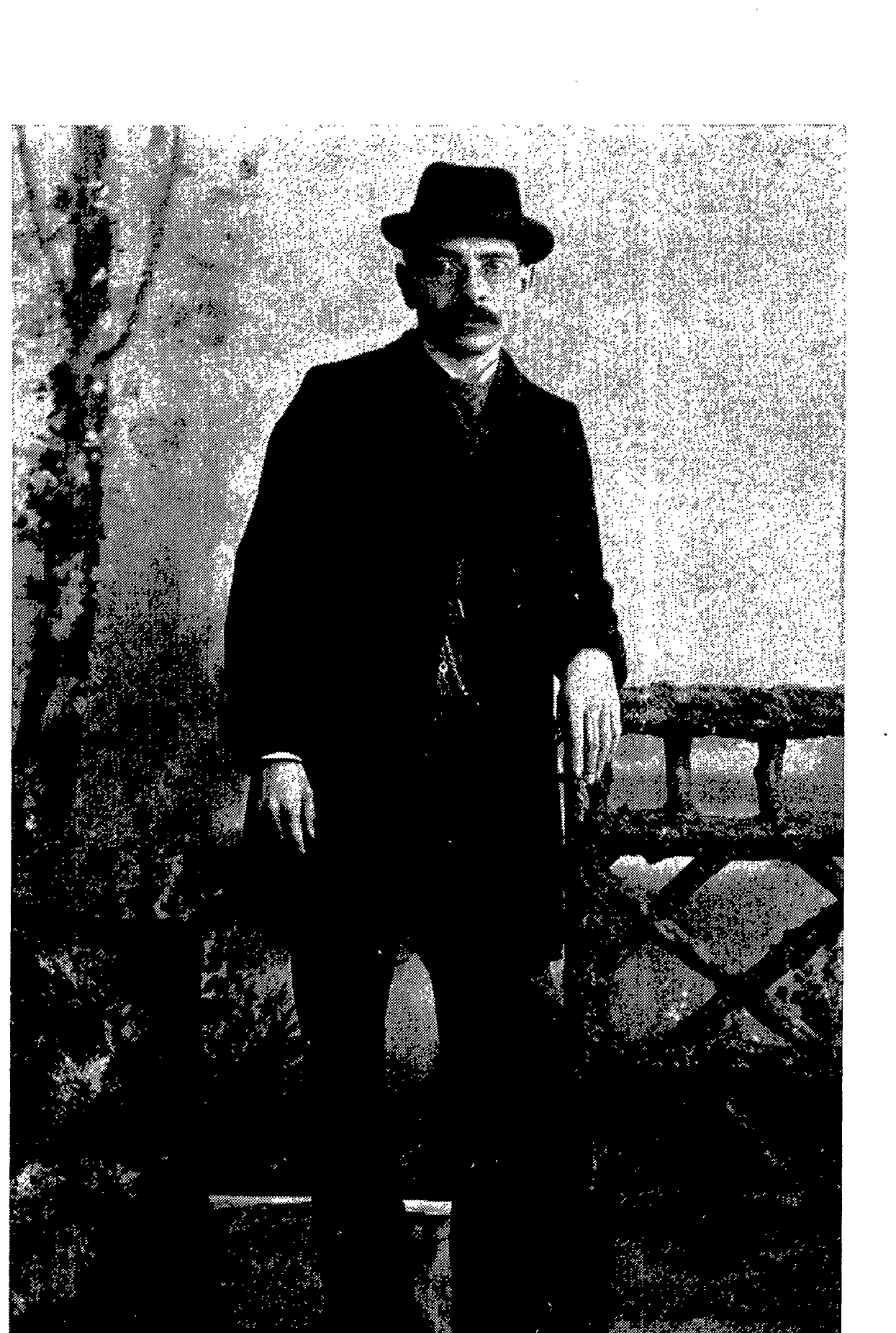
The most important activists in the Jewish movement at that time were Louis Miller and Michael Zametkin. The former as a leader, and the latter as a speaker.
Zametkin is an Odessan, and he is several years older than Miller. He came to America three months later than I did. He began to agitate some four years later. And as an agitator he had great success. The Jewish workers used to be set aflame at one of his speeches almost from the first word he uttered. He would immediately come into a nervous enthusiasm, speak with a remarkable fire, and his nervous fervor would carry over to his listeners.
Miller, who later developed into a brilliant speaker, did not yet play any great role on the agitation platform at that time. But he was the leading spirit, the general of the socialist group on the East Side.
His older brother, Leon Bandes*, who had been a prominent member of our revolutionary circle in Vilna, also came over, and he too took part in the movement.
440Around that time there came from Riga an intelligent and capable young man by the name of Morris Hillquit, and he too became active in the Jewish movement. He was the youngest of the group.
On the 9th of October, 1888, Bandes, Hillquit, a comrade by the name of J. Magidov, B. Weinstein, and a few more Jewish socialists held a meeting at which "the United Hebrew Trades" was founded, which I mentioned above in passing. The plan was Magidov's. He copied it from the "United German Trades," which then played a great role in the organized labor movement of New York.
The leaders of the Jewish anarchists—R. Louis, S. Yanovsky, Zolotarov, Girzhdansky, Rodashevsky, and others—conducted their agitation according to the teaching of Johann Most. In every one of their speeches they called for a revolution, and they attacked our comrades because they "talk the worker's teeth out with a ballot box."
In Philadelphia, too, a Jewish anarchist group was founded ("Pioneers of Liberty"), and it became fairly large in number. Their leader was Frener, a young man of about twenty, with a handsome, honest little face and a ringing, sympathetic voice. His flaming speeches used to have an effect on Jewish workers.
441Jewish anarchists and Jewish socialists used to quarrel with one another, but it did not go far. In private life both parties were on friendly terms, and every Sunday afternoon they used to come together at a Russian gathering. In part they were united by the respect that both sides had for the martyrs of the Russian struggle, and in part their disagreements were on the whole nothing more than a theoretical hairsplitting.
Sometimes Yanovsky would be the lecturer, sometimes one of the social democrats. In the debates people would get heated, but always within the bounds of decency, and after the meeting they would go drink tea at one little table, or visit one another as guests.
For a certain time the Jewish anarchists were stronger than the Jewish social democrats. The Jewish anarchists founded a newspaper—a weekly by the name of "Varhayt" [Truth]—even before the social democrats had been able to manage such a thing. But they too were unable to keep up their organ for long. The "Varhayt" lasted less than a year. For a certain time Yanovsky was the editor, and for a certain time Zolotarov.
In the fall of 1889 I delivered my first speeches in a city other than New York. This was, indeed, my first visit to another American city (I had been in Philadelphia earlier than in New York; but at that time I had not seen the city).
442The Jewish socialists in Boston invited me to come to them for a lecture, on a Sunday afternoon, and for the evening a lecture in English had been arranged for me at the Boston American section of our party.
I arrived in Boston on Saturday morning. I had the address of J. Finn, the founder and leader of the Jewish section of Boston. As has already been noted, when we spoke of Gorseid, no one in our movement yet knew, at that time, about staying at a hotel. A traveling speaker used to come and stay with a comrade; so Finn had invited me to him. But before I went off to his quarters, I went to look at the city. The station was only a few steps from the historic park, "the Boston Common," and I walked through it.
Groups of Jews, dressed in their Sunday best, were strolling among the trees. Why so early, of all things? I recalled that it was Yom Kippur. In New York one can find masses of Jews in Central Park on Yom Kippur. These are the ones who do not want to go to synagogue and also do not want to stay at home. In other cities it is naturally the same.
The Boston synagogues were just as packed as the New York ones. The Jews whom I saw on the "Common" were not synagogue-going Jews. Perhaps their parents or wives thought they were in synagogue.
Finn's dwelling was on Brookline Street, by a small park, and I finally went off to him.
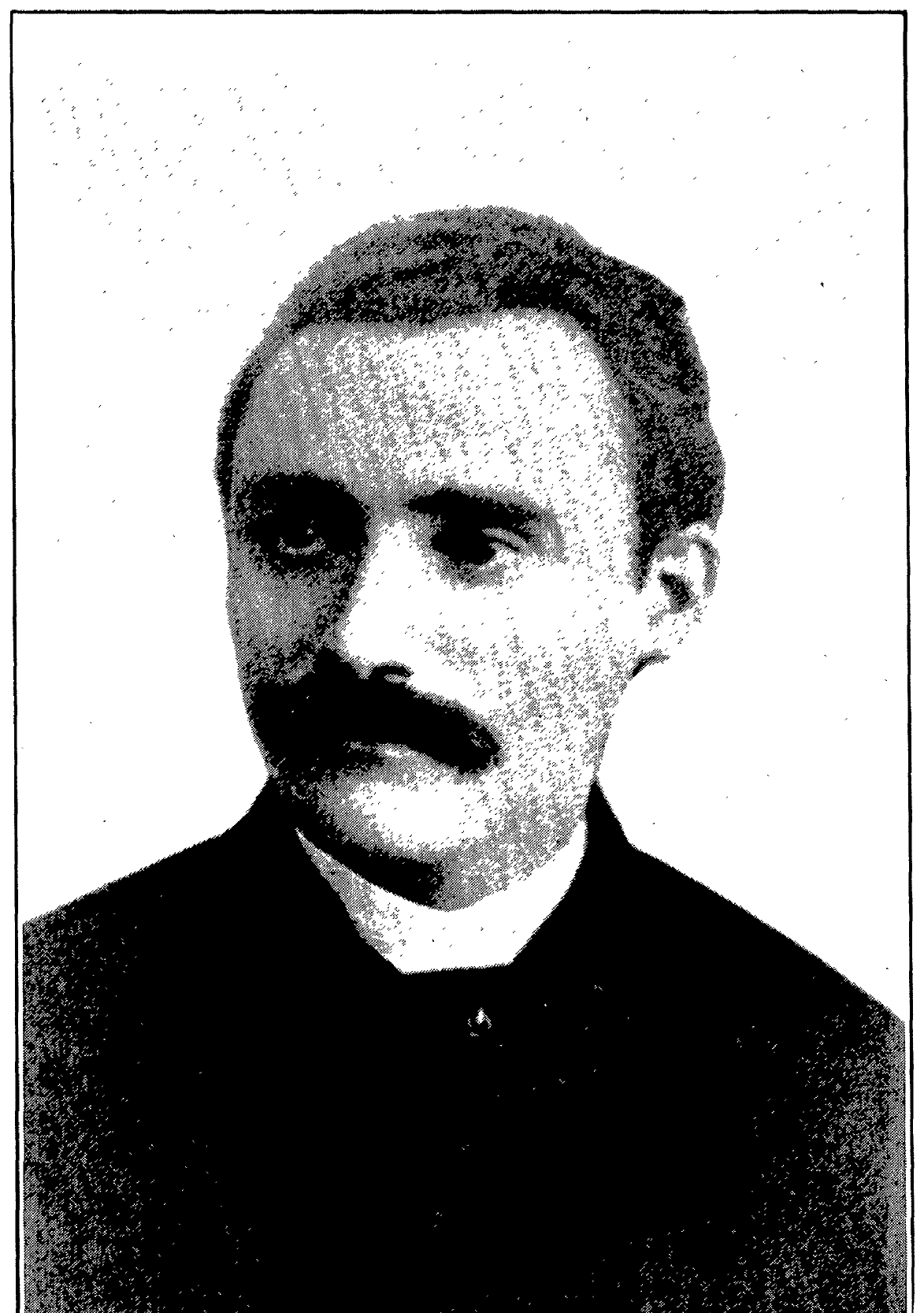
He was a sympathetic and interesting man. Back home, in Lithuania, he had been a teacher. Here he became an operator; but working at the
(plate; bound in the original between pp. 442–443)
443sewing machine, he always worked with his mind as well. As he himself used to tell me, his best time for thinking was precisely then, when his hands and feet were toiling hard on the coats that he "operated." He had good abilities and a clear, logical mind.
The Jewish gathering took place in Finn Memorial Hall, a large hall in the middle of the city. A large crowd came.
In a light, popular manner, with parables, I explained the basic ideas of socialism. The leader of the local anarchists was then Michael Cohen. He was the chief debater against me.
After I had answered his speech, a young man by the name of Zlatkin, a member of our section, played on a trumpet. He played like a beginner, and to this day, when I happen to be in Boston and pass by "Finn Memorial Hall," this trumpet rings in my ears, and Michael Cohen's Polish pronunciation as he puts his anarchist questions to me.
While in Boston I visited Victor Yarros, the Kremenchug immigrant, who was both a typesetter and a co-editor at Boston's Benjamin Tucker's "Liberty." We had been well acquainted from New York. By now we belonged to two hostile tendencies. Personally, however, we remained friends. So I went over to him. He was living at the editorial office, in Revere Station. Tucker's apartment was in the same house. And there their circle used to gather.
I spent a full day and night at Yarros's.
I remember my mood when I was riding back to New York. I was proud of what I had 444seen Boston, visited a great and important city. But at the same time I felt that I had not yet seen America and was not yet acquainted with it; that there lies a vast, vast land with many cities of which I have no conception; that I am living in one tiny little world.
(End of the second volume.)
Notes (the original's footnotes)
[p. 418] The matter recalls what is now happening in Russia regarding the question of government industry and private industry under the "NEP." Lenin, in his famous "NEP" speech of 1921, said exactly the same thing as what Yarros had argued to me. He had, namely, directed the Soviet government
[p. 432] It is important for the reader to keep in mind that the name is written De Leon. That is how it is pronounced in all languages except English. In English the pronunciation is De Lee-on.
[p. 439] Bandes is the name of the family. "Miller" was the name the younger brother gave himself while he was in Switzerland.