Chapter Six
Back in New York
240We returned to New York on Wednesday, September 4, aboard the German steamer "Prinzessin Cecilie." A large number of comrades were waiting for us at the pier. It was a joyful reunion. We all had lunch together, and afterward I paid my first visit to the "Forverts" building — our new ten-story edifice, which had been completed while I was in Europe. Approaching the building, I stopped to look it over from outside. Tall, impressive, its face toward Rutgers Square and Seward Park, with gleaming large golden letters spelling "Forverts" looking down from beneath the roof onto the surrounding streets, it stood many heads taller than all the other buildings that a passerby could see here. Two minutes' walk from there, a twelve-story edifice had been completed a short time earlier, the property of a banking firm, the "Yarmolovsky Building." But it cannot be seen from here. It stands on Canal Street, in a comparatively built-up stretch, whereas the "Forverts" building is situated on the square and stands free to the eye over a goodly expanse.
Inside, the comrades showed me the various floors, departments, signs of our growth, and the meeting halls for unions and other organizations.
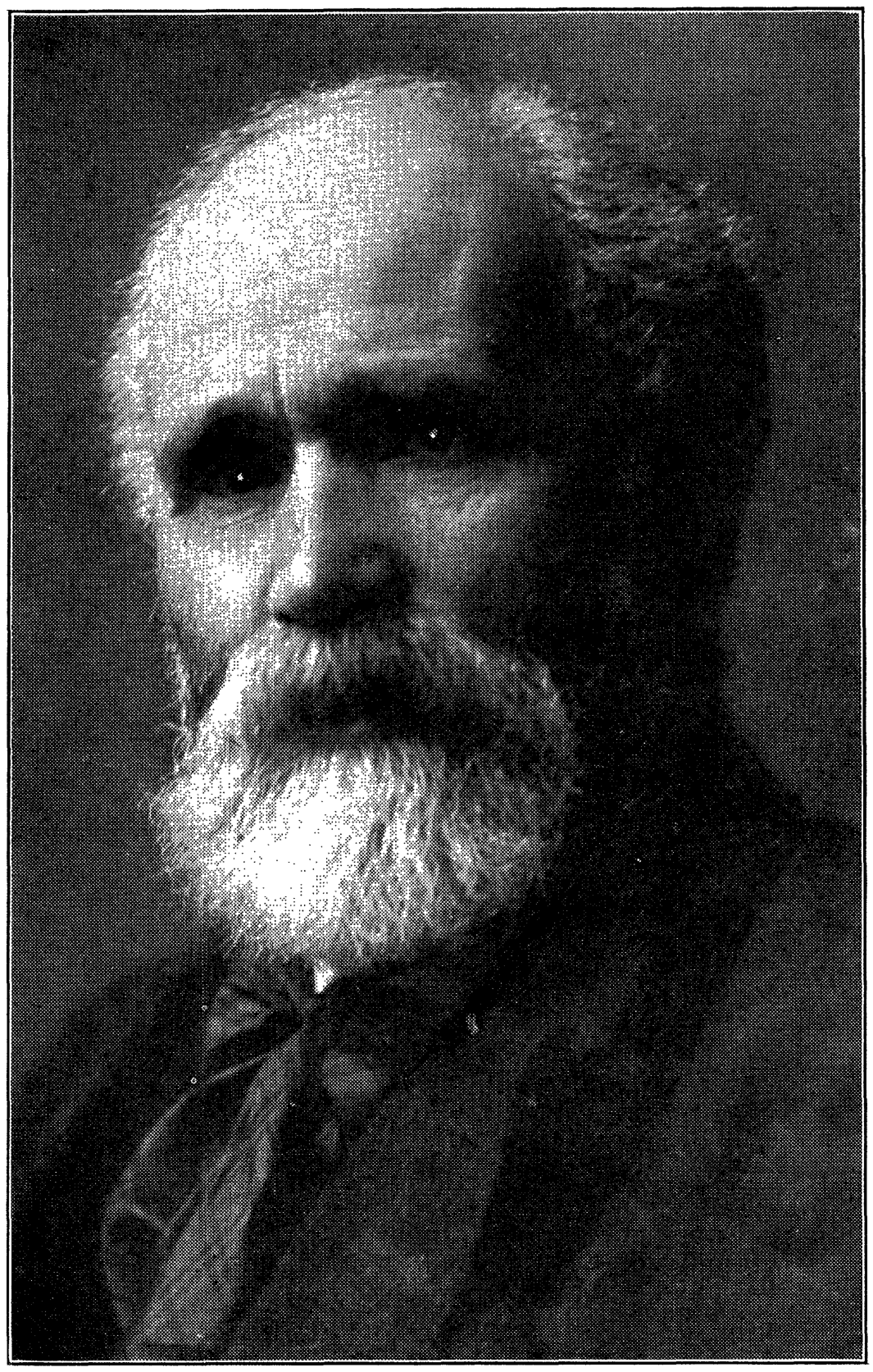
(plate; in the original facing p. 242)
241In New York at that time there happened to be a guest from London, the above-mentioned Keir Hardie, the founder of the socialist "Independent Labour Party" of England, which had been making rapid progress. He brought a greeting to me from English socialists, and he had conveyed it to me in writing. So I visited him at his hotel, and we had a long conversation.
We have seen above that the "Independent Labour Party" was not Marxist in its outlook, and that Keir Hardie's socialism was similar to that of Jaurès and close to the socialism of the German revisionists. I now reflected that fate kept bringing me ever closer to socialists of the tendency to which I myself had belonged these last several years.
The strongest impression Keir Hardie made on me in the first moments was through his appearance and his Scottish speech. I had known that he had been raised as a worker (a coal miner), and one could observe this in him. But at the same time his face reminded me of a Jewish lamdn (learned man). His hard Scottish "r's" made themselves felt so242strongly that at first they interfered with my hearing what he was saying. But the content of his words soon swallowed up the "r's."
Our conversation interested me in a peculiar way. On my earlier visits to England I had become acquainted with many English socialists. But Keir Hardie's talk about the socialist movement sounded different to me from theirs, for they had been under the influence of the Marxist school, just as all of us had been then. The difference between them and Keir Hardie was, naturally, nothing new to me. Yet his manner of speaking about the movement was intriguing to me. Somehow a socialist and yet not a socialist. Such an impression is made by a Karaite when he speaks about Yidishkayt (Jewishness) with a Jew.
His words, however, pleased me. In their content I found a certain similarity to the socialism of Jean Jaurès and Eduard Bernstein. Such expressions as "revolutionary socialism" or "class struggle" I did not hear from Keir Hardie. He did not speak about classes at all — a word without which Hyndman could not have spoken about socialism for three minutes.
Hyndman's "Social Democratic Federation" never made any great progress. So along came this Scotsman, who would have nothing to do with our Marxist theory, but who began to preach the practical essence (ikr) of that same socialism, and he did have success. When Hyndman declared that the workers must have their own political party, just as they had trade unions for their economic interests, the English workers listened little. When this coal miner said exactly the same thing to them,243they did listen to him. Why? — Because his manner of speaking was a different one, because his agitation was not full of theoretical expressions and was simply closer to their heart and to their mind.
But the difference between them lay not only in expressions. It will be enough to point to one example: when a worker was elected to Parliament from the Conservative or Liberal Party, Hyndman used to regret it greatly. Keir Hardie, on the other hand, used in such a case to rejoice in the fact that one more worker had entered Parliament.
Keir Hardie asked me about our movement.
"With us it has gone very slowly," I answered. "The Americans have not listened to us. The whole movement has been in the hands of Germans and Jews, but now it is already beginning to find its way."
"Yes, it will go now," he said. "With us it was the same."
I tried to talk with him about the difference between the "Social Democratic Federation" and his "Independent Labour Party." He explained the matter to me just as I had imagined it. Of Hyndman's federation he spoke in a friendly way, without a trace of ill will, not at all the way we were accustomed to speak about our competitors.
I conveyed to him briefly my impression of Jaurès and also the substance of the conversations I had had with the revolutionary trade-union leaders of Berlin. He confirmed my opinion that he held approximately the same view as Jaurès, and that the German "revolutionaries" were very close to him. All this he said cautiously, with much tact, avoiding244words that could point to hostile feelings between his "Independent Labour Party" and the "Social Democratic Federation."
Our comrades invited him to meetings, and everywhere he was received with joy and with honor (koved).
When I returned from Europe, I found a sensation in the New York newspapers. Some time earlier, in New York, a Jew named Herman Rosenthal, who kept a gambling house, had been murdered. Like all gambling houses and houses of prostitution, his business shared its profits with the police. Now, between him and a police captain named Becker, a sharp conflict arose. The gambler claimed that the captain was demanding too much from him and was persecuting him. Finally he went to the district attorney (prosecutor) and lodged a complaint, informing (informing as a moser) against him. The result was that gangsters, or "gunmen" (professional revolver "heroes"), shot him dead. This took place on Broadway, near 43rd Street — that is, in the very center of the theater world, which was then also the center of the gambling houses and of the wealthier underworld. The investigation brought out facts with names. Four young men surfaced who were known in the underworld by the nicknames "Lefty Louie," "Whitey Louie," "Gyp the Blood," and "Dago Frank." (The first three were Jews, and the fourth — an Italian.) It came to light that Becker had hired these professional "murder squads" to remove Rosenthal from his path. They were sought, and gra245dually they were all arrested. Becker, too, was arrested. Of "Lefty Louie" it was said that he was an intelligent, finely raised young fellow, and that those who knew him simply did not believe that he could be a criminal. The press became filled day after day with details of the case — not only the newspapers of New York, but of all America.
Becker's trial was the first. I attended his trial as well and wrote up my impressions for the "Forverts" every day.
He was found guilty, and he was sentenced to death. He died in the electric chair in Sing Sing. A short time after his trial came the trial of the hired murderers, and that one I attended too. The verdict was a murder verdict against all four, and they too were "electrocuted," one after the other, also in Sing Sing.
The election campaign of that year (in the autumn, as usual) was a very active one with us, in New York and also in Milwaukee, Wisconsin (a large American city with many Germans and Americans of German descent). In New York the campaign of Meyer London (see picture on page 588, fourth volume) and of Charles Edward Russell was ablaze. London was "running" for Congressman from the 12th Congressional District (the district where the "Forverts" is located). He was a brilliant orator and very popular among Jewish workers. His campaign was full of life. The neighborhood seethed with enthusiastic assemblies; and the candidate246flew from one assembly to the next. Charles Edward Russell, a well-known American journalist, became the socialist candidate for Governor of the State of New York. In those years he was a devoted member of our party and used to take a lively part in our agitation. He was also beloved among us, and the fact that he was a Christian, and an "authentic Yankee" at that, gave him a special charm in Jewish eyes. So we threw ourselves into his campaign too with great interest. Most of the time he and London used to speak at the same meetings. As usual, I spoke almost every evening at campaign assemblies, often two or three in a single evening.
And in Milwaukee, where the capable, energetic Victor Berger was the leader of the socialist movement — and where Berger had a year earlier been elected to the Washington Congress — a lively campaign was under way for the municipal elections.
From various other states came reports that the socialists were active there too.
Meyer London received a large number of votes, but this time he was still not elected. Therefore the good tidings (besure) came from Milwaukee that the socialist candidate there for mayor, Emil Seidel, had been elected, and that other socialists had been elected there to important other offices in the city government. And the most important thing perhaps — that our Victor Berger had been elected there as Congressman. For America this was tremendous news. It was almost not to be believed that a city like Milwaukee had passed into socialist hands. And that same city had247a socialist Congressman in Washington! The American press began to pay attention to our party. With us it was "liyhudim" (there was rejoicing, "the Jews had a festive day").
For the inauguration of Emil Seidel — that is, for the ceremony when he would enter into his office as mayor of Milwaukee — I traveled out there.*) I attended the scene, spent time with the comrades there, and sent reports to the "Forverts."
It appeared that at last our movement was blossoming forth in America.
We are at the beginning of 1913. In that year two sensational occurrences took place in our great unions, which had an inner similarity.
In both cases it was a "fratricidal war," and in both the "Forverts" played an important role. In each of the two clashes there was a question between reasonableness, order, and discipline on the one side, and demagogic mass-rule on the other side. One struggle broke out among the men's tailors, and the second among the cloakmakers — the two largest Jewish workers' organizations in America, and that means also in the whole world. The position of the "Forverts" was the same in both cases. We energetically supported the side of discipline, tact, and reason. For a certain time248we had a hard struggle. Demagogic influences gained the upper hand, and there were unpleasant moments. But in both cases the situation changed, and our standpoint was vindicated. In both events the "Forverts" had a great moral victory.
The first fratricidal war broke out among the "United Garment Workers" (the union of the various tailoring trades of men's clothing). They declared a strike on the eve of the New Year, December 31, 1913, and at the end of the ninth week of the struggle there developed a sensational occurrence, which belongs to the history of the "Forverts" as much as to the history of the tailoring trades.
Indirectly it is also bound up with a most important leaf of my personal fate.
The great mass of workers in the tailoring industry was employed by the contractors — more accurately said, by the little contractors, who took the work from the clothing manufacturers. In the "warehouses" — that is, in the lofts of the clothing capitalists — for the most part only the cutters worked. From there the cut-out pieces of material were sent to the contractors, the bosses of the shops where the tailors, the basters, machine operators, finishers, pressers worked.
There the work went on under very hard conditions. A great part of the shops were "sweatshops" (sweat-workshops), as in former times. People toiled some sixty-odd hours a week for thoroughly wretched wages (vidushes, earnings).
So a strike was declared. The union was then small and weak. But thereupon happened that which used to happen at almost all Jewish strikes in Ame249rica: masses of tailors joined who had previously not belonged to the young union at all. Before the New Year the union had consisted exclusively of those who had worked for the little contractors of the smaller clothing firms. When the struggle began, it drew in many thousands who had worked for the contractors of the rich clothing manufacturers, the giants of the industry. The smaller firms were our own Jews — Russian, Polish, Galician — whereas the great ones, the millionaires of the trade, were mostly German "yehudim" (Jews), or children of German "yehudim," long-rooted wealthy companies. The little contractors had no power. Most of the time they could not pay their workers their weekly wages until they had received their weekly check from the rich manufacturers. And the labor prices depended on the manufacturers. Although the tailors had never once looked the manufacturers in the eye, their strike was a struggle against them, against the manufacturers. For the contractors were in truth only agents of the capitalists in their relations with the workers. The great manufacturers, the "yehudim," were organized. There were three such associations, and the largest of them had as president a capitalist named Alfred Bendheim. The majority of the workers, some two-thirds, consisted of Jews. The rest were Italians. The strikers demanded a shortened workday — 48 hours a week — and the recognition of the union, that is, that no others but union members might be employed in any shop. The second point was the most important, for through it all the shops would be strictly unionized, and then the organization would contro250l the trade; so it would then be more possible to achieve a raise of wages and other improvements. Naturally, a raise of wages was expected as well; — but that was put off until the time when the employers (balebatim) would come to negotiate over a figure, and over how the written agreement would be drawn up with each of them separately, for every section had close to it its own special interests and special demands. For example, the coat tailors demanded week-work, instead of the old system of "piece-work" (where the tailor received every Friday certain wages, on condition that by then he had finished a certain number of coats); the pants makers and vest makers, on the other hand, demanded piece-work.
As the organ of the Jewish workers, the "Forverts" gave the strike a great deal of space. The struggle every day occupied the top of our front page, and the headlines over the strike reports were always printed in quite large letters. We also printed editorials to give the strikers courage, and other articles about the strike as well. Morris Rosenfeld, the poet, who was a permanent contributor of ours, composed an inspirational poem to the strikers.
Apart from working for the strike through the "Forverts," some of us delivered speeches before the strikers. I was quite active at this.
Some of the manufacturers gave in at once. Instead of 48 hours, the union settled with them on fifty hours a week. The recognition of the union was written into the agreement (opmakh), and the wages were raised to passable251sums, according to the separate agreements of the various shops. Later other manufacturers came along, still later — yet others. One settlement after another was signed (an agreement between the manufacturers and the union). From time to time the "Forverts" would announce a settlement with a large shop. So it went. A week went by, a second, a third. Settlements were reported of twenty shops at a time, of thirty or even forty in a single day, all with victories for the union. The manufacturers who came to settle accepted almost all the demands that the organization had laid before them — the most important demands, in any case.
Thus nine weeks went by. A goodly number of the strikers had already gone back to work. To the outside world it looked as though things were standing quite close to a complete victory for the union; that any moment now every tailor would again be in his shop, and that the struggle would be completely won. (In this sense we wrote our reports, in order to give the strikers courage. On February 16, for example, the headline over the strike report was: "Tailors on the threshold of a complete victory.")
But the tailors and others who were close to the labor movement, and even outsiders who read our reports attentively and understood how to read between the lines as well, knew that things were not nearly so rosy as people imagined. For all those settlements had been made with the smaller — mostly with the very small — employers (baale-batim) of the industry, with Jewish immigrants from Russia, Poland, or Galicia. In all, fewer than ten thousand of the strikers had settled, whereas about twenty-five thou252sand were still striking, and these were for the most part the unfortunate ones whose wages came from the millionaire German "yehudim," the giants of the industry. As mentioned, these rich firms were united in associations, and they did not budge from their spot.
Important here, too, is the above-mentioned fact that the workers who were employed by the contractors of these millionaires had joined the union only after the strike had already begun. The union was still a new thing to them; to fight and suffer for it — to that they were not yet accustomed.
Another week went by. Those who had gone back to work at the settled shops paid ten percent of their wages to support those who still had to strike. More than that could not be demanded of them. But for the twenty-five thousand this was like a drop in the sea. And even the ten percent the "settled" workers did not always bring in on time. They themselves were also impoverished and in debt (pawned). The burden of the "unsettled" grew heavier and heavier.
Some of the Jewish tailors who worked for the "yehudim" had already lost their patience, and they went back to work without a settlement. And as for the Italian members of the union, a great majority of them had abandoned the strike right at its beginning.
Every day the danger grew greater that those who still remained on strike would also lose their patience, and then the "settled" shops would lose what they had won. For the agreement that their employers had signed contained a253point that their settlement was dependent on the conditions that could be wrested from the powerful association manufacturers. Otherwise it would be impossible for them to compete with them.
As the chief leaders of the strike there were announced two well-known persons of the Jewish labor movement: our comrade, the above-mentioned Max Pine, and Benjamin Schweitzer, the organizer of that branch of the "United Garment Workers" which consisted of coat tailors and which called itself the "Brotherhood of Tailors."
Pine used to come up to us every day and give a report on the condition of the strike. I used to talk with him, and thus I became well acquainted with the situation. Besides this, I was after all often enough among the strikers. So I knew that the hopes for a victory were growing ever smaller. Naturally, before the public the "Forverts" did not say this out; in the interests of the struggle one had to take heart.
On Friday evening, February 28, Pine and Schweitzer came into my office. Their faces bore an expression of deep seriousness. Pine described to me the situation of the strike. He explained that things stood precariously. But he added that there was a possibility of settling with the great manufacturers, if the union would agree to a compromise. The compromise was not a happy one for the union, but the254union was compelled to accept it; thus fear had prevailed.
With the representatives of the rich firms three other men had also met, influential, well-known persons: a rich communal worker (klal-tuer), a pious Christian by the name of Rabchev [Pulkan Pamini]; an American Jewish communal worker by the name of M. Marcus; and the Italian-descended Zionist, Dr. [J.] Mangano, who had earlier been an important figure in the temple of the Reform congregation of New York. They had turned to Alfred Bendheim and to several others of the rich clothing manufacturers. Earlier these capitalists had not even wished to know of the union, and with its representatives they had not even wished to deal. It was a different matter when these three well-known persons turned to them. The manufacturers received them in a friendly manner and let themselves be persuaded. In the end they consented to a compromise. The compromise had in and of itself no substantial conditions, but a beginning was nonetheless made in it.
They were still grudging over trifles. Of recognizing the union they would not hear. And yet it was a step in a new direction. For the first time the union came into negotiation with the great manufacturers' associations, and as a union — true, even this not directly, but rather through the intermediaries; yet this could already be regarded as a foundation for a recognition of the organization once it would become truly strong. In any case, there was no other choice. It was a question not of choosing what was more advantageous, but of necessity.
As [Pine] explained to me, the strike stood255so badly that if this weak compromise were not accepted, the strike would be entirely lost, and then the union too would be ruined. It was chiefly a question of saving the union.
The committee of the three distinguished citizens reported the points of the compromise to [the committee, namely to] Rickert, the secretary of the "United Garment Workers." Then Rickert and the other members of the executive committee of the "United Garment Workers" considered the situation, and they came to the conclusion that the compromise must be accepted. But first the committee wanted to know whether the union ["Forverts"] would support such a settlement. For that reason Pine and Schweitzer came to me that evening.
"What do you say, Comrade Cahan?" Pine asked, after he had told and explained everything to me. My answer was:
"Accept the compromise, the 'Forverts' will stand by you. It is not a good settlement, but there is no helping it; in any case, one can build a real union [with it]."
"There will be hotheads. They will raise an outcry," he said. "It will not go down easily."
"It makes no difference. Accept the settlement. They will calm down," I answered. "They will understand that there was no other choice."
I set about writing an editorial for the next day's "Forverts" to explain why one must content oneself with such a settlement. The usual editorial goes also on the innermost page. But that page had already been set and made up, so that it was already too late. To make changes there was im256possible. Open still were only the news pages. So I had in mind a special editorial that should be printed on the first page, here where the most important news is found.
At my request, Pine sat down at my desk, and I began to dictate the article to him.
As I paced back and forth, dictating, there came into the general editorial room one of the organizers of the "Forverts," [Ike Goldstein], and together with him came a tall worker, an acquaintance of his, by the name of Louis Hollander, who was then unknown to me. Goldstein I knew; he was an anarchist, a factional revolutionary, but not an enemy of mine; he was
a factional comrade of ours, but not an enemy. A genuinely good man, an honest idealist, but more dry than practical. When he had learned of the settlement that was to be made here, he became agitated. So he went looking for Pine. He understood that Pine was now in our office, and therefore he came to us.
As the door of my private office was open, and as he came into the general editorial room, he heard me dictating a few words that indicated the gist of my article. He began to appeal to me not to print such an article;
he heard it with pain and with anger. He pleaded from his whole heart.
"Comrade Cahan! Comrade Cahan! The settlement is a betrayal," he pleaded.
I explained to him that this was a serious moment, and that one must not be rash.
"The settlement is not a good one," I said. "One would wish to have something better. Rathe257[accept the settlement, and] now the union will have something to build on. Then we will have greater victories."
I appealed to him in the friendliest manner, and he debated with a broken heart (shvures-lev), but in a friendly way too. I remained of my opinion, and he and his companion left.
A few hours later the "Forverts" was already on the presses.(*). Over more than half of the front page, across the width of five columns, in quite large letters, stood the words:
"The great tailors' strike settled."
Under it, also in long lines and large letters, stood:
"The three great manufacturers' associations and the United Garment Workers leave the question of working hours to a committee." And under these words, in heavy lines:
"The settlement is not as good a one as one would wish, but for the future fate of the tailors it is more a good one. The great tailors' union has been created. There is here a firm foundation to improve and to better the unfortunate trade."
Then the conditions were enumerated. The most important of them were:
"1) The three great manufacturers' associations and the United Garment Workers leave the question of working hours to a committee. The details have not yet been determined. But the maximum workday will be nine hours (this is already determined), that is, 54 hours a week, instead of the 50 hours determined in the earlier settlements.
258"2) The wages are raised by 1 dollar a week.
"3) Sub-contractors are abolished."
My article contained, among other lines, the following:
"A true fighter is one who has not only the courage to fight and to suffer; a true fighter must also know how to weigh everything calmly and to understand the circumstances well.
"The circumstances in this case are such that the settlement gives a foundation for a needed improvement of your trade. Do not forget that your great union is still very young. It was, in fact, born just now, in this struggle. With this settlement it will only now become a truly mighty organization. A dollar a week is naturally too little; nine hours a day is naturally too much. This, however, bear in mind, is only a beginning. What have you won? A union you have won!
"That is the most important thing. Every true union man will understand it. Only hotheads and babblers will speak against it."
The next morning, Saturday, things broke loose. I then lived on 96th Street, between Madison and Park Avenue. And, as usual on the Sabbath, I stayed home the first half of the day. I had no idea what was going on there. But Adolf Held, who was then again the business manager of the "Forverts," let me know. When I came to the "Forverts" building, I saw right at the entrance259a confirmation of Held's news: the great panes of the front door had been smashed out.
Then I learned the details.
In the morning the strikers had gathered in the halls where they had always met since the strike began. A rumor began to spread of underhanded dealings with the settlement. They came out of the halls and began to assemble in the streets. Thus several thousand people gathered. The majority of the crowd went to East Broadway, where the "Forverts" is located. A smaller part went to the office of the union, which was located in "Bible House" on Eighth Street, between Third and Fourth Avenue. The crowd that was dissatisfied with the compromise consisted of those who had worked in the "settled" shops. They were already back at work at the agreed-upon improved wages. (On the Sabbath, however, many of them did not work, so they were now out on the street.) They had settled for fifty hours a week, and according to the general compromise they would have to work 54 hours a week, and their raised wages would also be diminished, for their settlements would be superseded in the general settlement of the whole trade. That they should not be satisfied with the compromise was natural. Apart from this, it simply paid for the "settled" that the other tailors should continue to strike, for through this there was a great shortage of goods in the clothing stores of the land. And when there was a shortage of goods in the stores, there was abundant work, and they, the "settled" tailors, and their bosses, earned well. These bosses incited their workers to protest against the new settlement.
260Especially interesting is the following fact: among the "settled" shops there were many that were now temporarily working for the "unsettled" manufacturers. Thus the "settled" tailors had scabbed (worked as strikebreakers) against their striking young brothers, and through this they helped the great manufacturers to hold firm against the young union.
Among the tailors who were out on the street that Saturday, March 1, there were also tailors from unsettled shops. These were exhausted people. They had been compelled to go back to work. They had no union of their own to [stand by them]. They had no desire to go back to work. They had no desire to go back to work in the interests of the "settled." They had mixed in with the "settled" now, out on the street, only out of curiosity.
The spokesmen were workers from the "settled" shops; the others, the unsettled, had not the courage to express their opinion. The mood was inflamed with a spirit of protest against the leaders of the strike and against the "Forverts." For demagogues such a moment is a golden opportunity.
To set oneself against this spirit was dangerous. To speak against this bad situation, in which the strike found itself — about necessities, about practicality — to that no one objected. The "unsettled" did not protest against the "settled," who demanded that the hungry should go on hungering.
The above-mentioned Ike Goldstein, the anarchist, was one of those who represented the fighting spirit. He did this, however, out of an honest conviction. Out on the street, with the inflamed mass, he261not now, but that was only because he had slept the whole night. He and a few others from the "Brotherhood," and all the members of the Brotherhood's executive, had spent the night in deliberation. There were among them some who still understood how necessary the compromise was, but the others shouted them down, and the executive then issued a proclamation. Thus was the strike to be continued.
When the whole mass arrived at East Broadway, someone began to call out that people should go to the editorial office of the Yiddish newspaper "Varhayt" (Truth), which was located on East Broadway, half a minute's walk from the "Forverts." The "Forverts," the organ and property of the organized Jewish workers, had suddenly become a "scab" trade, so to speak — under the circumstances. They said one must condemn it for this, and that one must go and beg the "Varhayt" to lead the strike. So argued some of the discontented, and a number of mere rabble-rousers, for whom such a moment is a fine opportunity. The agitators of inciters.
The "Varhayt" was the organ of Tammany Hall, of the most corrupt political organization in America — of that Tammany Hall which drew its income from the houses of prostitution and from criminals of every kind. Of that Tammany Hall which represented everything that is filthy in political life. A day earlier this same mass had been appealing to our speakers; a few weeks earlier, in the time of the election campaign, many of this same mass had condemned Tammany with its rascalities and had shouted hurrah for the Socialist candidates.
Among these people were some who, a day earlier, had come to beg me to come and262address the strikers. Now they shouted to the Tammany newspaper that it should be their counselor and their leader. Meanwhile, at one of the American windows of the "Varhayt" editorial office, a young man appeared, and he began to speak to the crowd.
This was Louis Hollander, the official of the "Brotherhood of Tailors," who had earlier been at my office together with Goldstein. He now delivered a speech to those who were gathered outside. He told them not to accept the settlement, and to go on striking.
Hollander had long been an opponent of the "Forverts." But not on account of union matters, and also not on account of political points of view. While Jacob Gordin was alive, Hollander had been a hot adherent of his, and now too he was a hot Gordinist. He was a member of the "circle of the most embittered Gordinists." And ever since my series of articles on Gordin's dramatic works first appeared in the "Forverts" (in the year 1908; see the fourth volume of these "Pages," pages 521–529), he and the whole "little circle" had been ardent anti-"Forvertsists." Inasmuch as the "Varhayt" had strongly supported Gordin against the "Forverts" and had attacked us in general, the "Varhayt" was the organ of the "little circle."
From the "Varhayt" the crowd made a dash toward the "Forverts" building. What then took place was reported in the following morning's (Sunday's) "Forverts," as we shall soon see.
263In the following morning's number of the "Forverts," that of March 2, the following was printed on the first page in great words:
"Great agitation among the tailors, dissatisfaction with the settlement."
In the report it was told:
"Yesterday, in the morning, was a day of great commotion in the tailors' strike. The news that the strike had been settled came as a surprise to the workers and caused great agitation both among those who were satisfied with the news and among those who were not. The dissatisfied were more active in venting their dissatisfaction than the satisfied were in expressing their satisfaction. In the halls where the strikers gather, the various committees assembled early in the morning, debating the points of the settlement and the question of whether the leaders had acted rightly. Among the satisfied were mostly the workers from the large, not-yet-settled shops. Against the settlement were mostly the workers from the settled shops.
"About twelve o'clock great crowds began to gather around the office of the "Forverts." Many came into the lobby (front room) and into the halls. Some of those assembled began to agitate against the "Forverts" for our statement concerning the settlement. For a long while the agitation brought no results. Some of those who had been worked up began to break windows, and before the others had time to stop them, they had smashed the panes of the great front doors. About this shameful work there is nothing to say. Upon the truly decent fellows this made a264repulsive impression, and they condemned these pogrom-tactics with indignation. Only people who do not understand what a union means act in such a way. Union men do not believe in such doings.
It is further told that the agitation moved the executive committee of the United Garment Makers Union to issue a statement to the workers that the strike was being continued; that the leaders of the strike therefore said the struggle had reached a worse position, and that they had felt that no better conditions could be expected, even if the strike were to go on without end.
The leading editorial in the "Forverts" number of March 2 contains, among other lines, the following:
"We surrendered the settlement yesterday. That is, the settlement with the great manufacturers, where the majority work.*) We said that the settlement is not such a good one as one would wish, but that under the circumstances nothing better could be made. The most important thing is to have a union, and with a union as a foundation one can improve the trade further and further.
"But in the course of the day a part of the tailors raised a storm of dissatisfaction. To the "Forverts" came dozens, hundreds of tailors, and they protested; they protested "strongly." There was an outcry, an uproar.
"All these were a part of the thirty thousand tailors, that is, of the shops that are already working.265Those who are still going hungry, those who are not working, the fifty thousand — they did not protest.*)
The hungry ones expressed satisfaction with the settlement that had been made under these circumstances.
" 'It is easy for you to be hot-headed, because you are already working,' — they said to the others. — 'Our wives and children are perishing; let us go back to work, let us be true to our union, and later it will get us better settlements.'
"But those who had grown heated continued their shouting, and they went so far as to want to make an uproar. Such fellows as these heated workers, those who remained, smashed the windows in the front doors of the "Forverts" building.
"When one has no better arguments, one seizes upon worse arguments.
"Before we go further, let us say at once here that if the question of accepting or not accepting this settlement is to be decided, then it must be voted on only by the fifty thousand hungry ones. And that, moreover, by a secret ballot — with masked ballot-slips. It would not be right that the thirty thousand who are already working should decide that not they, but the others, the fifty thousand, should go on starving.
"The chief thing is the union. With a strong union one can win further and further improvements. The most important thing is to make the organization strong. With this agitating and getting heated nothing can be accomplished. One must always266consider calmly. If not, everything will fall apart, and it will be lost."
As a part of the leading editorial, the proclamation of the executive committee of the Brotherhood of Tailors was printed, which declared that the strike should be continued. In this call were found the following lines:
"We feel it our duty to warn you not to act upon what the newspapers say, and not to go back to work. We will continue the strike. We will bring all New York to a standstill, and we will not be in the position of letting such a crime stand. We cannot recognize any settlement that has been made without our general knowledge. We cannot recognize any settlement that does not guarantee the recognition of our union. We have fought nine weeks; we will go on fighting to the last drop of blood, until our demands are won."
By the words "not to act upon what the newspapers say," the "Forverts" is naturally meant. For the "Varhayt" took quite a "revolutionary" stand against the settlement.
The "Varhayt" of the previous day, that is, of Saturday, March 1, had carried a report with a great headline across four columns: "Settling the whole tai267lors' strike"; and in a sub-headline it was explained that it was not yet certain whether the strikers would accept the settlement. The report was a very short and indefinite one. As it turned out afterward, Louis Hollander had earlier telephoned the editorial office of the "Varhayt" that the tailors were not satisfied with the settlement, and that they would probably refuse to recognize it. On his advice, the "Varhayt" added that it was not yet certain whether the strikers would accept the compromise.
That Sunday the "Varhayt" already had a "head" across the entire front page in the largest letters:
"Revolution in the tailors' strike."
And in a sub-headline it stood:
"The Brotherhood of Tailors rejects the settlement as a shame and a misfortune for the trade," and beneath this ran the lines:
"Rousing scenes of enthusiasm before the office of the "Varhayt."
In small words was printed:
"A few hot-heads break the windows of the "Forverts."
The report itself begins with the following words:
"With the greatest excitement and enthusiasm, which simply cannot be described, the tens of thousands of tailor strikers, as one man, rejected the settlement."
"There was no anger, no dissatisfaction, but a true revolution. New York has never yet seen the like. And just as the great revolutions have changed the history of countries, so what happened to take place on Sunday — Saturday, the whole day — occurred in New York.
"At every step and turn you met thousands and at ti268mes tens of thousands of tailor strikers, who demanded justice."
Then comes a "little head": "The 'Varhayt,' the center of the revolution."
It is told how people shouted "Three cheers for the 'Varhayt' and for its editor!", "Let Miller make a speech!", "Hurrah for Miller!" Then it is explained:
"But the editor of the "Varhayt" was not then in the office, so one of the officials of the union, L. Hollander, of the Brotherhood of Tailors, who happened then to be in the office of the "Varhayt," showed himself to the strikers at the open window, and he assured the mass that the strike was only just beginning."
This first piece of writing was very characteristic of Miller. Reading it, one might think that barricades had been set up in New York. In the fourth volume of the "Pages from My Life" (pages 363–364) there are found specimens of the same sort. L. Miller sets up a "little head" in the largest letters across an entire page:
"The Jewish quarter is in flames." And from the next line, which is printed in much smaller letters, you learn that the flames are flames of anger at the "Tageblat," for having offered for money to serve the Democratic Party. (In passing, it is to be noted that now Miller's "Varhayt" did precisely that for which he had stormed so against the "Tageblat" in 1902 — served Tammany for reward.)
Characteristic here too are, for example, the words that "at every step and turn one met thousands and at times tens of thousands."
269Concerning the window-breaking at the "Forverts" building, the "Varhayt" reported with tact, but still in its own fashion:
"It was, naturally, unavoidable, — it said, — that in such a great mass there should be found a few who could not restrain themselves. Some broke into the office of the "Forverts" and there wrought havoc, after they had broken as many windows of the "Forverts" building as they possibly could. The great mass of strikers and the leaders regret this. Such tactics are harmful and not nice."
The report is exaggerated with a full hand, for apart from the window-breaking at the front door, no havoc whatsoever was wrought.
Miller's leading editorial in the same number of the "Varhayt" takes up twice as much space as usual. It takes up the space of four columns, and it is written in the same fashion as the few lines I have quoted above about the "revolution," or about the fact that "the quarter is in flames." We here reprint word for word the first quarter, or sixth part, of this four-column leading editorial. The heading is:
"Do not go to work!" Then come the following lines:
"Picture to yourself, reader, that you are yourself among a great mass of your fellow men on a little ship upon a roaring, stormy sea.
"Now you are high in the clouds, now you are in an abyss of eternity. Now comes a fearful mountain of water that will engulf you, drown you, and now it flings you upon a rock, and everything cracks beneath your feet. It seems to you that all is already ended.
"And not a minute, not an hour, and not a day does it draw out,270that the agony drags on, holding you between heaven and earth. A year this torment drags on, this fear of death, and yet another year, and again a year, and again a year, and yet a year, and again a year of this half-mad struggle, of this inhuman torment with the enemy of life.
"Ten long weeks, terrible ten weeks of struggle, of exertion, of hunger, of want, of bitter cold, of sacrifice and despair, of women's tears, children's torments, human cries... Ten long weeks, like ten endless eternities!
"And at last, far, very far, a glimmer, a flash... land... sweet tones of heavenly life come floating toward you... rescue... the awaited goal... the dreamed-of victory... the joyful tidings of the ended struggle, the sweet, the happy hope of the won triumph, of the attained ideal.
"You begin to leap for joy, for rapture... tears pour from your eyes in the intoxicating consciousness of the found blessedness. You embrace your comrades in struggle, your friends in suffering, you kiss your fellow fighters, your fellow marchers, out of gladness... like a...
"Ah, woe is you! A thousand times woe! No word, no language, no sign, no image can convey what has happened. The aching light that drew you from afar is the gleaming eye of a snake... the sweet tones that rang out from heaven are the grinding teeth of a monster... All the rest is devastation, shame, slavery, hell, and death...
"Picture to yourself, reader, that you are yourself in all these possible situations, moods, expectations, heart-upheavals and spirit-convulsions. Picture to yourself that you yourself271go through all this, and you will get a little idea, a little notion, of what took place today, Saturday, the whole day, in the heads, in the hearts, in the souls of the hundred thousand tailors, when it was announced to them what they had won after their great ten-week strike."
As the reader sees, the endless "florid rhetoric" (melitse — high-flown phraseology) consists of a claim that the settlement is a great disappointment. That more than two-thirds of the strikers are satisfied with the settlement — this the leading-editorial writer does not mention. "A hundred thousand tailors — they are all bitterly disappointed," he says. And in the report, in the same number of the "Varhayt," it is told that the tailors rejected the settlement "as one man."
Characteristic also is what follows. The agitation is carried throughout. The article is interwoven with the special sort of demagoguery with which the "Varhayt" was always full.
The Tammany newspaper did not, naturally, care about the fate of the tailors. For all it cared, the union might go to ruin. In the interests of its demagogic sensation it became "revolutionary." It knew well that the union could not go on striking.
By a blunder, the "Varhayt" announced, in great words, that the Jewish banker Joseph Marcus was one of the committee of three that had made the compromise settlement. The result was that several of the rowdies who had made the "revolution" at the "Forverts" broke the panes at Marcus's bank as well. The next day the "Varhayt" explained the error it had made — that it was not Jo272seph Marcus who was the member of the committee of three, but Marcus M. Marcus.
About our broken windowpanes, jokes went around town. People recalled that in earlier strikes there had also been found "wags" who had threatened to break the panes at our place (in many cases these were simply scabs, provocateurs)... So now we were given "advice" that we should keep a glazier on permanent retainer. And later, every time a strike broke out among Jewish workers, people would say: "Well, the "Forverts" had better get a glazier ready."
In the labor movement it was known that the tailors' strike could not be continued. And the general opinion was absolutely favorable to our position. From all sides friendly greetings came to us.
As a counterweight to the demagogic turmoil that the "Varhayt" had brought into the situation, on that Saturday evening, March 1, a meeting was convened of representatives of all the Jewish unions and other organizations of our movement, with the aim of putting together a committee that should take the situation into its own hands.
The meeting was called for the next day, Sunday, March 2, in the daytime, at Clinton Hall, 151 Clinton Street. For the same time meetings were appointed of two locals of the tailors' union, which had273their sessions in the "Forverts" building. That Sunday I addressed these three meetings.
I went first into the "Forverts" building. I came into a hall where members of the vest-makers local were assembled. The crowd received me with hearty applause, and the chairman at once gave me the floor. My first words were heard out most amicably. One of those present interrupted me, but also with a friendly call. He explained, namely, that those who had broken the windows were condemned by everyone as hot-heads and as people who do not know how to behave decently.
To this I made roughly the following remark:
"Those who break windows are bullies. About them there is nothing to say. Yet this story is characteristic. Why do they not go to break windows at other editorial offices? Because those are strangers, and the "Forverts" is one of their own. This is the mass, and of a mass one makes demands, whether the demand is a just one or not. When it happens that there is a coarse fellow who breaks plates at home, it also makes no difference. A mass forgives..."
I said this in a jesting tone, and the crowd laughed merrily and applauded warmly.
Then I came to the point. I spoke in the same spirit in which I had written the aforementioned article about the compromise settlement. More accurately, I tried to speak, for they at once began to interrupt me. I answered the interruptions. But they went on interrupting, ever more angrily, and ever more voices joined in. It rang out from various parts274of the hall. I shouted them all down. It became a deafening tumult. For a minute I succeeded in quieting everyone with my shouts. I explained how senseless was the demagogic argument of outsiders that one must go on striking under impossible circumstances, and how unjust were the "settled" union men with their demands that others should go on striking. They interrupted me again — without cease. With all my strength I went on shouting. I barely managed to finish my speech.
A similar experience I had at the second tailors' meeting, which took place in another part of the "Forverts" building. I came out hoarse, sweat-soaked, exhausted.
By then it was already time to go to Clinton Hall, and I set off there. Two of our comrades, who were standing in the front room of the "Forverts" building and who had witnessed the scenes at those two meetings, tried to hold me back:
"Don't go, Comrade Cahan, you are worn out, and your health is, after all, not in the best condition," they argued with me.
I tore myself away from them. One of them ran after me and tried to detain me. I stopped and explained to him how necessary it was for me to attend the meeting at Clinton Hall, and went off.
At Clinton Hall there were, besides the representatives of the various unions and other organizations, ordinary people of the movement. They gave me the floor.
I began to appeal and to explain the position of the strike. Here too they interrupted me, though only a few voices. One young man, who was sitting in275the first row on the left side, was particularly cheeky. This irritated me. I came down from the platform in order to be able to speak nearer to him and to the others, and so as not to be forced to strain my voice again. Beside me stood Eyb Baron, of the bakers' union, who was a delegate to the United Jewish Trades. Of middle height, very compactly built, with broad shoulders, firm as a wall, he would not let me go. He stretched out his strong, heavy arm and barred my way, as if with an iron bar.
"I will not let you go and rend your gall with these wretches," he said. "Take care of your health, Comrade Cahan."
I barely begged him to let me pass through, and went on with my speech. I explained, argued, reasoned, appealed.
The young man on the left side kept jumping up at every moment and interrupting me, shouting and getting heated in a wild manner.
"Who are you? Are you a member of the union?" I cried out with all my strength.
"Yes, yes, I am a member of the tailors' union."
"No doubt you are one of the 'settled.' True? Yes?"
At this question he became flustered. Then I began to demand that he show me his union book. He was in no hurry to obey. But several voices from the hall shouted: "Show your book! Show your book!" He reluctantly handed me his book, and then, reluctantly, he also had to name the shop where he works, or against which he is striking. It was a settled shop.
"Aha! You sit and work and earn wa276ges! You eat three times a day," I shouted at the highest pitch of ecstasy, beside myself with anger, "and it suits you to demand that those who do not eat should go on starving and striking for you!"
When I came out of the hall, I felt as if something within me had torn loose. I could barely manage to reach a streetcar.
I came home weak, ill. I lay down. When I had rested well, I felt better, and the next morning, after ten hours of sleep, I felt better still. I went off to the office, as usual. Actually I was not in the same condition as the morning before. But I paid this no attention. From all those years of stomach illness I had grown accustomed to the thought that the pangs come and go away. True, now they had taken on a new "taste"; such a sort of ache I had never had before. It was, properly speaking, not an ache, but a strange feeling of bloody soreness. But, as I said, I made no great matter of it.
The result of the deliberation at Clinton Hall consisted in this, that a committee of 25 persons was chosen, representatives of various branches of the Jewish labor movement. Among them were some of its most important persons, such as Isaac Aaron Hourwich, Morris Winchevsky, Meyer London, Jacob Pan277kin, John Dyche, A. Rosenberg, A. Shiplacoff, William Karlin, B. Vladeck, H. Hinder.
Inasmuch as for practical work such a committee is too large, the 25 chose from among themselves a sub-committee of five, which consisted of John Dyche, Meyer London, Jacob Pankin, Fiorello La Guardia (an Italian, who was then the lawyer of the tailors' union, and who later began to play a role in the political life of New York, as a Republican) and H. Ashinsky of the "Brotherhood of Tailors."
It just happened that Robert Fulton Cutting, of the committee of three, had to go away; so the committee of five elected Meyer London in his place, and the manufacturers accepted him. The committee of three now, accordingly, consisted of Marcus M. Marcus, Dr. Magnes, and Meyer London.
The strike did not hold out more than a few more days. Then the committee of five settled it, and the 25 endorsed the settlement. What was won was little more than nothing — no more than one hour a week. The previous settlement had been for 54 hours a week, and the new one for 53 (with a promise of 52 hours the next year). Of recognition of the union there could still be no talk.
In the statement that the committee of 25 issued, it set forth as one of the most important points the fact that Meyer London was now a member of the committee of three with which the capitalists were ready to deal. In other words, a representative of the labor movement had been recognized as one of the mediators; that is, the capitalists had moved a step nearer to the recognition of the union. So the committee of 25278interpreted the fact, and the leaders of the "Red Sunday" accepted this fact, and a second march to the "Varhayt" they no longer organized. The hero of the day became Meyer London, a "Forvertsist."
Everyone regarded the settlement as a confirmation of our position toward the first settlement.*)
The strike was ended. The tailors went back to work. As we had explained in our leading editorial, a foundation for a true union had been achieved. This now began to be felt at once. Wages were, within a short time, raised again, as if of themselves. For the manufacturers and their contractors saw before them a true union, a solid, strong organization.
As for me personally, or more accurately, the state of my health, the story is quite another matter. With regard to the strike, my activity had ended before the final settlement was reached — four days earlier.
Tuesday, March 4, that is, the day after the aforementioned Sunday, a group of friends were sitting in my private office in the "Forverts" editorial rooms. Among them were Dr. Isidore Heller, Joseph Levenson, Morris Berman, and B. Feigenbaum. We were a279committee to arrange a celebration in honor of the fiftieth-anniversary jubilee of the poet Morris Rosenfeld. Advertisements about the jubilee, with a recitation by the poet, had been printed in the "Forverts" every day already in the course of three weeks. The celebration had been announced for Saturday, March 10, and now we had come together to settle some practical details. English Walling, an American Christian who was then active in the Socialist Party, was also one of the committee. But he had not yet arrived; so we sat and waited for him.
For the jubilee Carnegie Hall had been engaged, and the committee had appointed me as chairman.
I kept feeling ill. Yet I had no doubt that I would be able to fulfill the duty. But in those minutes, when we were getting ready to talk about the Rosenfeld celebration, I suddenly felt that I would not be able to attend the gathering.
"I am afraid to say that you will have to choose another chairman," I said.
"What is the matter?" the other committee members asked.
"I see that I will soon have to have an operation."
"How do you know? You are no doctor, after all," Feigenbaum tried to reassure me.
"I have heard so much about my illness from doctors that I already know," was my answer. "There can no longer be any question of a doctor."
Dr. Jacob Kaufman (see the fourth volume, page 521) had long warned me that I must have an operation, and now I had ascertained that certain details which he had foretold had been ful280filled. Such an operation is a serious matter, and in 1913 it was regarded as still far more serious than today. Yet I had already been ready for it six years earlier. But then even Dr. Kaufman believed that perhaps one might manage with purely medical means; and later, when medical means did not help and he recommended that I put myself into the hands of a surgeon, I no longer regarded it seriously. Now, however, I felt that this would have to be done as quickly as possible.
The word "operation" itself was for me a relief. It became brighter before my eyes. About what would come afterward I asked no question. I felt like someone who has a toothache. He knows only one thing: he will go to the dentist to have the tooth pulled.
The greatest name in New York as a surgeon was then held by Dr. Joseph Blake. He belonged to the high windows (the elite) and was very busy. Dr. Isaac Levin, a brother-in-law of our Morris Hillquit, was acquainted with him. So I turned to Dr. Levin, and he put himself in contact with Dr. Blake. A few days passed.
By the day my condition grew worse. I could no longer get about. At last Dr. Levin came to me with the famous surgeon. They found me lying in bed. Dr. Blake examined me and ordered me to be transferred at once to his hospital, the Presbyterian Hospital, which was then located on Madison Avenue and 71st Street.
281When I was brought there, the private rooms were all occupied. So, for the first evening, I had to make do with a separate room that belonged to a general ward. The next morning my wife and my cousin Khavele (see the 1st volume, page 145, and the 3rd volume, page 307) visited me, before I was taken to the operation.
A few minutes later I was transferred to the surgical department. To the operation there had been invited, among others, several doctors who were friends of mine. While they were administering the "ether" to me, I watched as they wrapped the white smocks around themselves. Breathing in the sleeping-draught, while I was still in my normal consciousness, I was in the best of moods. I thought to myself: how comical they look in their white smocks!... For the time being I am still "I." But soon everything will vanish. When will I begin to feel it? And perhaps it will come so suddenly that I will not know at all that I am beginning to lose my consciousness?...
When I opened my eyes again, I did not at first know where I was. I saw only that I found myself in another room. Beside my bed stood a tall, young nurse with dark eyes.
"Where am I here?" I asked.
"In a private room," she answered. Then I recognized her — the same nurse I had had in the morning.
"Oh, you are the girl from the South?" I said in such a weak voice that I was startled.
282My next question was:
— When will they perform the "operation"?
— It has already been done, a few hours ago, — she answered me with a smile.
Then I felt that my body was bandaged. It seems I am a living being, but alive in this manner I had never yet been. Beyond that, nothing interested me. I was too weak to think or to feel. A strange indifference held sway over me.
In the "Forward" of Monday, the 10th of March, there was printed a report of Morris Rosenfeld's jubilee, where, among other things, the following appeared:
"The chair of the assembly was held by Comrade Morris Berman, and in his short speech he explained that Ab. Cahan was to have been the chairman, but that he is ill and was not able to come."
On the same page there is another report with a headline:
"Comrade Cahan Ill."
There one finds the following lines:
"Comrade Cahan, editor of the 'Forward,' was taken yesterday at noon to the Presbyterian Hospital. Comrade Cahan has been suffering from a stomach illness for several years already. Last summer he traveled to Europe on account of it, where he was examined by great specialists in Berlin and in Carlsbad. (This is a mistake: instead of 'Berlin' it should have been 'Vienna.') From his journey283Comrade Cahan returned in good health. The whole time he worked diligently and felt well.
"A few days ago, his old pains suddenly made themselves felt in him again. For several days he lay at home, and yesterday he was taken into the aforementioned hospital. Comrade Cahan finds himself under the special supervision of the famous Professor Blake, the chief surgeon of the hospital. Professor Blake will decide whether the patient will need to have an operation or not. If an operation is necessary, the same professor will perform it."
The operation had already taken place, and in the course of the next several days there was in every issue of the "Forward" a bulletin about the state of my health. In the "Wahrheit" there were also reports about my condition. One day there was in the "Forward" a notice that the telephone did not stop ringing from people who were inquiring about the condition of Ab. Cahan. At the same time there was a statement that too many people were telephoning directly to the hospital, that the officials had no possibility of answering all the telephone calls; therefore, the request was made that one had better inquire at the "Forward."
The morning after the operation my wife asked Dr. Blake about my condition. His answer was no fountain of consolation for her.
— "He was played out when he came to us," — he gave her no definite answers.
I had quite a high temperature, and I was not always in a clear state of consciousness. I remember how I saw the paws of a large hen, with long, thin fingers and long, sharp fingernails, which were284dipped in blood. The fingernails would scratch a wall or a piece of sky, and they left behind red stripes. The fingernails grew longer and bloodier. All of this kept tangling itself before my eyes without end.
I also remember certain sounds, drawn-out, strange, sad, mysterious. Later I understood that this was the echo of the electric car that runs along Madison Avenue. In my feverish brain these tones took on a strange character, something like a long, deep, subterranean cry of mourning.
I also had whole hours of full consciousness. Then I would observe everyone and everything that I saw around me, — Dr. Blake and his suite of young doctors who accompanied him on his visits to the patients, the day nurses, the night nurses, the "orderlies."
Once one of the young doctors came in alone. He had forgotten something in my room. I asked him: "What did you find there in me?" And he answered:
— An ulcer of the duodenum; a fairly handsome fellow it was: as big as a half-dollar.
Then, in the course of several days, a half-dollar stood constantly before my eyes.
On the fourth day I began to ask for food and was full of interest in life. I talked, made jokes, so that the nurses had to "discipline" me. "Don't forget that you have a long, deep wound, which still has to heal," — the night nurse said to me several times.
They began to allow visitors to me — my wife and other close friends.
285In the "Forward" of the first of April there stood in a prominent place a headline:
"Ab. Cahan Out of the Hospital."
Under this "little heading" it was described that I was already out of the hospital, but that I was still very weak and would have to rest for several weeks.
I was so weak that I literally could barely keep myself on my feet. I remember how I said to my wife: "Oh, how wobbly I am!" ("Wobbly" means shaky, not firm.)
Adolph Held took me home from the hospital. When he took me out of the automobile, he had to lead me up to my apartment, just as one leads a small child. And the same job my wife had afterward in the course of several days. Our apartment was on 96th Street, quite close to Central Park; she would lead me there to walk.
The operation had shaken the whole organism, and there could therefore be no talk during the first days of going off to the country to rest. But day by day I grew stronger and firmer. Then I traveled out to Lakewood for a couple of weeks.
An operation such as the one I underwent is not always entirely successful. It often happens that the pains recur. The operation that Dr. Blake performed on me, however, was completely successful. These lines are being written exactly seventeen years later, and — may it remain so further. The terrible pains, which had pursued me in the course of several years, are for me merely an unpleasant memory.286Earlier, before the operation, it used to be very hard for me to climb stairs. Two months after the operation I did not walk up, but ran up two flights at once. It will not be a hair exaggerated when I say that I felt ten or even fifteen years younger than before the operation.
Only then did I learn how close the Angel of Death had been to me a few days before the operation, and two days after it. I learned that Dr. Blake had had little hope that I would pull through.
When I was lying in the hospital, people everywhere were talking about the connection between my operation and the tailors' strike. And now, that I had become completely well, I had a feeling of gratitude toward that strike. Had it not been for the above-mentioned Sunday, with the three assemblies that I addressed, the operation would probably not have come about so quickly, — until it would already have been too late.
The tailors' strike, in an indirect manner, saved my life.
When I recall the days that I spent in the Presbyterian Hospital, I also recall the beginning of my English novel "The Rise of David Levinsky." It was like this:
On a certain early morning, several months earlier, I was visited in the office of the "Forward" by one of the editors of "McClure's Magazine," which was then the most widely circulated monthly journal in America. He287made me a proposal that I should write a couple of short stories for the magazine. My answer was approximately this:
— I am very busy with the "Forward," but a theme keeps tangling itself in my mind for a series of English stories, in which the central figure should be the same one. The main idea consists in showing how a certain typical Jewish immigrant became rich in America, what kind of person he is, how he comes to his business, how he works his way up, what kind of life he leads outside of his business, and so on.
— That would be excellent! — the editor seized upon it.
He had spoken of two sketches. And I set about writing them. When the first sketch was finished, and he had read it aloud to his colleagues of the "McClure's" editorial staff, he came to me again and told me that the editorial staff liked the story so strongly that it wanted to have not two, but four. So I wrote up the second sketch and set about writing the third and the fourth.
Then began the stormy days of the tailors' strike and the events that led to my operation.
The artist who made pictures for the stories had something to ask about the second sketch, and for this purpose he visited me in the hospital.
The third sketch I wrote in Lakewood, where I stayed after my illness. My fingers were still not able to hold a pen in hand, and I had to dictate the manuscript to a stenog288rapher. The fourth sketch I already wrote in New York.
In this manner were created the four sketches, out of which I later developed the book, about which it will hopefully be told in the next volume of these "Pages."
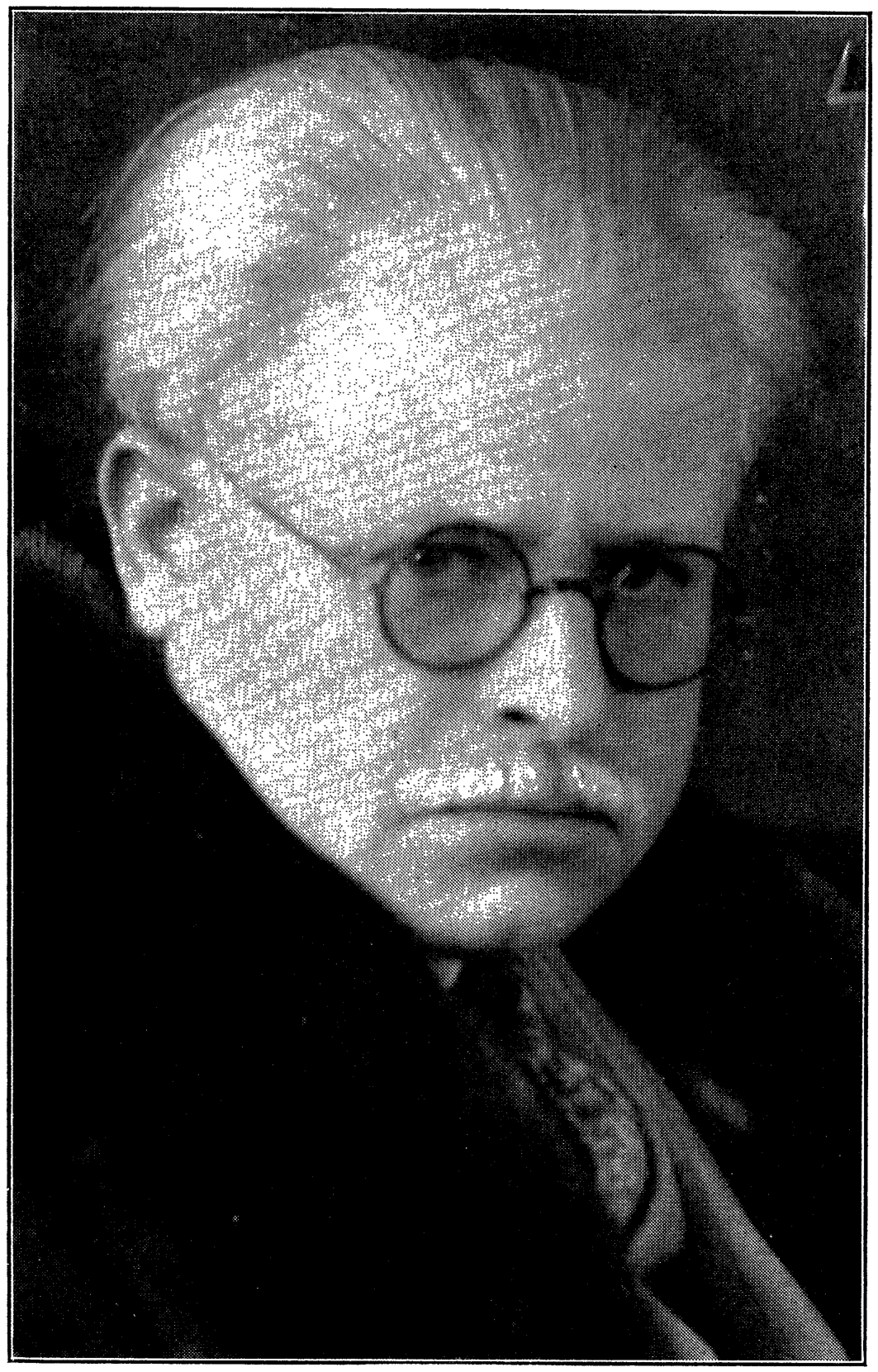
(plate; in the original facing p. 292)
The time that I spent in the hospital is bound up in my memory with J. Adler's first days as a contributor to the "Forward." He visited me in the hospital, and his visit had partly to do with the question of his connection with the "Forward."
For the first time I saw him at the above-mentioned gathering of the Galician socialists, where I conveyed to them a greeting from their old home. Adler had been invited to that gathering as a reader.
By the way, he himself is also from Galicia. He read several of his humorous sketches, and I derived great pleasure from them. I literally rolled over with laughter.
I had long heard that he is a member of the Socialist party. I also knew that he writes humorous feuilletons and also poems. With his works, however, I was very little acquainted. Up until a short time before my operation, he took part in a Yiddish humor sheet by the name of "Kundes," where the "Forward" and I personally used to be regularly attacked. To make mockery of the most popular, most widely circulated newspaper and simply to revile it was "good business." The public takes an interest in everything that concerns the newspaper, and to see how one makes occasional289fun of it, there are always those willing to do it. The owner of "Kundes" used to say openly that when an issue of his weekly came out without some venomous joke about the "Forward" or about its editor, the paper sold more weakly.
Adler was one of those who used to write this sort of joke. I seldom read "Kundes," and of Adler's attacks I knew little. I would indeed hear something of them, but such things went in one ear and out the other.
The sketches that he read aloud at the reception evening that his countrymen made for me contained the sort of joke at which one laughs without a reason. This is a laughter for the sake of laughing. And to obtain this sort of sketch for the "Forward" I had long had in mind. Jokes of other sorts we had. For the most part it was a smile-humor. But I also wanted to have laugh-humor. And this I had now found in J. Adler.
I asked that several of his works be brought to me. Leon Gottlieb, of our editorial staff, conveyed this to him, and he, Adler, put together a packet (it is understood, those feuilletons in which he had shot arrows at the "Forward" or at me he did not include in the packet). I read through the several humorous sketches and decided to engage him as a contributor. Then my attention was drawn to those feuilletons of his in which the "Forward," or I, had been the victim. My answer was:
"He is not the first, and he will not be the last, who will attack us as long as we are popular. When he writes for us, he will not compose such things,290and his earlier sins do not interest me."
I engaged him. That is to say, I nominated him as a regular contributor to the "Forward." For, when it is a matter of regular contributorship, the editor can, according to our constitution, only nominate. The question must be voted on by the association, which can accept the nomination or reject it. Thus, I engaged Adler only provisionally. He began to write for us.
Since a short time before he had attacked the "Forward" and me personally, it was not convenient to use his real name. Adler agreed with me that it was necessary, for the first time at least, to give him a pseudonym. Since he is a Galician, I asked him in jest whether he would have anything against it if I made him into a Litvak. He answered cheerfully that for his part I could even make him into a Turk. So I chose the name "B. Kovner," and he explained in his quiet, merry manner that the name suited him excellently.
Under this name, then, he began to write humorous sketches in the "Forward." Within a few days I was forced to leave the editorial staff, and Dr. Blake was brought to me. Later, when I was still lying in the hospital, but I was already able to receive Adler, he visited me. He told me that B. Feigenbaum, who had edited the "Forward" in my absence, did not like his feuilletons.
291— He says they are empty jokes, that they contain no ideas, — he explained.
My answer was:
— When I come back, I will not demand any idea-feuilletons from you. Just write so that the public laughs. That you can do. For feuilletons with ideas we have other contributors.
The humorous sketches that he printed in our paper had a great success. I returned to the editorial staff in May. A short time later he began his series of feuilletons about Yente with her husband Mendel Telebende, and their little son Pinye, and the series became enormously popular throughout all of America. He also created other humorous characters who became famous. He tells grotesque jokes and creates successful witticisms in general. In addition, he has a very clear, light, and pleasant language, which has something in it such that when he writes something humorous, one must laugh at the words themselves. He became one of the most popular Yiddish writers in America.
He is also a brilliant reader, and people began to demand him for various gatherings, entertainments, concerts.
Once I made a tour across the country together with him for the benefit of the "Vilna Relief," — I as speaker, and he as reader; and I saw almost everywhere the following:
The chairman has to introduce him to the public, and he begins with the words: "And now I have the honor of introducing to you..." Further, however, he cannot speak. The public has already noticed who the "next one" is, and there292breaks out literally a storm of merry laughter. Instead of applauding, people laugh, and in such a case that is the best applause. People laugh from the whole heart and with all their strength. They shout: "Yente! Mendel! Pinye!", and they laugh for all they are worth.
Adler bows toward the front, to the right and to the left. The storm breaks out again and again. Scarcely have people calmed down, and he begins to read aloud. Then, when he comes to a grotesque joke — and that happens every little while, — a crash of merriment breaks out again.
Above it has already been mentioned that Adler is also a poet. His poems are mainly on sentimental, homely themes. Many of them are very grotesque. They are sympathetic and contain no little of the sap of true poetry.
It is already seventeen years that he has been a member of our editorial family, and his popularity is very great. To be able to entertain people, to call forth from them a hearty laughter, so that they forget their troubles —
— that is one of the most important things that the written or spoken word can accomplish. For this a born talent is required, a special one, and this sort of talent Adler possesses in great measure. A great number of his pranks have, in these seventeen years, won renown, and they are read aloud throughout the whole world.
On a certain day at the noon hour, when the guests were in the dining room, there drove up to the Lakewood hotel where I was then staying an automobile with three young people. They ordered dinner.293After the meal one of them came up to me and introduced himself as Al Jolson. He was already then well known in America, though not yet as much as today.
We had an interesting conversation about him personally and about Jewish singers and actors on the American stage in general. He told me about his childhood years, about his father the cantor, and about the effect that the upbringing in his father's house had on the development of his musical talent. We also spoke about Irving Berlin, the popular composer of American songs, who is also a son of a cantor. We chatted about the effect that cantorial melodies have on the American public when they are changed a little and adapted to the American taste.
I did not see Al Jolson again, neither personally nor on the stage, — except in the talkies (talking films). Since then his name has grown enormously. He is now one of the most popular actor-singers in America and also one of the richest. Fairness, however, demands that one say that if the "talkies" did a great deal for Al Jolson, Al Jolson did no less for the "talkies." It is a generally known fact that, thanks to his participation, the talkies had their first success, without which the whole undertaking might perhaps have been regarded as a stillborn child.
The Warner Brothers, the five Jewish brothers (sons of a Lomza shoemaker), who introduced the talkies, were on the verge of going bankrupt, but they put on "The Jazz Singer" (about a Jewish cantor and his son), with Jolson in the leading role, and this
294had such a colossal success that the firm made several million dollars' profit. A little later they put on the play "The Singing Fool," again with Jolson in the central role as actor and singer, and this brought them still more millions. These very millions laid the financial foundation of the enterprise. This made it possible for the talkies to push the silent pictures out of the market throughout all of America.
Notes (footnotes from the original)
[p. 247] Milwaukee is an hour's journey by rail from Chicago.
[p. 257] *) The Sabbath "Forverts" used to be ready then at 10 o'clock Friday evening.
[p. 264] *) The majority consisted of more than two-thirds of all the tailors.
[p. 265] *) The figures were strongly exaggerated in the interests of the struggle. The true figures were much smaller. Those who settled were probably about eight thousand, and those not settled were about 25 thousand.
[p. 278] *) Years later, when I met the above-mentioned Louis Hollander, he said to me: "I have long since become convinced that you were then right. I have also long since realized that you were right with regard to the Jacob Gordin question."